Spectre Brands

GhostToys, video games and computers · West Hartford, Connecticut

Coleco

Founded as the Connecticut Leather Company in 1932. Bankrupt in 1988. Gone as an operating company in 1990.

Coleco found three of the biggest crazes of the 1980s. It could not survive any of them ending.

Why ghost: Coleco Industries sold its toy lines to Hasbro in 1989 and emerged from bankruptcy in 1990 as Ranger Industries, a shell with no operations. The Coleco name lived on: Hasbro bought the right to use it on toys, River West Brands revived it on a handheld in 2006, and Coleco Holdings put it on a console in 2016 that was never made.1213141516

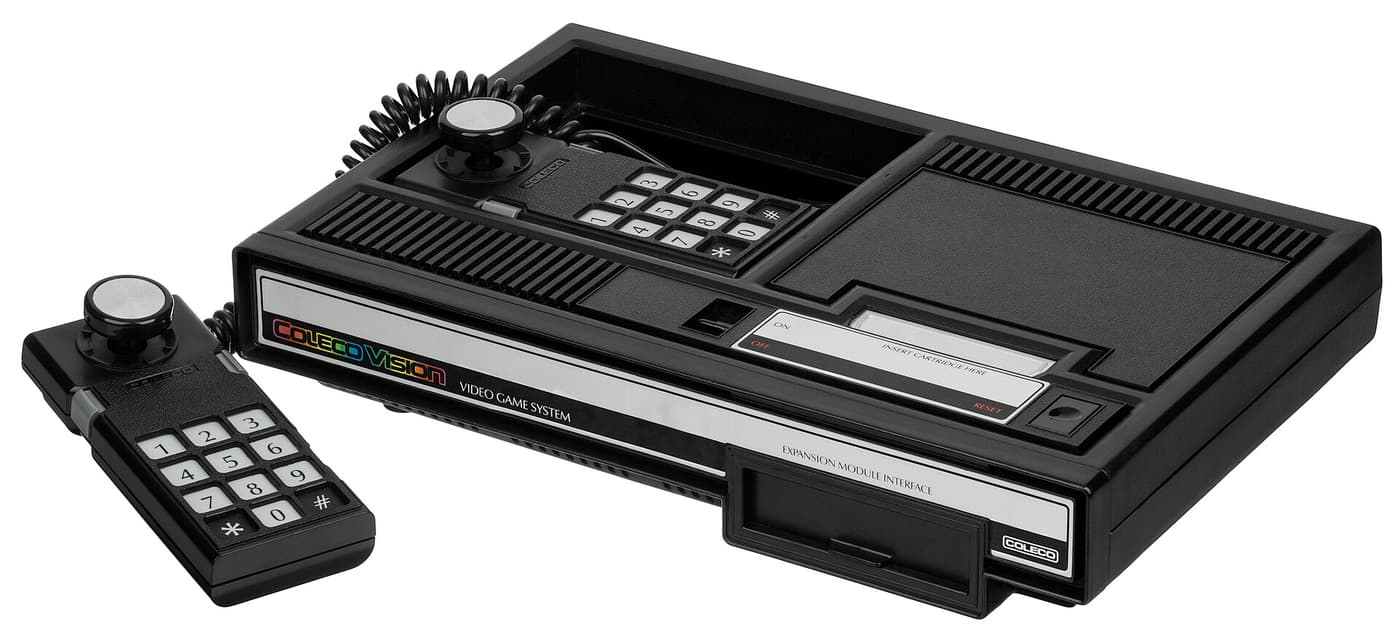
A black ColecoVision console with a keypad controller beside it
The ColecoVision console, launched in August 1982, with its keypad controller. Photo: Evan-Amos, Wikimedia Commons, public domain.Photo: Evan-Amos, via Wikimedia Commons, Public domain.
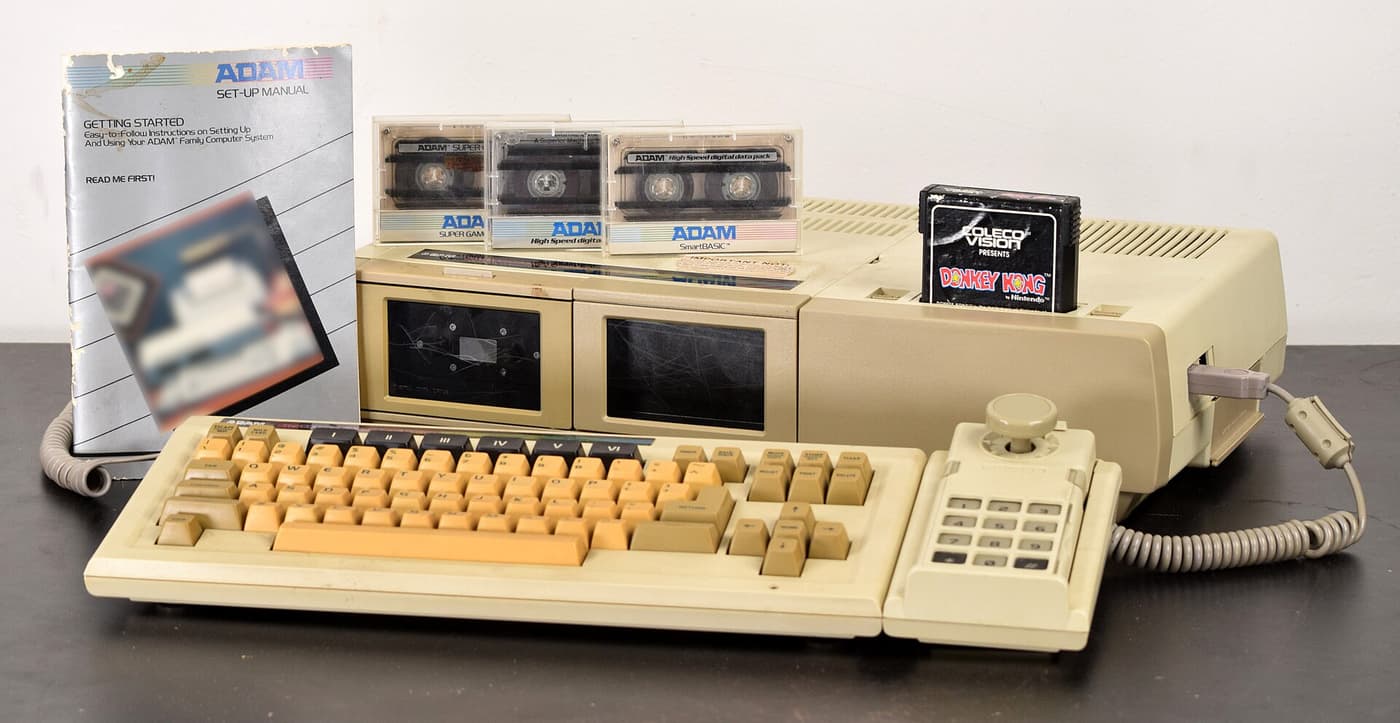
A beige Coleco Adam computer with keyboard, printer and tape drives
The Adam Family Computer System, shipped in October 1983. Photo: Akbkuku, Wikimedia Commons, CC BY 4.0.Photo: Akbkuku, via Wikimedia Commons, CC BY 4.0.

Coleco began as a leather supplier, moved into plastic wading pools and then into electronics. In August 1982 it launched ColecoVision, which it called the number one video game system by the end of that year. Its follow-up, the Adam home computer, shipped late and broken in 1983 and cost $118.6M to abandon. The Cabbage Patch Kids, launched the same month the Adam was announced, saved the company: $540M of sales in 1984 and $600M in 1985. Then demand fell to about $250M in 1986, and Coleco was left with $335M of bonds it could not pay. It filed for Chapter 11 in July 1988, sold everything to Hasbro for $85M and became an empty shell called Ranger Industries. This page draws on Coleco’s own annual reports, its successor’s SEC filings and reports in the Los Angeles Times and UPI.

Coleco in four numbers

95,000
Adam computers shipped in 1983, against a forecast of 500,00024
$600M
Cabbage Patch Kids sales in 1985, at the peak3
$335M
owed to bondholders when it filed for bankruptcy10
$85M
what Hasbro paid for almost everything that was left, 198912

Key findings

  1. Its hits were all crazes. Consumer electronics were 73% of Coleco’s sales in 1982; Cabbage Patch Kids were about $600M of its $776M in 1985. Each time, one fashionable product carried the company.23 (derived)
  2. The computer cost more than the console made. The Adam shipped about 95,000 units in 1983 and caused a fourth-quarter loss. Getting out of it in 1984 cost $118.6M, and the electronics business lost $140M on operations that year.23
  3. It borrowed against the doll. Analysts said Coleco borrowed to expand after the Cabbage Patch success. When doll sales fell from $600M to about $250M, the debt stayed: $335M of bonds, on which it defaulted in 1988.6811
  4. The name outlived the company. Hasbro bought the toy lines and the right to use the Coleco name on toys. The bankrupt company itself became Ranger Industries, a shell with $950,000 and no business.1213

The story

Three crazes, one bankruptcy

Coleco’s 1980s came in three acts: a games console, a computer and a doll. Each one was bigger than the one before.

Chapter 1 of 5

1932

the year Maurice Greenberg founded the Connecticut Leather Company

1932 – 1981 · Leather, pools and toys

The Connecticut Leather Company

Maurice Greenberg, a Russian immigrant, founded the Connecticut Leather Company in 1932. It moved from leather and shoe products into toys in the 1950s, and changed its name to Coleco in 1961.11 Plastic wading pools and children’s outdoor furniture “helped launch Coleco in the toy business.”9

In 1981 Coleco had sales of $178.0M and earned $7.7M.3

Chapter 2 of 5

560,000

ColecoVision consoles shipped in North America in 1982

ColecoVision console and controller
ColecoVision. Photo: Evan-Amos, via Wikimedia Commons, public domain.

1982 · The console

ColecoVision

Coleco introduced ColecoVision in August 1982, “taking advantage of consumers’ dissatisfaction with existing systems.”1 It shipped 560,000 units in North America that year and nearly as many in the first quarter of 1983, and by the end of 1982 Coleco described it as the number one video game system in the marketplace.1

Sales nearly tripled to $510.4M and profit rose to $44.9M. Electronics were $373.5M of the total, 73%.23

Chapter 3 of 5

$118.6M

the loss on abandoning the Adam computer, 1984

Commercial · 1984Coleco Adam: “Is That Legal?” (1984) An Adam commercial from the year Coleco cut its wholesale price from $650 to $475.4 The year is the uploader’s. Watch on YouTube

1983 – 1984 · The computer

Adam

In June 1983 Coleco announced it was entering the home-computer business.4 The Adam shipped 60 to 90 days late, and “total shipments of ADAM in 1983 were limited to around 95,000 units,” the company admitted; early machines “caused users to experience various difficulties.”2 Costs “incurred in anticipation of shipping a much higher volume of ADAM computers than we actually did” produced a fourth-quarter loss, and Coleco lost $7.4M for 1983.23

On January 2, 1985 it gave up. “Some of the early products just didn’t measure up, and we were never able to recover,” an executive said.4 The disposition cost $118.6M and Coleco lost $79.8M for 1984. Its equity fell from $89.4M to $10.5M.3

Chapter 4 of 5

$600M

Cabbage Patch Kids sales in 1985

Commercial · 1984Cabbage Patch Kids, Coleco toy commercial (1984) From the year the line sold $540M.3 The year is the uploader’s. Watch on YouTube

1983 – 1985 · The doll

Cabbage Patch Kids

Coleco introduced the Cabbage Patch Kids in June 1983, the same month it announced the Adam.4 First-year sales of more than 3.2 million units made it, Coleco said, “the most successful new doll introduction in the industry’s history.”2 The line brought in $65M in 1983, $540M in 1984 and $600M in 1985.23

1985 was the best year Coleco ever had: sales of $776.0M and record net earnings of $82.9M, including a tax credit. All remaining Adam and ColecoVision stock was sold off.3

Chapter 5 of 5

$540.3M

of liabilities listed in the July 1988 bankruptcy petition

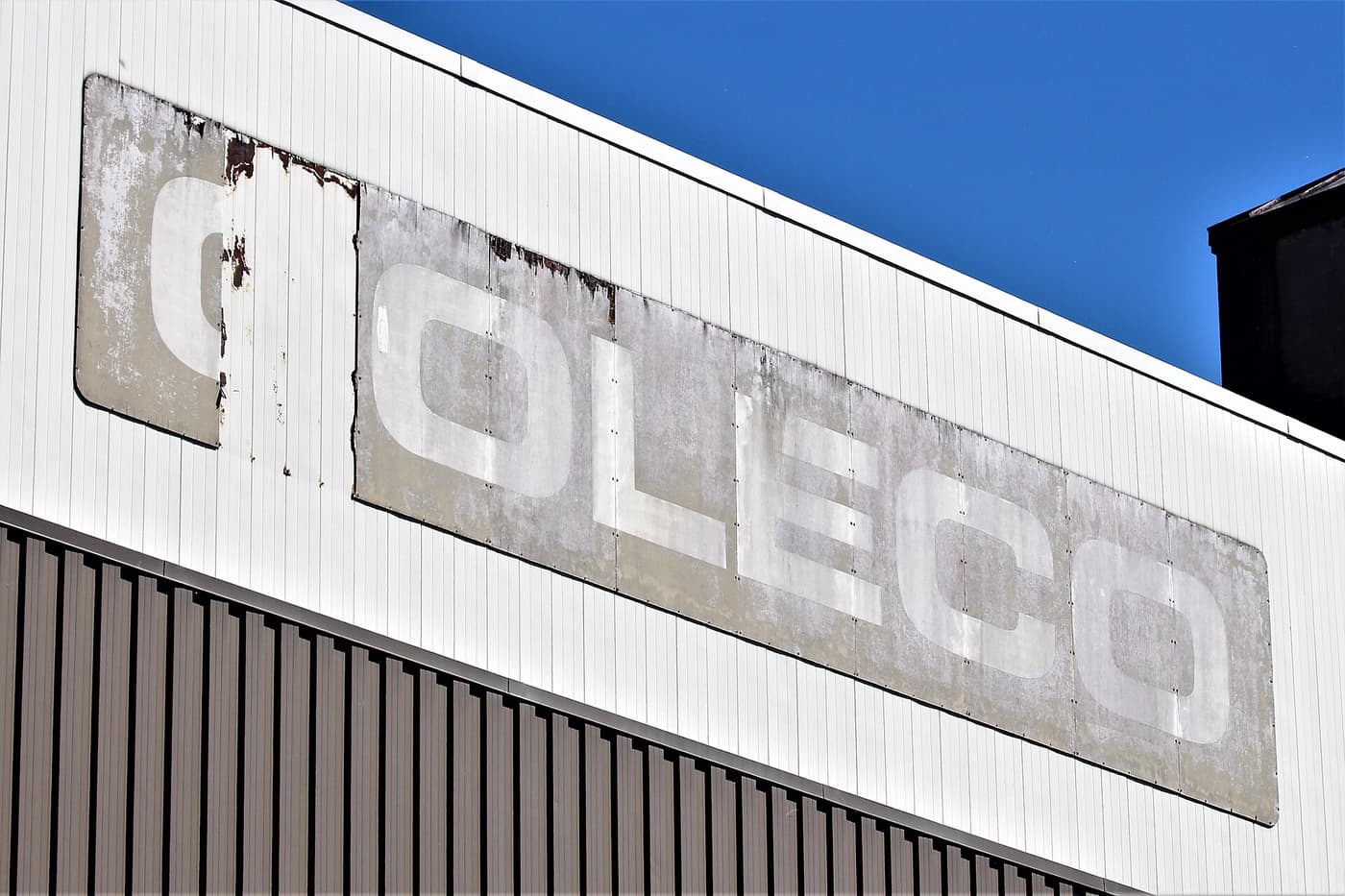
A faded COLECO sign on a white industrial building
The faded COLECO sign in Amsterdam, New York, where Coleco had its main U.S. plant, 2021. Photo: Tyler A. McNeil, via Wikimedia Commons, CC BY-SA 4.0.

1986 – 1990 · The bill

From $600 million to $250 million

Cabbage Patch sales fell to about $250M in 1986, and total sales by roughly a third, to $500.7M. Margins fell too, as Coleco cut prices and paid for rebates and advertising; Furskins bears and Rambo toys sold modestly.68 Coleco lost $105.4M in 1987, lost its Trivial Pursuit licence in 1988 and then defaulted on interest on $335M of bonds.78

On July 11, 1988 it filed for Chapter 11, listing assets of $384.3M and liabilities of $540.3M.1013 Hasbro bought most of its remaining assets for $85M in July 1989. Under the plan that took effect on February 28, 1990, the old shares were cancelled, the cash went to trusts for creditors, and the company, now named Ranger Industries, kept $950,000 and looked for a business to buy.1213

Timeline

From leather to a shell, in 21 moments

Fifty-six years of Coleco and the afterlife of its name. Filter by thread.

All 21 events as a list
  1. 1932
    Company

    Connecticut Leather

    Maurice Greenberg founds the Connecticut Leather Company.1113

  2. 1961
    Company

    Coleco

    The company changes its name to Coleco.11

  3. Aug1982
    Products

    ColecoVision

    Coleco enters video games; 560,000 consoles ship in North America that year.1

  4. 1982
    Money

    Sales nearly triple

    $510.4M of sales and $44.9M of profit; electronics are 73% of sales.23

  5. Jun1983
    Products

    Adam and the Kids

    Coleco announces a home computer and introduces the Cabbage Patch Kids in the same month.4

  6. Oct1983
    Products

    Adam ships

    Late and with early faults; about 95,000 ship in 1983.24

  7. 1983
    Money

    A loss

    A $7.4M net loss, driven by Adam costs in the fourth quarter.23

  8. Jan 21985
    Products

    Adam abandoned

    The remaining stock is sold at a loss to an unnamed retail chain.4

  9. 1984
    Money

    $79.8M loss

    Including $118.6M on disposing of the Adam; equity falls to $10.5M.3

  10. 1985
    Money

    Record year

    $776.0M of sales, $600M of it Cabbage Patch Kids; net earnings $82.9M.3

  11. Aug1986
    Company

    Layoffs

    100 more jobs cut in Connecticut as doll sales slow and Rambo toys disappoint.5

  12. Oct1986
    Company

    Tomy USA

    Coleco buys the U.S. arm of the Japanese toy maker.6

  13. Jan 81987
    Money

    The doll halves

    Cabbage Patch sales fell to about $250M in 1986, Coleco says.6

  14. Mar1988
    Money

    $105.4M loss

    For 1987, on sales of $504.5M.8

  15. May1988
    Bankruptcy & after

    Losing licences

    Trivial Pursuit is going to Tonka; 475 jobs go and the chairman resigns.78

  16. Jul 111988
    Bankruptcy & after

    Chapter 11

    Filed in New York: $384.3M of assets, $540.3M of liabilities.1013

  17. Jul 71989
    Bankruptcy & after

    Sold to Hasbro

    The court approves the $85M sale of nearly all remaining assets.1213

  18. Feb 281990
    Bankruptcy & after

    Ranger Industries

    The plan takes effect; old shares are cancelled and the shell keeps $950,000.13

  19. 2005
    Company

    The name returns

    River West Brands acquires the Coleco trademark.16

  20. Oct2006
    Products

    Coleco Sonic

    A $50 handheld with 20 Sega games goes on pre-order.14

  21. Mar 82016
    Products

    Chameleon cancelled

    Coleco Holdings ends the console project before any product ships.15

The money

Three peaks, one cliff

Figures for 1981 to 1985 come from Coleco’s own 1985 annual report and earlier reports, preserved by a collectors’ archive. Later figures are as reported by UPI and the Los Angeles Times. Coleco’s filings from this period are not on SEC EDGAR, which begins later.

Net sales, 1981 to 1987

$ millions.

$0M$200M$400M$600M$800M19811982198319841985198619871234$0M$500M$1000M19811983198519871234
  1. 1982 · ColecoVision Electronics are 73% of sales.2
  2. 1983 · Adam Sales up, but a $7.4M loss.3
  3. 1985 · the peak $600M of Cabbage Patch Kids.3
  4. 1986 · the fall Doll sales drop to about $250M.6
Data table
Net sales, 1981 to 1987
PeriodNet sales
1981$178M
1982$510.4M
1983$596.5M
1984$774.9M
1985$776M
1986$500.7M
1987$504.5M
1985 annual report (1981–85) and UPI (1986–87).38

Net earnings and losses

$ millions. 1986 is not shown; see the notes.

Data table
Net earnings and losses (Net result)
PeriodNet earnings (loss)
1981$7.7M
1982$44.9M
1983$-7.4M
1984$-79.8M
1985$82.9M
1987$-105.4M
1985 annual report and UPI.38 1985 includes an $18.7M extraordinary tax credit; before it, earnings were $64.2M.

Cabbage Patch Kids sales

$ millions, as Coleco reported them.

$0M$200M$400M$600M1983198419851986123$0M$250M$500M$750M1983198419851986123
  1. 1983 · launch year “The $65 million level achieved in 1983.”2
  2. 1985 · peak $600M.3
  3. 1986 · after the craze “About $250 million.”6
Data table
Cabbage Patch Kids sales
PeriodCabbage Patch Kids
1983$65M
1984$540M
1985$600M
1986$250M
Coleco’s 1983 and 1985 annual reports and its January 1987 shareholder letter as reported by UPI.236 The 1986 figure is approximate.

1982: a games company

Share of net sales.

  1. 73.2%Electronics$373.5M
  2. 26.8%Toys$136.8M
Data table
1982: a games company
SegmentShare
Electronics73.2%
Toys26.8%
Derived from the 1983 annual report.2

1985: a doll company

Share of net sales.

  1. 92.8%Toys$719.8M
  2. 7.2%Electronics$56.2M
Data table
1985: a doll company
SegmentShare
Toys92.8%
Electronics7.2%
Derived from the 1985 annual report.3

The Adam, in numbers

500,000
Adams Coleco had predicted it would ship in 19834
~95,000
Adams it actually shipped that year2
$118.6M
the loss on disposing of the Adam, 19843
$140.0M
operating loss in consumer electronics in 1984, separate from that write-off3
Coleco annual reports and the Los Angeles Times.234

What it owed, July 1988

$ millions, by creditor group, as listed in the petition.

Bondholders (four issues)
$335M
More than 1,200 other creditors
$135.2M
Secured creditors, mainly 11 banks
$104.3M
Data table
What it owed, July 1988
CreditorsOwedNote
Bondholders (four issues)$335M
More than 1,200 other creditors$135.2M
Secured creditors, mainly 11 banks$104.3M
Los Angeles Times, Jul 18, 1988.10 The groups as reported add up to more than the $540.3M total liabilities; see the notes.
Faded COLECO sign on a building
Jun 2021 What is left of the COLECO sign in Amsterdam, New York.Photo: Tyler A. McNeil, via Wikimedia Commons, CC BY-SA 4.0.

Part 3 of 6

Brand

Commercials & footage · Brand gallery

Commercials & footage

Arcade at home, a computer, and a doll

Coleco advertised all three of its 1980s hits on national television. The commercials were uploaded by collectors; their dates are the uploaders’.

Commercial · 1982ColecoVision: “Bring the Arcade Experience Home” (1982) A launch-year spot for the console Coleco introduced in August 1982.1 The year is the uploader’s. Watch on YouTube
Commercial · 1984Coleco Adam: “Is That Legal?” (1984) An Adam commercial from the year Coleco cut its wholesale price from $650 to $475.4 The year is the uploader’s. Watch on YouTube
Commercial · 1984Cabbage Patch Kids, Coleco toy commercial (1984) From the year the line sold $540M.3 The year is the uploader’s. Watch on YouTube
News segment · 1983From 1983: Demand for Cabbage Patch Kids causes chaos in stores Archive local news footage of the first Christmas, when demand was “always exceeding the supply,” as Coleco put it.2 Watch on YouTube
Retrospective · 2020The Story of the ColecoVision, What Could Have Been! A fan-made video history of the console. We rely on Coleco’s filings for figures. Watch on YouTube

Videos are embedded from the services that host them and load only when you press play. YouTube embeds use youtube-nocookie.com. Each video belongs to its uploader or rights holder and is shown here for commentary; we do not host any of the files.

The clippings

What they said at the time

Press (3)
Some of the early products just didn’t measure up, and we were never able to recover.
Morton E. Handel, Coleco executive vice president, on the Adam, January 19854
  1. Gary Jacobson, toy analyst, Kidder, Peabody & Co., on the bankruptcy, July 19888

    That’s the nature of the toy industry. It’s boom or bust.
  2. Paul Valentine, toy analyst, Standard & Poor’s, June 198911

    Coleco always stood for innovation and the ability to take risks. The industry is poorer because of their demise.
Coleco Adam computer system
1983 The Adam Family Computer System with its printer and tape drives.Photo: Akbkuku, via Wikimedia Commons, CC BY 4.0.

Part 5 of 6

Verdict

Cause of death · What if · Afterlife

Cause of death

The autopsy

Tap a cause to see the evidence. The percentages are our editorial weighting. The evidence under each one is sourced.

Cause of death, by editorial weight

One square is one percentage point. The weights are our judgment, not a measurement.

  1. 40%One craze at a time
  2. 25%The Adam
  3. 25%Debt
  4. 10%Lost licences
Data table
Cause of death, by editorial weight
CauseWeight
One craze at a time40%
The Adam25%
Debt25%
Lost licences10%

Electronics were 73% of sales in 1982; Cabbage Patch Kids were about 77% in 1985 (derived). When doll sales fell to about $250M in 1986, nothing replaced them; Furskins, Wrinkles and Rambo sold modestly.236

A computer that shipped late, in small numbers and with faults. It turned 1983 into a loss and cost $118.6M to abandon in 1984, leaving the company with $10.5M of equity going into the Cabbage Patch boom.234

Analysts said Coleco borrowed to expand after the Cabbage Patch success. By 1988 it owed $335M to bondholders from four issues, defaulted on the interest and could not get a short-term credit line.81011

It did not own its biggest products. In 1988 it lost Trivial Pursuit to Tonka and faced losing the Cabbage Patch licence from Original Appalachian Artworks.7

Editorial judgment: The weights are our judgment of how much each factor contributed. Reasonable readers could weigh them differently.

The fork in the road

What if…

Three decisions where the story could have gone differently. The “What if” panels are speculation, labeled as such.

What happened

Coleco announced the Adam in June 1983 and spent heavily ahead of sales that never came; it lost $7.4M in 1983 and $79.8M in 1984.34

What if speculative

Without the Adam, Coleco would probably have gone into the Cabbage Patch boom with most of its 1983 equity of $89.4M intact, rather than $10.5M. It would still have had a console business in a collapsing video game market.

What happened

Coleco ended 1985 with $110M of cash, then raised about $160M more in 15-year debentures. Analysts later said it borrowed to expand.311

What if speculative

Without that new debt, Coleco would have faced the 1986 doll slump with fewer obligations. Whether it could have found another hit is unknowable.

What happened

Cabbage Patch Kids and Trivial Pursuit were both licensed; Coleco lost Trivial Pursuit in 1988 and Hasbro had to agree terms with Original Appalachian Artworks to take on the dolls.712

What if speculative

Owned brands would have been worth more as collateral and in a sale. It might not have changed the falling demand.

Where are they now

The afterlife

Coleco

  1. The toys and games

    Sold

    Hasbro bought most of Coleco’s non-cash assets for $85M and warrants in July 1989, putting Scrabble, Parcheesi and Aggravation into Milton Bradley and making Cabbage Patch Kids itself.12

  2. The company

    Shell

    Coleco Industries became Ranger Industries. The 1990 plan cancelled the old shares, gave 4,000,000 new shares to unsecured creditors, moved the cash into two trusts and left the company $950,000 and about $178M of tax losses, but no business.13

  3. The workers

    Gone

    Coleco had an average of 2,500 U.S. employees in 1987 and fewer than 600 when it filed. Most of its last 80 headquarters staff were to be laid off after the Hasbro sale.912

  4. The name

    Revived, briefly

    River West Brands acquired the Coleco trademark in 2005 and sold a Coleco Sonic handheld in 2006. Its Coleco Holdings ended the Coleco Chameleon console in March 2016 before it was made.141516

Who held the Coleco name

  1. 1932

    Connecticut Leather Company

    Founded by Maurice Greenberg; renamed Coleco in 1961.11

  2. Jul 1988

    Coleco Industries, in Chapter 11

    Files in New York.13

  3. Jul 1989

    Hasbro

    Buys the right to use the Coleco name on toys with the toy lines.12

    $85M plus warrants
  4. 2005

    River West Brands

    Acquires the trademark; launches the Coleco Sonic in 2006.1416

  5. 2014

    Coleco Holdings

    River West’s Coleco company; cancels the Chameleon in 2016.1516

Data table
Who held the Coleco name
WhenOwnerWhat happenedPrice
1932Connecticut Leather CompanyFounded by Maurice Greenberg; renamed Coleco in 1961.
Jul 1988Coleco Industries, in Chapter 11Files in New York.
Jul 1989HasbroBuys the right to use the Coleco name on toys with the toy lines.$85M plus warrants
2005River West BrandsAcquires the trademark; launches the Coleco Sonic in 2006.
2014Coleco HoldingsRiver West’s Coleco company; cancels the Chameleon in 2016.
UPI, Ranger Industries’ SEC filing, Engadget and TechSpot.1213141516 We did not find who holds the trademark today.

Sources & data notes

Show your work

Coleco’s own annual reports for 1982, 1983 and 1985, scanned by a collectors’ archive, supply the figures to 1985. Its successor’s SEC filing describes the bankruptcy, and contemporary wire and newspaper reports cover the rest. Every link was opened while this page was researched.

  1. Coleco Industries, Inc., 1982 Annual Report, via The ADAM Archive (adamarchive.org).
  2. Coleco Industries, Inc., 1983 Annual Report, via The ADAM Archive.
  3. Coleco Industries, Inc., 1985 Annual Report, via The ADAM Archive. Includes the five-year financial summary for 1981–1985 and segment data for 1983–1985.
  4. “Coleco Discontinues Its Adam Computer Line”, Los Angeles Times, Jan 3, 1985.
  5. “Coleco Lays Off 100 Workers in Connecticut”, Los Angeles Times, Aug 15, 1986.
  6. “Coleco loss blamed on Cabbage Patch Kids”, UPI, Jan 8, 1987.
  7. “Coleco Industries, which is battling to avoid bankruptcy, has lost its license…”, Los Angeles Times, May 23, 1988.
  8. Bob Webster, “Coleco seeks bankruptcy protection”, UPI, Jul 12, 1988.
  9. “Cabbage Patch Doll Maker Is Bankrupt”, Los Angeles Times, Jul 12, 1988.
  10. “Coleco Industries Inc., which last week filed…”, Los Angeles Times, Jul 18, 1988.
  11. “$85-Million Deal: Coleco OKs Hasbro Buyout Offer”, Los Angeles Times, Jun 16, 1989.
  12. “Hasbro completes purchase of Coleco assets”, UPI, Jul 12, 1989.
  13. Ranger Industries, Inc. (formerly Coleco Industries), annual report on Form 10-KSB for 1996, filed Apr 15, 1997, SEC EDGAR. Item 1 describes the petition, the Hasbro sale and the 1990 plan.
  14. “Coleco Sonic Handheld debuts: take home 20 Sega 8-bit games for $50”, Engadget, Oct 27, 2006.
  15. “Coleco officially pulls its name from the Chameleon”, Engadget, Mar 8, 2016.
  16. “Coleco: Gone But Not Forgotten”, TechSpot, Aug 9, 2021.
Data notes (6)

Data notes

Derived: $350M is $600M of 1985 Cabbage Patch sales less about $250M in 1986.36 Segment shares are our arithmetic from the annual reports: 1982 electronics $373.5M of $510.4M; 1985 toys $719.8M of $776.0M.23 “About 77%” is $600M of $776.0M.

Conflicts: The Los Angeles Times dated Coleco’s move into toys to 1954 and, a year earlier, said pools launched it in toys in 1956.911 The creditor groups listed in July 1988 ($104.3M secured, $335M of bonds, $135.2M to other creditors) add up to $574.5M, more than the $540.3M total liabilities in the same report; we show them as reported.10 UPI gives the petition date as Monday evening, July 11; the Times says “late Monday.”810

Unknown: Coleco’s 1986 net loss: UPI and the Times reported $105.4M for 1987 and “$215 million over the last two years,” but we did not find the 1986 figure itself, so the chart omits it.89 How many Adams were sold in total; who owns the Coleco trademark today.

Secondary: The 2005 acquisition of the trademark by River West Brands and the 2014 formation of Coleco Holdings come from TechSpot, a secondary history.16

Videos: Commercial dates are the uploaders’. The retrospective is fan-made.

Images: All three photographs are from Wikimedia Commons under the licences in their credits. The swatches are approximations. The drawing is original.