Spectre Brands

GhostVideo games and home computers · Sunnyvale, California

Atari

Founded 1972. Sold to Warner 1976. Broken up and sold Jul 2, 1984.

Atari made the home video game a business, and then showed how quickly that business could vanish.

Why ghost: The original Atari, Inc. was broken up and sold by Warner Communications in July 1984; the name now belongs to Atari SA, a Paris-listed publisher of retro games and hardware that reported €56.0M of revenue for the year to March 2026.721

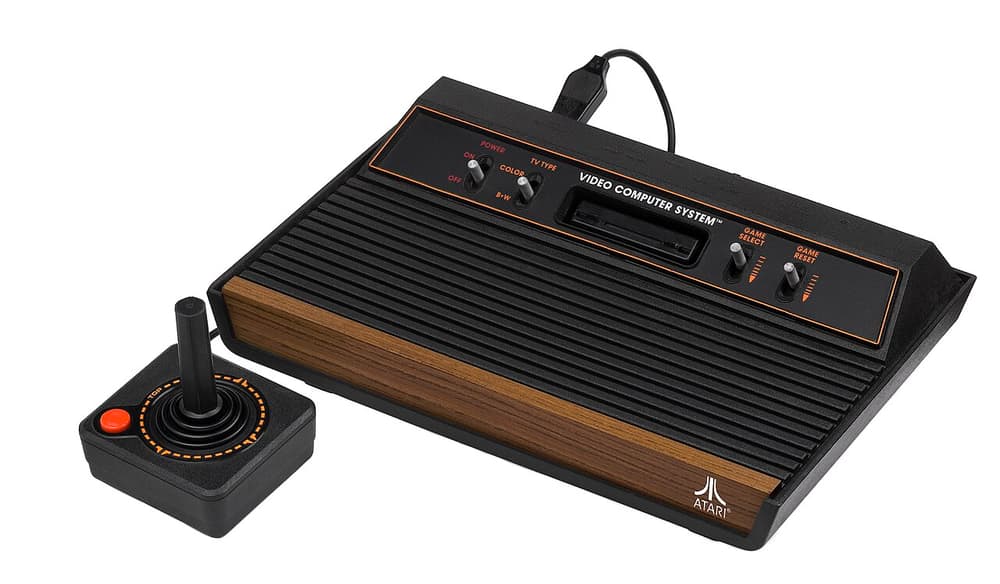
Atari 2600 console with wood-grain front and a joystick
The Video Computer System, 1977Photo: Evan-Amos, via Wikimedia Commons, public domain.
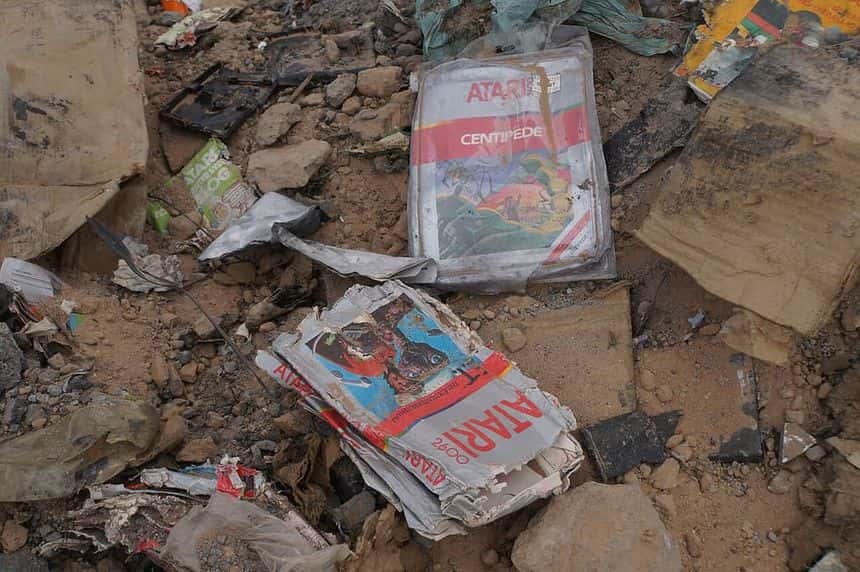
Crushed Atari game boxes in landfill dirt
Dug up in Alamogordo, 2014
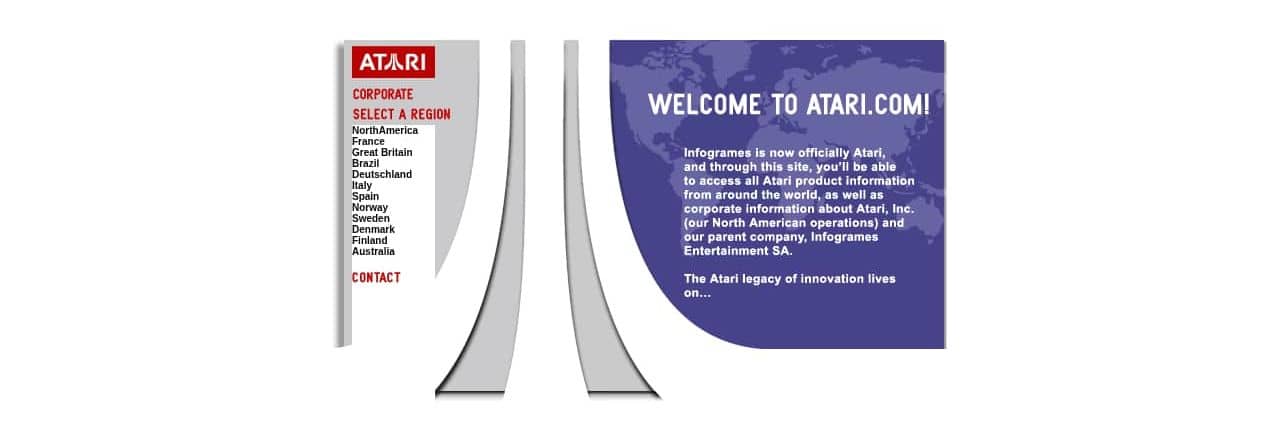
atari.com welcome page from October 2003
atari.com under Infogrames, 2003

Warner Communications paid $28 million for Atari in 1976. By 1982 it was half of Warner’s revenue. One year later it had lost more than half a billion dollars, buried truckloads of cartridges in the New Mexico desert and laid off most of its staff. In July 1984 Warner gave the company to a competitor for notes and no cash. The name has since belonged to a disk-drive maker, a toy company and a French publisher, and it is still trading. This is the post-mortem, built from contemporary New York Times reporting, SEC filings and the archived website.

The company in four numbers

$28M
paid by Warner Communications for Atari in 197616
$2B
approximate sales in 1982, about ten times the 1978 figure13
$538M
lost by Atari in 19837
$5M
paid by Hasbro Interactive for the name and the games in 199813

Key findings

  1. It was half of Warner. In the first nine months of 1982 Atari contributed half of Warner’s $2.9 billion in revenue and two thirds of its $471 million in operating profit.1
  2. The profit was in cartridges, and Atari lost its hold on them. An analyst put cartridges at $180 million of Atari’s $280 million operating profit in 1981. By December 1982 the number of game producers had more than tripled, to 20.18
  3. Management did not see it coming. Analysts said Warner privately confirmed their estimates until the morning before the December 8, 1982 warning. A Warner executive said the company was “blind-sided.”1
  4. The collapse took one year. Atari earned $323 million in 1982 and lost $536 million in the first nine months of 1983. Staff fell from 10,000 to about 1,100 by June 1984.167
  5. The name outlived the company by four decades. It was sold for $240 million in notes in 1984, for $5 million in 1998 and inside a $100 million deal in 2001. Its current owner reported €56.0M of revenue in FY2026.7131421

The market it built

An industry that doubled, then choked

Home video games were the fastest-growing consumer product of the early 1980s. The boom drew in so many suppliers that the product became a commodity inside a year.

The U.S. home video game market at the turn
$2Bexpected industry sales in 1982, double the year before, split about evenly between consoles and cartridges18
20companies producing games by December 1982, more than triple the number a year earlier8
15Mgame machines plugged into American televisions by October 19835
$100Mestimated network television time bought by game makers for the 1982–83 season8

More cartridges, less money

U.S. cartridge sales in 1982 and analysts’ expectations for 1983, as reported in October 1983.

Data table
More cartridges, less money (Units)
PeriodCartridges sold, millions
198265M
1983 (expected)80M to 90M
Data table
More cartridges, less money (Dollars)
PeriodCartridge sales
1982$1600000000B
1983 (expected)$1300000000B
The New York Times, October 17, 19835: “about 65 million” cartridges in 1982 and 80 million to 90 million expected in 1983 (shown as a range), with dollar value falling from $1.6 billion to about $1.3 billion according to analyst Christopher Kirby. Console sales were expected to fall from 8 million to between 5.5 million and 6 million. These are contemporary estimates, not final figures.

What changed

In October 1981 Atari had about 80 percent of the market for both consoles and games, “with Mattel its main competitor.”1 A year later the Times counted Coleco, Activision, Imagic and Parker Brothers among “numerous companies” in software.1 Retailers had ordered for a monopoly market and received a competitive one. In 1986 the same newspaper summarised the result: “Retailers took a bath as millions of cartridges remained on their shelves.”9

The story

The fastest-growing company in America, and then the fastest-shrinking

Atari did not fail because people stopped playing video games. It failed because it planned for a monopoly it no longer had, and its owner found out too late.

Chapter 1 of 6

$28M

paid by Warner Communications for Atari in 1976

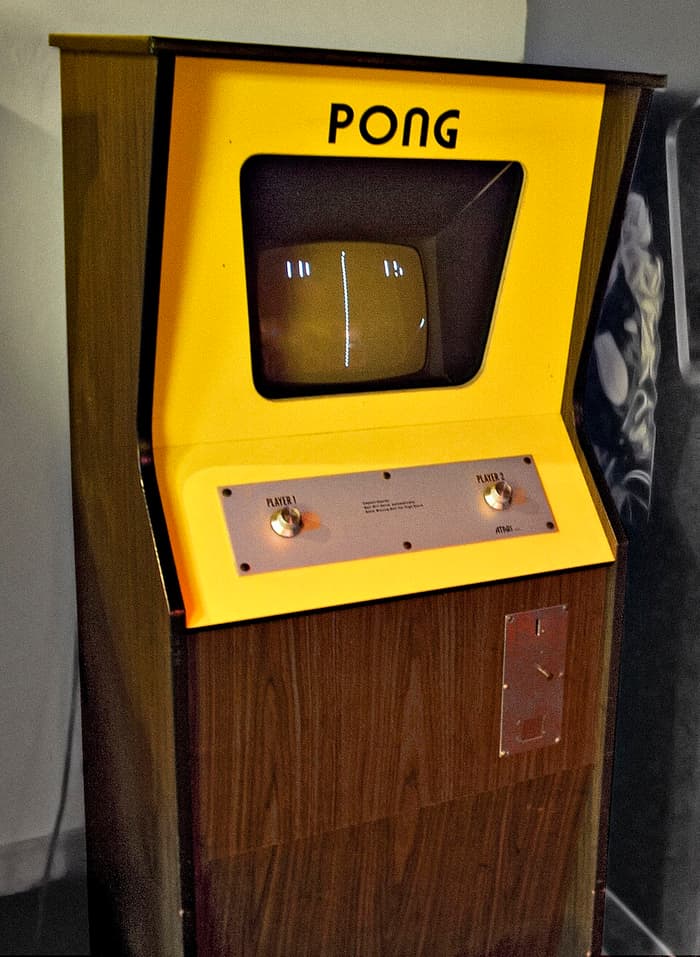
Yellow and wood-grain Pong arcade cabinet
A Pong arcade cabinet. Photo: Rob Boudon, cropped by Ubcule, via Wikimedia Commons, CC BY 2.0.

1972 – 1976 · Pong

A coin-operated game and a $28 million exit

Atari was founded in 1972 by Nolan Bushnell, “whose first successful game was a coin-operated Ping-Pong game called Pong.”1 Bushnell had hired a young engineer, Al Alcorn, to design a driving game; when that proved too ambitious, Alcorn built Pong instead, and it was tested in bars in Grass Valley and Sunnyvale, California.29

A home version followed in 1975, sold through Sears, which according to a reference history agreed to buy all 100,000 units Atari made.25 Atari needed capital for its next product, and in 1976 Warner Communications bought the company for $28 million, mainly at the urging of Warner executive Emanuel Gerard.16 An early backer, the venture capitalist Donald Valentine, later called it “the greatest acquisition in history.”1

Chapter 2 of 6

80%

of the home video game hardware and software market in October 1981

Atari 2600 console with wood-grain front and a joystick
The four-switch Video Computer System with its joystick. Photo: Evan-Amos, via Wikimedia Commons, public domain.

1977 – 1981 · The VCS

Cartridges, and the programmers who left

The Video Computer System, later renamed the 2600, went on sale in 1977. It stored games on interchangeable cartridges and went on to sell more than twenty million units.299 Warner removed Bushnell and installed Raymond Kassar, a 25-year veteran of Burlington Industries. Revenue was under $200 million in 1978, just before he took over.1

The money was in the software. Cartridges cost a few dollars to make and sold for more than $20, and one analyst attributed $180 million of Atari’s $280 million in 1981 operating profit to them.1 The people who wrote them were paid salaries and given no credit. In 1979 four programmers worked out that their games had produced 60 percent of $100 million in cartridge sales, asked for recognition and were refused. They left and founded Activision, the first company to make cartridges for someone else’s console.2627

You are no more important to Atari than the person on the assembly line who puts the cartridges in the box.

Ray Kassar, as recalled by programmer David Crane26

Chapter 3 of 6

$2B

approximate Atari sales in 1982, with $323 million of operating profit

Commercial · 1982Pac-Man for the Atari 2600 The home version was “widely faulted for the quality of its graphic display” and still sold well.1 The 1982 date is the uploader’s. Watch on YouTube

1982 · The peak

Half of Warner’s revenue

By 1982 Atari was, in the words of The New York Times, “probably the fastest growing company in the nation.” Sales reached about $2 billion and staff reached 10,000, of whom 4,000 were hired that year.1 The division earned $323 million.6 It spent more than $100 million on advertising and almost as much on research.1

The plan for the year had been set in October 1981, when Atari asked its distributors to commit to orders for virtually all of 1982. At that point it held about 80 percent of the market.1 During 1982 the number of game producers more than tripled, to 20.8 Atari’s own Pac-Man cartridge was “widely faulted for the quality of its graphic display” but sold well; its games licensed from the films E.T. and Raiders of the Lost Ark were not “the blockbusters Atari expected.”1

Chapter 4 of 6

$538M

lost by Atari in 1983, after a $323 million profit in 1982

Crushed Atari E.T. and Centipede game boxes lying in landfill dirt
Boxes of E.T. and Centipede in the Alamogordo landfill during the April 2014 excavation. Photo: taylorhatmaker, via Wikimedia Commons, CC BY 2.0.

Dec 1982 – Dec 1983 · The collapse

Fourteen truckloads to Alamogordo

On December 8, 1982 Warner said fourth-quarter earnings would be about 60 cents a share. Analysts had expected $1.60 to $2.00 and said the company had confirmed those estimates until the morning before.1 The stock fell $16.75 the next trading day, and from $51 to $29.50 by December 23.2 Kassar had sold 5,000 Warner shares on the day of the announcement, and the Securities and Exchange Commission investigated.23

The losses followed: $45.6 million in the first quarter of 1983, $310.5 million in the second and about $180 million in the third.345 Kassar resigned in July.3 In September Atari dumped 14 truckloads of cartridges and equipment from its El Paso plant in the city landfill at Alamogordo, New Mexico, and workers poured concrete over them.4 The burial was treated as a legend for thirty years, until a documentary crew dug the cartridges up in April 2014.22

Chapter 5 of 6

$0

cash received by Warner for Atari’s home computer and video game business

News segment · 1984CBS 8 San Diego special report on the video game slump A ten-minute local news report from the station’s own archive, dated 1984 by the station, on the collapse of the home video game business. Watch on YouTube

Jul 2, 1984 · The sale

“Warner essentially gave away the company”

Kassar’s successor, James Morgan, came from Philip Morris. Atari had already moved much of its manufacturing to Asia, and it laid off nearly 4,000 of its 7,000 employees, but the home computer price war led by Commodore under Jack Tramiel kept the losses running.67 By June 1984 Atari had about 1,100 employees, down from more than 7,000 a year earlier.7

At 4 a.m. on July 2, 1984, Warner signed the company over to Tramiel himself, by then the former chief executive of Commodore. Warner received no cash: it took $240 million in long-term notes and warrants for 32 percent of Tramiel’s new Atari Corporation, and kept the coin-operated games division. It booked a $425 million second-quarter loss.7 An analyst told the Times: “It’s clear that the old Atari was dead. It just wasn’t worth anything.”7

Chapter 6 of 6

$5M

paid by Hasbro Interactive in 1998 for the Atari name and game rights

A name with a price on it. Original illustration.

1984 – today · The name

Sold again, and again

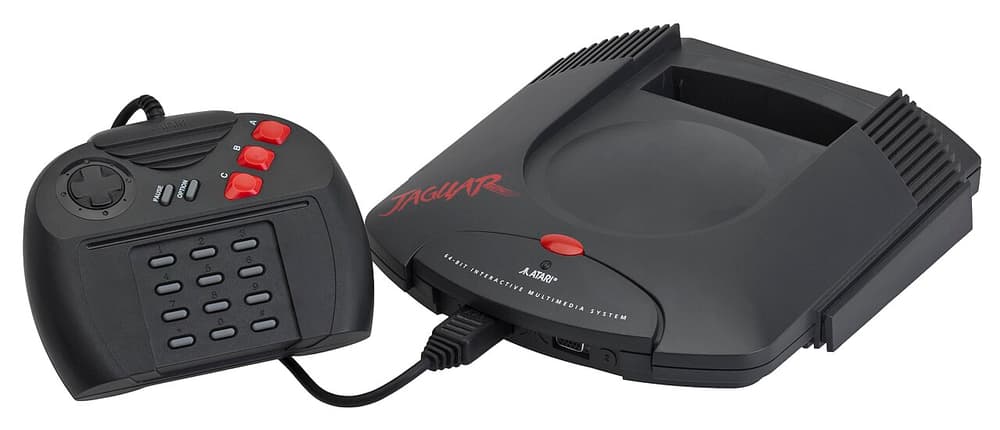
Tramiel’s Atari Corporation sold computers and kept the 2600 on sale at $40.9 Its last console, the Jaguar, sold about 125,000 units in two years and left 100,000 in the warehouse.11 In 1996 the company, down to 31 employees, merged into JTS, a maker of disk drives.1113

JTS sold the Atari assets to a Hasbro subsidiary for $5 million in February 1998.13 Hasbro sold its interactive division to the French publisher Infogrames for $100 million in 2001, and Infogrames renamed its American arm Atari, Inc. in 2003.1416 That company filed for Chapter 11 in 2013.18 The French parent, now called Atari SA and run by Wade Rosen, sells new cartridge consoles and collections of old games. It reported €56.0M of revenue for the year to March 2026.21

Timeline

Fifty-four years, 33 moments

From a bar in Sunnyvale to a landfill in New Mexico, and through every later owner of the name. Filter by thread.

All 33 events as a list
  1. 1972
    Corporate

    Atari founded; Pong

    Nolan Bushnell founds Atari. Engineer Al Alcorn builds Pong, which is tested in bars in Grass Valley and Sunnyvale, California.129

  2. 1975
    Product

    Home Pong

    A home version of Pong is sold through Sears, which a reference history says agreed to buy all 100,000 units.2530

  3. 1976
    Corporate

    Warner buys Atari for $28 million

    Warner Communications acquires the company from Bushnell, mainly at the urging of executive Emanuel Gerard.16

  4. 1977
    Product

    The Video Computer System

    Atari launches the cartridge-based VCS, later renamed the 2600.29

  5. 1978
    Corporate

    Kassar replaces Bushnell

    Warner removes Bushnell and installs Raymond Kassar, from Burlington Industries. Revenue for 1978 is under $200 million.1

  6. 1979
    Rivals

    The programmers walk out

    Four game programmers leave after being refused credit and royalties, and found Activision.26

  7. Jul 1980
    Rivals

    First third-party cartridges

    Activision ships Fishing Derby, Dragster and Boxing for the Atari console.27

  8. 1980
    Money

    Revenue passes $415 million

    A reference history puts Atari’s 1980 revenue above $415 million, more than double the year before.25

  9. Oct 1981
    Corporate

    Distributors asked to commit for a year

    Atari asks distributors to place orders for virtually all of 1982. It has about 80 percent of the market.1

  10. Spring 1982
    Product

    Pac-Man for the 2600

    The cartridge is criticised for its graphics and sells well. Atari expected to sell nine million, according to a reference history.125

  11. 1982
    Money

    The peak year

    Sales of about $2 billion, operating profit of $323 million and 10,000 employees.16

  12. Dec 81982
    Collapse

    The earnings warning

    Warner says fourth-quarter earnings will be about 60 cents a share against expectations of $1.60 to $2.00. The stock falls $16.75 the next trading day.12

  13. Dec 231982
    Collapse

    Insider sales disclosed

    Warner chairman Steven Ross discloses that Kassar sold 5,000 shares on December 8 and another executive sold 6,376 on December 1. The stock closes at $29.50.2

  14. Feb 1983
    Collapse

    Manufacturing moves to Asia

    Atari moves production to Hong Kong and Taiwan, eliminating 1,700 U.S. jobs.325

  15. Q1 1983
    Money

    First operating loss

    Atari loses $45.6 million, against a profit of $100.6 million a year earlier.3

  16. Jul 71983
    Corporate

    Kassar resigns

    James J. Morgan of Philip Morris is named to succeed him from September 6.3

  17. Sep 1983
    Collapse

    The Alamogordo burial

    Fourteen truckloads of cartridges and equipment are dumped in a New Mexico landfill and covered in concrete. Atari’s second-quarter loss was $310.5 million.4

  18. Oct 1983
    Money

    $536 million lost in nine months

    Atari reports a third-quarter loss of about $180 million. Mattel’s electronics division has lost $201 million so far in the year.56

  19. Jan 1984
    Corporate

    Warner under siege

    Rupert Murdoch seeks up to 49.9 percent of Warner, whose shares have traded as low as $19.6

  20. Jul 21984
    Collapse

    Sold to Jack Tramiel

    Warner sells the home computer and video game business for $240 million in notes and no cash, keeps the coin-operated division and takes a $425 million loss.7

  21. 1986
    The name

    The 2600 returns at $40

    Atari Corporation relaunches the console as Nintendo and Sega enter the U.S. market. More than 20 million have been sold.9

  22. Nov 1993
    Product

    The Jaguar

    Atari Corporation introduces a 64-bit console at $249.99.11

  23. 1995
    Money

    The Jaguar fails

    About 125,000 units sold since launch, 100,000 unsold in inventory, and a net loss of $49.6 million on revenue of $14.6 million.11

  24. Feb 131996
    The name

    Merger with a disk-drive maker

    Atari Corporation agrees to merge into JTS in a stock swap worth about $75 million. The merger closes in July.1213

  25. Feb 231998
    The name

    Hasbro buys the name for $5 million

    JTS sells the Atari games, trademarks and licences to a subsidiary of Hasbro Interactive.13

  26. Jan 2001
    The name

    Infogrames buys Hasbro Interactive

    The French publisher pays $100 million for the division, which includes the Atari properties.1415

  27. May 2003
    The name

    Infogrames becomes Atari

    Infogrames, Inc. changes its name to Atari, Inc. Its Nasdaq symbol becomes ATAR.1633

  28. Apr 302008
    The name

    The parent buys out the U.S. company

    Infogrames Entertainment agrees to pay $1.68 a share for the 49 percent of Atari, Inc. it does not own.17

  29. Jan 212013
    The name

    Chapter 11

    Atari Inc., Atari Interactive and two affiliates file in the Southern District of New York to separate from the French parent, by then called Atari S.A.18

  30. Dec 52013
    The name

    Bankruptcy plan approved

    The court approves a plan that pays unsecured creditors, owed a reported $10.3 million, about $1.75 million over three years.19

  31. Apr 262014
    The name

    The dig

    A documentary crew excavates the Alamogordo landfill and finds E.T. cartridges in front of about 200 onlookers.22

  32. Apr 2021
    The name

    Wade Rosen becomes chief executive

    The chairman of Atari SA takes over from Frédéric Chesnais.20

  33. Aug 32026
    The name

    €56.0M of revenue

    Atari SA reports its third straight year of growth and a small net profit, and moves its registered office to Luxembourg.21

Atari Jaguar console with controller
1993 The Jaguar, Atari Corporation’s last console.Photo: Evan-Amos, via Wikimedia Commons, CC BY-SA 3.0.

Part 2 of 6

Business

The numbers · Unit economics · Marketing · Rivals

The money

One good year, one terrible year, and a long tail

Atari was a division of Warner Communications and never published its own accounts. The figures below are the ones Warner disclosed and the press reported at the time, followed by the audited record of the smaller companies that carried the name afterwards.

Warner’s share price, at the dates we could source

Dollars per share on the New York Stock Exchange. Atari was about half of Warner’s revenue, so the stock traded on Atari’s results.

$0.00$20.00$40.00$60.00$80.001982 highDec 8, 1982Dec 23, 1982Jul 7, 1983Jan 1984 low12345$0.00$25.00$50.00$75.001982 highDec 8, 1982Dec 23, 1982Jul 7, 1983Jan 1984 low12345
  1. 1982 high · The peak Warner shares reached $63 in 1982, the year Atari earned $323 million.6
  2. Dec 8, 1982 · The warning The price before the December 8 announcement that cartridge sales had fallen short.2
  3. Dec 23, 1982 · Fifteen days later $29.50 at the close on December 23, down 42% (derived).2
  4. Jul 7, 1983 · Kassar resigns $26.75 on the day the resignation of Atari’s chairman was announced.3
  5. Jan 1984 low · The raider As low as $19 when Rupert Murdoch began buying Warner stock.6
Data table
Warner’s share price, at the dates we could source
Documented dates only; this is not a daily price series.Warner Communications share price
1982 high$63.00
Dec 8, 1982$51.00
Dec 23, 1982$29.50
Jul 7, 1983$26.75
Jan 1984 low$19.00
The New York Times, December 24, 19822, July 8, 19833 and January 8, 19846. The 42% fall is derived: ($51 − $29.50) ÷ $51.

Atari’s operating result by quarter

$ millions. Only the quarters reported in our sources are shown.

Data table
Atari’s operating result by quarter
PeriodOperating profit or loss
Q1 1982$100.6M
Q1 1983$-45.6M
Q2 1983$-310.5M
Q3 1983$-180.3M
Q1 1982 and Q1 19833; Q2 19834; Q3 1983525. The three 1983 quarters sum to $536.4M (derived), which matches the nine-month loss of $536 million reported by the Times.6

Atari’s annual operating result

$ millions. The 1981 figure is an analyst’s estimate.

Data table
Atari’s annual operating result
PeriodOperating profit or loss
1981 (estimate)$280M
1982$323M
1983$-538M
1981: estimate by Richard Simon of Goldman Sachs, as reported by the Times1. 19826. 1983: “losses that last year totaled $538 million”7.

Where Warner’s $4 billion came from in 1982

Warner Communications revenue for 1982, split by line of business.

$3990M Warner Communications revenue, 1982
$1995M 50%Consumer electronics (Atari)$758M 19%Music recording and publishing$678M 17%Filmed entertainment$559M 14%Consumer products$1995M 50%Consumer electronics (Atari)$758M 19%Music recording and publishing$678M 17%Filmed entertainment$559M 14%Consumer products
  • Consumer electronics (Atari). 50% of revenue.6
  • Music recording and publishing. 19% of revenue.6
  • Filmed entertainment. 17% of revenue.6
  • Consumer products. 14% of revenue.6
Data table
Where Warner’s $4 billion came from in 1982
Where it wentAmountShareNote
Consumer electronics (Atari)$1995M50%50% of revenue.
Music recording and publishing$758M19%19% of revenue.
Filmed entertainment$678M17%17% of revenue.
Consumer products$559M14%14% of revenue.
Revenue of $3,989,985 thousand and the percentage split are from the “At a glance” table in The New York Times, January 8, 19846. The dollar value of each line is derived: total revenue × the published percentage, rounded to the nearest $1M.

Headcount, on a log scale

Employees at each reported date. The first three bars are Atari under Warner; the last three are Atari Corporation.

Data table
Headcount, on a log scale
PeriodEmployees
Dec 198210,000
Mid 19837,000
Jun 19841,100
Dec 1994101
Dec 199573
Mar 199631
10,000 in December 19821; “more than 7,000” a year before June 1984 and about 1,100 in June 19847; Atari Corporation headcount from its FY1995 Form 10-K11.

The second fall: Atari Corporation, 1990–1995

Revenue of the company Jack Tramiel built from the assets Warner sold, $ millions.

$0.0M$200.0M$400.0M$600.0M1990199119921993199419951234$0.0M$200.0M$400.0M$600.0M1990199219951234
  1. 1990 · A computer company $411.5M of net sales in 1990, from personal computers and video games.1011
  2. 1992 · Exit from computers In 1992 and 1993 the company downsized and left the computer business. It lost $73.6M in 1992.1011
  3. 1993 · The Jaguar Launched in late 1993. About 17,000 consoles shipped that quarter.10
  4. 1995 · The end Jaguar sales of $9.9M, a net loss of $49.6M and a merger agreement with JTS.11
Data table
The second fall: Atari Corporation, 1990–1995
PeriodRevenue
1990$411.5M
1991$258.0M
1992$127.3M
1993$28.8M
1994$38.4M
1995$14.6M
Net sales for 1990–1994 from the FY1994 Form 10-K10; total revenues for 1995 from the FY1995 Form 10-K40511. The FY1995 filing restates 1993 and 1994 as $29.1M and $38.7M on a total-revenue basis.

What the name fetched each time it was sold

$28M
Warner Communications, 1976, for the whole company.16
$240M
Jack Tramiel, 1984, in long-term notes, for the home computer and video game business. No cash changed hands.7
$5M
Hasbro Interactive, 1998, in cash, for the games, trademarks and licences.13
$100M
Infogrames, 2001, for all of Hasbro Interactive, of which Atari was one part.14
Figures are nominal dollars as reported at the time and are not adjusted for inflation.

Unit economics

A razor, and other people’s blades

The console was the razor and the cartridge was the blade. The model worked for as long as Atari was the only company selling blades.

The cartridge business in 1981–82

$20+
retail price of a cartridge that cost “a few dollars to make.”1 The Times put typical prices at $25 to $35.8
$180M
of Atari’s $280 million 1981 operating profit came from cartridges, by one analyst’s estimate.1
$100M+
estimated advertising budget for 1982, with a research budget “of almost the same size.”1
$25–50M
estimated 1982 loss in home computers, on sales that quadrupled to about $300 million.1
The New York Times, December 7 and December 19, 198218. All four figures are analysts’ or the newspaper’s estimates; Warner did not publish them.

One year of profit against the price of the name

Atari’s 1982 operating profit, counted in units of what Hasbro paid for the brand sixteen years later.

$323MAtari operating profit, 1982
=
65 ×paid by Hasbro Interactive for the Atari assets, 1998 ($5M)

Derived $323M ÷ $5M = 64.6, shown as 65 coins. 1982 profit from The New York Times6; 1998 price from the JTS Form 8-K13. Nominal dollars, not adjusted for inflation.

Data table
One year of profit against the price of the name
Value
Atari operating profit, 1982$323M
paid by Hasbro Interactive for the Atari assets, 1998$5M
Ratio65 (derived)
The New York Times, January 8, 19846; JTS Corporation Form 8-K, March 199813.

Why the model broke

A cartridge that costs a few dollars and sells for more than twenty leaves room for a publisher with no factory and no console to make money. Activision proved it in 1980.27 Atari’s answer was litigation: “At one time or another it has sued Activision, Imagic, Coleco, Commodore and Magnavox.”1 It did not stop them. By 1983 unsold cartridges were being dumped “on the market at depressed prices,” and the price that had paid for the advertising and the research was gone.4

Marketing

The biggest advertiser in the business

Atari outspent every rival on television. The spending rose fastest in the year the market turned.

Television advertising, first nine months of 1982

$ millions, by video game company.

Atari
$28.5M
Up from $21.1M in all of 1981.
Mattel
$21.1M
Up from $8.5M in 1981.
Activision
$3.6M
Up from $670,200 in 1981.
Data table
Television advertising, first nine months of 1982
CompanyTV spendNote
Atari$28.5MUp from $21.1M in all of 1981.
Mattel$21.1MUp from $8.5M in 1981.
Activision$3.6MUp from $670,200 in 1981.
The New York Times, December 7, 19828.
Commercial · 1982Berzerk: “Have you played Atari today?” A cartridge spot that closes on the company’s jingle. Atari spent $28.5 million on television in the first nine months of 1982.8 The year is the uploader’s. Watch on YouTube

From $75 million to “low millions”

“In its heyday, Atari alone used to spend $75 million on advertising,” the Times wrote in 1986. That autumn Nintendo planned to spend $16 million, Sega more than $9 million and Jack Tramiel’s Atari Corporation an amount “in the ‘low millions.’”9 The earlier estimate of more than $100 million for 1982 comes from the same newspaper in December 1982.1 The two figures were reported four years apart and may not measure the same thing.

The rivals

Who else was in the room

The crash took most of the first generation of game companies with it. The two that mattered afterwards were a cartridge publisher founded by Atari’s own programmers and a Japanese company that arrived in 1985.

Six companies, forty years on

The companies that competed with Atari in 1982–86, and what became of each.

Atari

Ghost
19811983
$538M lost Loss for 1983 after a $323M profit in 1982. Sold in 1984; the name survives under Atari SA.6721

Mattel Electronics

Exited
$201M lost Deficit for 1983 to October. Maker of the Intellivision and Atari’s main competitor in 1981. Out of the business by mid-1984.157

Coleco

Bankrupt
$540.3M of debts Filed for bankruptcy protection in 1988. Hasbro bought its main assets for $85M in 1989.31

Commodore

Dead
Price war Its price cuts under Jack Tramiel “buried Atari” in home computers, in the Times’s phrase. Tramiel then bought Atari.7

Activision

Acquired
$68.7B Founded in 1979 by Atari programmers. Value of the Microsoft transaction announced in January 2022.2628

Nintendo

Survived
1.1–1.3M Machines it hoped to sell in the U.S. in 1986, after a test of about 90,000 in New York the previous Christmas.9
Data table
Six companies, forty years on
CompanyOutcomeHeadline figureNotesSeries
AtariGhost$538M lostLoss for 1983 after a $323M profit in 1982. Sold in 1984; the name survives under Atari SA.280, 323, -538
Mattel ElectronicsExited$201M lostDeficit for 1983 to October. Maker of the Intellivision and Atari’s main competitor in 1981. Out of the business by mid-1984.
ColecoBankrupt$540.3M of debtsFiled for bankruptcy protection in 1988. Hasbro bought its main assets for $85M in 1989.
CommodoreDeadPrice warIts price cuts under Jack Tramiel “buried Atari” in home computers, in the Times’s phrase. Tramiel then bought Atari.
ActivisionAcquired$68.7BFounded in 1979 by Atari programmers. Value of the Microsoft transaction announced in January 2022.
NintendoSurvived1.1–1.3MMachines it hoped to sell in the U.S. in 1986, after a test of about 90,000 in New York the previous Christmas.
Figures as cited. Commodore’s later bankruptcy is general knowledge and is listed in the data notes.
Ghost

Atari, 1982

Sales
about $2 billion1
Operating profit
$323M6
Employees
10,0001
Market share (Oct 1981)
about 80%1
Who wrote the games
Salaried staff, uncredited26
Owner
Warner Communications
Trading

Atari SA, FY2026

Revenue
€56.0M21
Current operating income
€0.9M, excluding Thunderful21
Games revenue
€46.1M21
Hardware revenue
€7.3M21
Catalogue
more than 400 games and franchises21
Owner
Listed, Euronext Growth Paris21
The two columns are in different currencies and 44 years apart; they are shown side by side for scale, not as a like-for-like comparison.

Atari SA revenue by line of business

€ millions, years to March 31. FY2026 includes Thunderful Group from September 1, 2025.

Data table
Atari SA revenue by line of business
PeriodGamesHardwareLicensing
FY2025€27.5M€4.0M€2.1M
FY2026€46.1M€7.3M€2.5M
Atari SA, Fiscal Year 2026 Results, August 3, 202621. Totals: €33.6M and €56.0M; the lines sum to within €0.1M because of rounding.

Part 3 of 6

Brand

Commercials & footage · Old website · Brand gallery

Commercials & footage

“Have you played Atari today?”

At its peak Atari was the largest advertiser in its industry. These are spots from the boom, a local news report filed as the company came apart, the 2014 excavation, and the last console to carry the name before it was sold.

Commercial · 1978Atari Video Computer System commercial An early spot for the cartridge console. The 1978 date is the uploader’s. A reference history says Atari spent $6 million on advertising in the last seven weeks of 1978 to clear unsold stock.25 Watch on YouTube
Commercial · 1982Pac-Man for the Atari 2600 The home version was “widely faulted for the quality of its graphic display” and still sold well.1 The 1982 date is the uploader’s. Watch on YouTube
Commercial · 1982Berzerk: “Have you played Atari today?” A cartridge spot that closes on the company’s jingle. Atari spent $28.5 million on television in the first nine months of 1982.8 The year is the uploader’s. Watch on YouTube
Commercial · 1982E.T. the Extra-Terrestrial for the Atari 2600 The Christmas 1982 spot for one of the film-licensed games that were not “the blockbusters Atari expected.”1 Copies were found in the Alamogordo landfill in 2014.22 The year is the uploader’s. Watch on YouTube
News segment · 1984CBS 8 San Diego special report on the video game slump A ten-minute local news report from the station’s own archive, dated 1984 by the station, on the collapse of the home video game business. Watch on YouTube
News segment · 2014KRQE: cartridges found at the Atari dig Albuquerque television on the April 26, 2014 excavation of the Alamogordo landfill, which confirmed the 1983 burial.224 Watch on YouTube
Commercial · 1994Atari Jaguar: “Do the Math” Atari Corporation’s 64-bit console sold about 125,000 units from late 1993 to the end of 1995.11 The 1994 date is the uploader’s. Watch on YouTube

Videos are embedded from the services that host them and load only when you press play. YouTube embeds use youtube-nocookie.com. Each video belongs to its uploader or rights holder and is shown here for commentary; we do not host any of the files. Air dates marked as the uploader’s could not be confirmed independently.

The old website

One address, five landlords

The original Atari was gone a decade before the web. What atari.com shows instead is the afterlife: each capture below belongs to a different owner or strategy. These are screenshots of pages saved by the Internet Archive’s Wayback Machine, found in October 2026. Click one to open the original capture.32

Screenshot of http://www.atari.com/ as archived Jan 17, 1998

Captured Jan 17, 1998

“Jagwire”

Five weeks before the sale to Hasbro. The front page still promotes the Jaguar console’s “Interactive Multimedia Domain” and carries the line “A JTS Corporation subsidiary.” JTS made disk drives.13

Open this capture on the Wayback Machine

Text preserved in the archived pages

“A JTS Corporation subsidiary.”
atari.com · Jan 17, 1998 capture32
“Infogrames is now officially Atari”
atari.com · Oct 4, 2003 capture32
“Join the Alpha Web Site and help create a legend. Play, Live & Create”
atari.com · May 31, 2007 capture32
Menu: “Hardware · Games · Apparel & Collectibles · New”
atari.com · Mar 1, 2025 capture32

We could not get a usable capture from the Hasbro years. In the captures we tried from 1999 to early 2001 the address returned a few hundred bytes or forwarded to hasbrointeractive.com/atari, where the archived page is an error. Images are missing from several captures; the screenshots show them as archived.

Part 4 of 6

People

People · Press

The people

Who ran it, and who walked out

Roles and dates are from contemporary reporting and filings. Later careers are included only where we found a source.

People (8)
Name and roleWhat they didAfterwards
Nolan BushnellFounder, 1972

Founded Atari and commissioned Pong. Sold the company to Warner in 1976 and was removed by Warner’s Emanuel Gerard.129

Raymond E. KassarChairman & CEO until Jul 1983

A 25-year veteran of Burlington Industries who tried to turn “a loosely organized band of engineers into a serious, businesslike, market-oriented company.” Sold 5,000 Warner shares on the day of the December 1982 warning. Resigned in July 1983.123

Steven J. RossChairman, Warner Communications

Built Warner from a funeral and parking business into an entertainment conglomerate, and disclosed the Atari insider sales himself in December 1982.26

Emanuel GerardWarner executive

Urged the 1976 purchase and later described the company as “blind-sided” by the cancellations.1

James J. MorganChairman & CEO, Sep 1983 – Jul 1984

Hired from Philip Morris at 41 with a contract reported to be worth more than $10 million. Learned of the sale to Tramiel days before it closed, according to an Atari executive.37

Jack TramielOwner, Atari Corporation, 1984 – 1996

Founder of Commodore, whose price war had hurt Atari. Bought the company for notes. He was named as a director of JTS in the 1996 merger plan.711

David CraneProgrammer; co-founder of Activision

One of four programmers who left in 1979 after being refused credit and royalties.26

Activision was acquired by Microsoft in a deal valued at $68.7 billion.28
Wade J. RosenChairman & CEO, Atari SA, from 2021

Took over as chief executive from Frédéric Chesnais in April 2021. His company IRATA LLC is Atari SA’s reference shareholder.2021

The clippings

What they said at the time

Press (6)
Why did it happen so quickly? And why were they not in tune with it while it was building?
Richard P. Simon, analyst at Goldman, Sachs, in The New York Times, Dec 19, 19821
  1. James J. Morgan, Atari chief executive, January 1984, as quoted in The New York Times7

    We have been erratic, unbelievable, and we have said things we didn’t mean. That has to come to an end.
  2. Lee Isgur, analyst at Paine Webber, in The New York Times, Jul 3, 19847

    Warner essentially gave away the company, in hopes Tramiel could make something happen.
  3. David Lawrence, analyst at Montgomery Securities, in The New York Times, Jul 3, 19847

    It’s clear that the old Atari was dead. It just wasn’t worth anything.
  4. Donald Valentine, early Atari backer, on Warner’s $28 million purchase, in The New York Times, Dec 19, 19821

    That has to be the greatest acquisition in history.
  5. Frédéric Chesnais, outgoing chief executive of Atari SA, April 202120

    8 years ago, when I came back, the brand was given for dead.

Part 5 of 6

Verdict

Cause of death · What if · Afterlife

Cause of death

The autopsy

Tap a cause to see the evidence. The percentages are our editorial weighting. The evidence under each one is sourced.

Cause of death, by editorial weight

One square is one percentage point. The weights are our judgment, not a measurement.

  1. 30%Management that could not see its own orders
  2. 25%A software monopoly that ended
  3. 20%Weak products at the worst moment
  4. 15%The home computer price war
  5. 10%A parent that depended on it
Data table
Cause of death, by editorial weight
CauseWeight
Management that could not see its own orders30%
A software monopoly that ended25%
Weak products at the worst moment20%
The home computer price war15%
A parent that depended on it10%

Atari fixed its 1982 plan in October 1981 by asking distributors to commit a year ahead, then did not register the cancellations until December. Warner’s Emanuel Gerard said the company was “blind-sided.” Three executives with under eight months’ service were dismissed in two weeks, and analysts questioned the company’s controls.1

Cartridges were the profit: an estimated $180 million of $280 million in 1981. Programmers refused royalties founded Activision in 1979, and by December 1982 the number of producers had more than tripled, to 20. In 1983 cartridge units were expected to rise while their dollar value fell from $1.6 billion to $1.3 billion.15826

The 2600 was five years old. Atari’s Pac-Man was faulted for its graphics, and the games licensed from E.T. and Raiders of the Lost Ark missed expectations. Retailers were left with “huge inventories of unsold equipment and game cartridges,” and Atari with truckloads to bury.147

Atari’s computer division was already losing an estimated $25 million to $50 million in 1982. In 1983 Commodore’s price cuts forced Atari “to cut prices on its home computers far more deeply than it could afford.” Texas Instruments, Mattel and Timex left the business.17

Atari was half of Warner’s revenue and more than 60 percent of its profit. When it failed, Warner’s shares fell from $63 to $19 and attracted a raider, and the sale to Tramiel was made quickly and for no cash.67

Editorial judgment: the weights are an interpretive model by the Spectre Brands editors, not a measured quantity. The press record documents the symptoms. How much each one contributed is a matter of opinion.

The fork in the road

What if…

Three decisions where the story could have gone differently. The “What if” panels are speculation, labeled as such.

What happened

In 1979 four programmers whose games accounted for 60 percent of $100 million in cartridge sales asked for credit and royalties. David Crane was on a salary of about $20,000. They were refused and founded Activision, which shipped its first cartridges in July 1980.2627 By 1982 Activision was spending $3.6 million on television and there were 20 producers in the market.8

What if speculative

A royalty plan would have cost a small share of a cartridge margin that ran from a few dollars of cost to a $20 price.1 It might have delayed the first independent publisher by a year or two. It would probably not have stopped third-party cartridges for good, because the console had no technical lock and the profits were visible to everyone.

What happened

The Video Computer System launched in 1977 and was still the core product in 1982. A reference history notes that Atari had not followed it with a second generation until a $350 machine in the autumn of 1982.25 Mattel was its main hardware competitor, and Coleco was among the companies it sued.1

What if speculative

A successor in 1980 or 1981, at the height of demand, would have given Atari a second installed base with fresh software margins before competitors arrived. The risk was real: it would have undercut a machine that was selling as fast as Atari could ship it.

What happened

Warner sold the home business in July 1984 for notes and no cash, after analysts had estimated $300 million to $500 million of write-offs still to come.67 Two years later Nintendo began its U.S. rollout and hoped to sell 1.1 million to 1.3 million machines in a year.9

What if speculative

A much smaller Atari inside Warner, with the 7800 console it had already designed9, would have met the Nintendo revival with the best-known name in the business and a film studio behind it. Warner was fighting off Rupert Murdoch at the time and may not have been able to carry two more years of losses.6

Where are they now

The afterlife

Atari

  1. The name

    Trading

    Owned through Atari Interactive, Inc. by Atari SA, listed on Euronext Growth Paris. FY2026 revenue was €56.0M: €46.1M from games, €7.3M from hardware and €2.5M from licensing.21

  2. The console

    Reissued

    Atari SA sells a cartridge console called the 2600+, including a Pac-Man edition made with Bandai Namco in FY2026.21 The original had sold more than 20 million units by 1986.9

  3. The buried cartridges

    Exhumed

    About 1,300 games were recovered from the Alamogordo landfill in 2014. The city sold 881 of them on eBay for about $108,000, gave 100 to the documentary crew and 23 to museums.23

  4. Atari Corporation

    Dissolved

    Jack Tramiel’s company merged into the disk-drive maker JTS in July 1996 with 31 employees. JTS sold the Atari assets nineteen months later.1113

  5. Atari, Inc. (the second one)

    Bankrupt, then restructured

    The former GT Interactive, renamed in 2003, was bought out by its French parent at $1.68 a share in 2008 and filed for Chapter 11 in January 2013. A plan was approved that December.16171819

  6. The programmers

    Vindicated

    Activision, founded by the four who left in 1979, was acquired by Microsoft in a transaction valued at $68.7 billion when it was announced in January 2022.2628

Who has owned the Atari name

Six owners in 54 years. The price fell by 98% between the second sale and the fourth.

  1. 1972

    Atari, Inc.

    Founded by Nolan Bushnell. Pong, then home Pong.129

  2. 1976

    Warner Communications

    Buys the company and funds the Video Computer System.16

    $28M
  3. Jul 1984

    Atari Corporation (Jack Tramiel)

    Buys the home computer and video game business. Warner keeps the coin-operated division.7

    $240M in notes
  4. Jul 1996

    JTS Corporation

    A disk-drive maker absorbs Atari Corporation in a stock merger.1213

    Stock
  5. Feb 1998

    Hasbro Interactive

    Buys the Atari games, trademarks and licences from JTS.13

    $5M
  6. Jan 2001

    Infogrames Entertainment

    Buys Hasbro Interactive and renames its U.S. arm Atari, Inc. in 2003.1416

    $100M for the division
  7. Jan 2013

    Chapter 11

    Atari Inc. and Atari Interactive file for bankruptcy protection in New York.18

  8. Today

    Atari SA

    The former Infogrames, led by Wade Rosen, publishes retro games and sells new cartridge consoles.2021

Data table
Who has owned the Atari name
WhenOwnerWhat happenedPrice
1972Atari, Inc.Founded by Nolan Bushnell. Pong, then home Pong.
1976Warner CommunicationsBuys the company and funds the Video Computer System.$28M
Jul 1984Atari Corporation (Jack Tramiel)Buys the home computer and video game business. Warner keeps the coin-operated division.$240M in notes
Jul 1996JTS CorporationA disk-drive maker absorbs Atari Corporation in a stock merger.Stock
Feb 1998Hasbro InteractiveBuys the Atari games, trademarks and licences from JTS.$5M
Jan 2001Infogrames EntertainmentBuys Hasbro Interactive and renames its U.S. arm Atari, Inc. in 2003.$100M for the division
Jan 2013Chapter 11Atari Inc. and Atari Interactive file for bankruptcy protection in New York.
TodayAtari SAThe former Infogrames, led by Wade Rosen, publishes retro games and sells new cartridge consoles.
The New York Times1671214, JTS Corporation Form 8-K13, Atari, Inc. filings16, the 2013 press release18 and Atari SA’s FY2026 results21. The 98% fall is derived: ($240M − $5M) ÷ $240M. The 1984 and 1998 sales did not cover exactly the same assets.

Sources & data notes

Show your work

The original Atari was a division of Warner Communications from 1976 and predates EDGAR, so the record for 1972–1984 is contemporary reporting, chiefly The New York Times. We read the Times articles through Internet Archive copies of the pages at the addresses below. SEC filings cover the later companies: Atari Corporation (CIK 802019), JTS Corporation (CIK 941167) and Infogrames, Inc. / Atari, Inc. (CIK 1002607).

  1. Andrew Pollack, “The Game Turns Serious at Atari”, The New York Times, Dec 19, 1982.
  2. “Warner Reports Atari Insider Case”, The New York Times, Dec 24, 1982.
  3. “Chief Is Replaced at Troubled Atari”, The New York Times, Jul 8, 1983.
  4. “Atari Parts Are Dumped”, The New York Times, Sep 28, 1983.
  5. “Video Games Industry Comes Down to Earth”, The New York Times, Oct 17, 1983.
  6. “The Battle for Survival at Warner”, The New York Times, Jan 8, 1984 (includes the “At a glance” table of Warner results).
  7. David E. Sanger, “Warner Sells Atari to Tramiel”, The New York Times, Jul 3, 1984.
  8. “A Squeeze in Video Games”, The New York Times, Dec 7, 1982.
  9. “Video Games, Once Zapped, in Comeback”, The New York Times, Sep 27, 1986.
  10. Atari Corporation: Form 10-K for 1994, filed Mar 31, 1995.
  11. Atari Corporation: Form 10-K405 for 1995, filed Apr 12, 1996.
  12. “Atari Agrees to Merge With Disk-Drive Maker”, The New York Times, Feb 14, 1996.
  13. JTS Corporation: Form 8-K, disposition of the Atari Division (with the asset purchase agreement), filed Mar 9, 1998.
  14. Associated Press, “Hasbro Completes Sale of Interactive Business”, The New York Times, Jan 30, 2001.
  15. Infogrames, Inc.: Form 10-K for fiscal 2001, filed Sep 26, 2001.
  16. Atari, Inc.: Form 10-K (transition period) 2003, filed Jul 15, 2003.
  17. Atari, Inc.: Form 10-K for fiscal 2008, filed Jul 1, 2008.
  18. Ingrid Lunden, “Atari Inc. Files For Ch. 11 To Separate From Troubled French Parent”, TechCrunch, Jan 21, 2013 (reproduces the company’s press release).
  19. Alex Wawro, “Atari’s bankruptcy escape plan is court-approved”, Game Developer, Dec 5, 2013 (citing The Wall Street Journal).
  20. “Atari splits into Gaming and Blockchain divisions, announces new CEO”, MCV/Develop, April 2021.
  21. Atari SA: Fiscal Year 2026 Results, press release, Aug 3, 2026.
  22. Associated Press, “Diggers find Atari’s E.T. games buried in landfill since 1983”, Deseret News, Apr 26, 2014.
  23. Julianne Pepitone, “Those Old ‘E.T.’ Atari Games Dug Up in New Mexico Desert Sold For $108K”, NBC News, Aug 31, 2015.
  24. Bill Chappell, “‘Atari Dump’ Will Be Excavated, After Nearly 30 Years”, NPR, May 31, 2013.
  25. “History of Atari Corporation”, FundingUniverse, reproducing the International Directory of Company Histories. A reference history; used for pre-1982 detail and marked as such where cited.
  26. “The History Of Activision”, Game Developer (Gamasutra), with interviews with David Crane.
  27. Guinness World Records, “First third-party videogame console developer”.
  28. Microsoft, “Microsoft to acquire Activision Blizzard”, press release, Jan 18, 2022.
  29. Computer History Museum, Timeline of Computer History: 1972 (Pong) and 1977 (Atari VCS).
  30. The Strong National Museum of Play, “Atari 2600 Game System”, National Toy Hall of Fame.
  31. “Hasbro’s Purchase Of Coleco’s Assets”, The New York Times, Jul 13, 1989.
  32. Internet Archive Wayback Machine, captures of atari.com: Jan 17, 1998, Oct 4, 2003, May 31, 2007, Feb 6, 2010, Mar 1, 2025.
  33. “Infogrames Changes Name To Atari”, Game Developer (Gamasutra), May 2003.
Data notes (8)

Data notes

Editorial: We date the death of the original company to 1984. Atari, Inc. was a single business from 1972 until July 2, 1984, when Warner sold the home computer and video game operations to Jack Tramiel and kept the coin-operated division.7 Everything that has used the name since is a different company that bought or inherited the trademarks. The tier is “ghost” because the name is in continuous commercial use.21

Not available: Warner Communications’ annual reports for 1977–1984 were not available to us online, so there is no audited year-by-year revenue series for Atari. We did not find a sourced revenue figure for 1977, 1979 or 1981 and have not charted annual revenue for the Warner years. Figures for 1978 (“less than $200 million”) and 1982 (“about $2 billion”) are the Times’s rounded descriptions.13 The 1980 figure of $415 million is from a reference history.25

Estimates: Atari’s 1981 operating profit ($280 million, of which $180 million from cartridges) is an estimate by Richard Simon of Goldman Sachs.1 The 1982 advertising budget (more than $100 million), research budget and home computer losses ($25 million to $50 million) are the Times’s estimates.1 Industry cartridge and console volumes for 1982–83 are analysts’ estimates reported in October 1983.5 Unsecured creditors’ claims in the 2013 bankruptcy ($10.3 million) are as reported by Game Developer, citing The Wall Street Journal.19

Conflicting figures: The Times gives Atari’s 1983 loss as $538 million7; the reference history gives $538.6 million on sales of $1.12 billion25. We use $538M. The nine-month loss is $536 million in the Times56 and $536.4 million in the reference history. The third-quarter loss is “$180 million” in the Times5 and $180.3 million in the reference history25; the quarterly chart uses $180.3M. Atari’s 1982 operating profit is $323 million in the Times of January 19846 and “more than $300 million” in July 19847.

Derived: Warner share price fall of 42%: ($51 − $29.50) ÷ $51.2 Sum of the three 1983 quarterly losses: $45.6M + $310.5M + $180.3M = $536.4M.3425 Warner 1982 revenue by line: $3,990M × 50%, 19%, 17% and 14%.6 Scale graphic: $323M ÷ $5M = 64.6.613 Fall in the price of the name: ($240M − $5M) ÷ $240M = 98%; the two sales did not cover identical assets.713 The 49 percent minority of Atari, Inc. in 2008 is 100% less the 51% held by the parent.17 The landfill burial is dated to September 1983 from the Times report of September 28.4

Unverified: Widely repeated unit figures for the Pac-Man and E.T. cartridges (how many were made, sold or returned) and for the number of cartridges buried at Alamogordo could not be traced to a primary source and are left out. The Associated Press described the search as being for “up to a million” copies; about 1,300 games were recovered.2223 Air dates of commercials are the uploaders’ unless stated. The exact date of Raymond Kassar’s appointment is not in our sources; the Times places it just after 1978.1 We did not find a primary source for the outcome of the SEC’s inquiry into the December 1982 share sales and do not state one.

General knowledge: Stated without a citation: Jack Tramiel left Commodore in January 1984; Commodore went bankrupt in 1994; Infogrames Entertainment SA renamed itself Atari SA in 2009 (the 2013 press release describes Atari S.A. as formerly Infogrames18); the Video Computer System was renamed the 2600 in 1982; the coin-operated division Warner kept became Atari Games.

Images: Photographs are from Wikimedia Commons: the 2600 (Evan-Amos, public domain), the Pong cabinet (Rob Boudon and Ubcule, CC BY 2.0), the Jaguar (Evan-Amos, CC BY-SA 3.0) and the Alamogordo dig (taylorhatmaker, CC BY 2.0). Screenshots and logo crops are from Internet Archive captures of atari.com32 and are shown for commentary.