Spectre Brands

GhostGame console standard, then game publisher · Redwood City, California

3DO

Began operations Oct 1991. Console launched Oct 1993. Chapter 11 on May 28, 2003.

3DO failed twice: first as the company that would set the standard for every living-room machine, then as the publisher of little green plastic soldiers.

Why ghost: The 3DO Company sold its assets at a bankruptcy auction on August 14, 2003 and nothing is sold under the 3DO name today, but the name is still held and fought over: in July 2026 two unrelated firms each claimed a 3DO trademark, and a third sells games the company once owned.163533

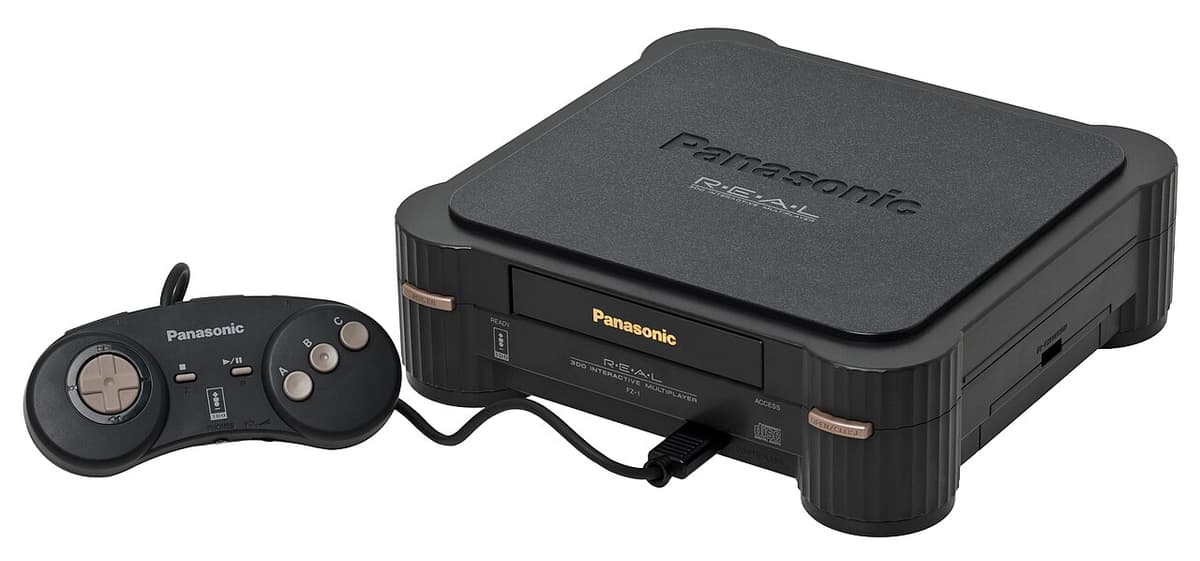
Black Panasonic 3DO console with its controller
Panasonic FZ-1, the first 3DO machinePhoto: Evan-Amos, via Wikimedia Commons, CC BY-SA 3.0.
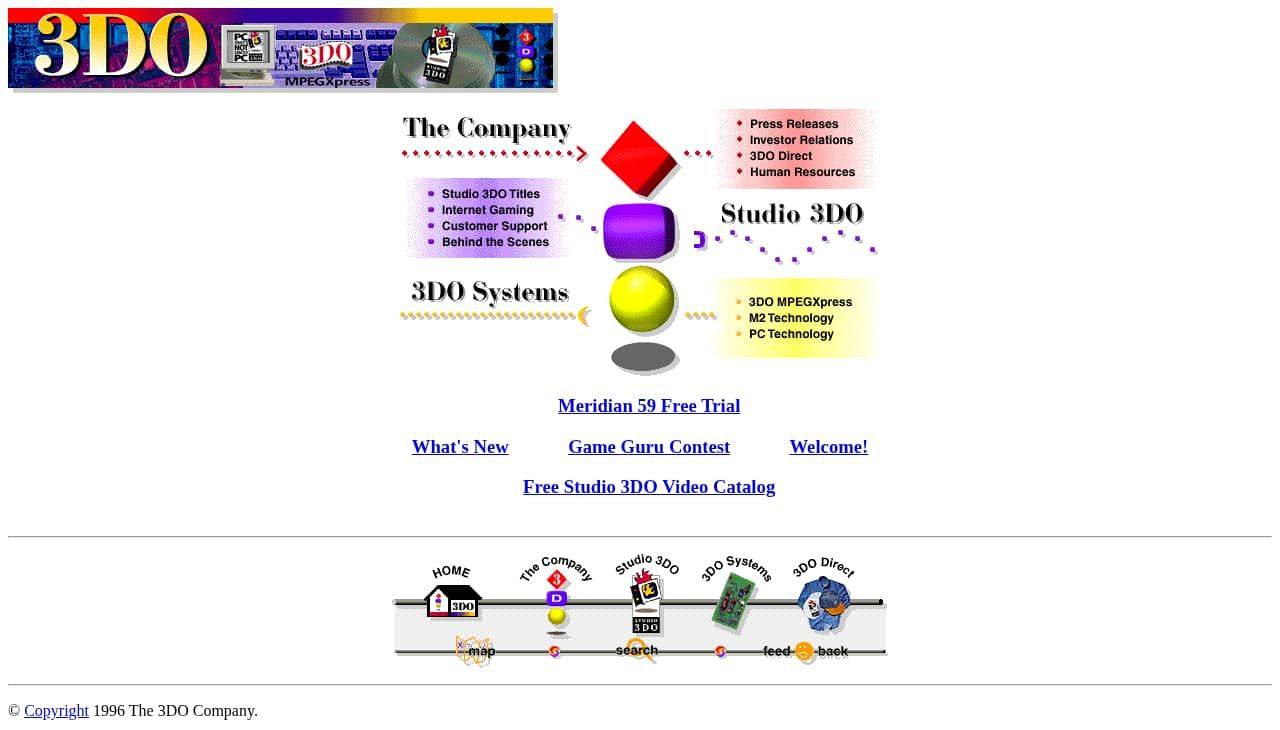
3do.com home page in December 1996 with links for The Company, Studio 3DO and 3DO Systems
3do.com, Dec 1996Cropped from an Internet Archive capture of 3do.com. Shown for commentary; trademarks belong to their owners.
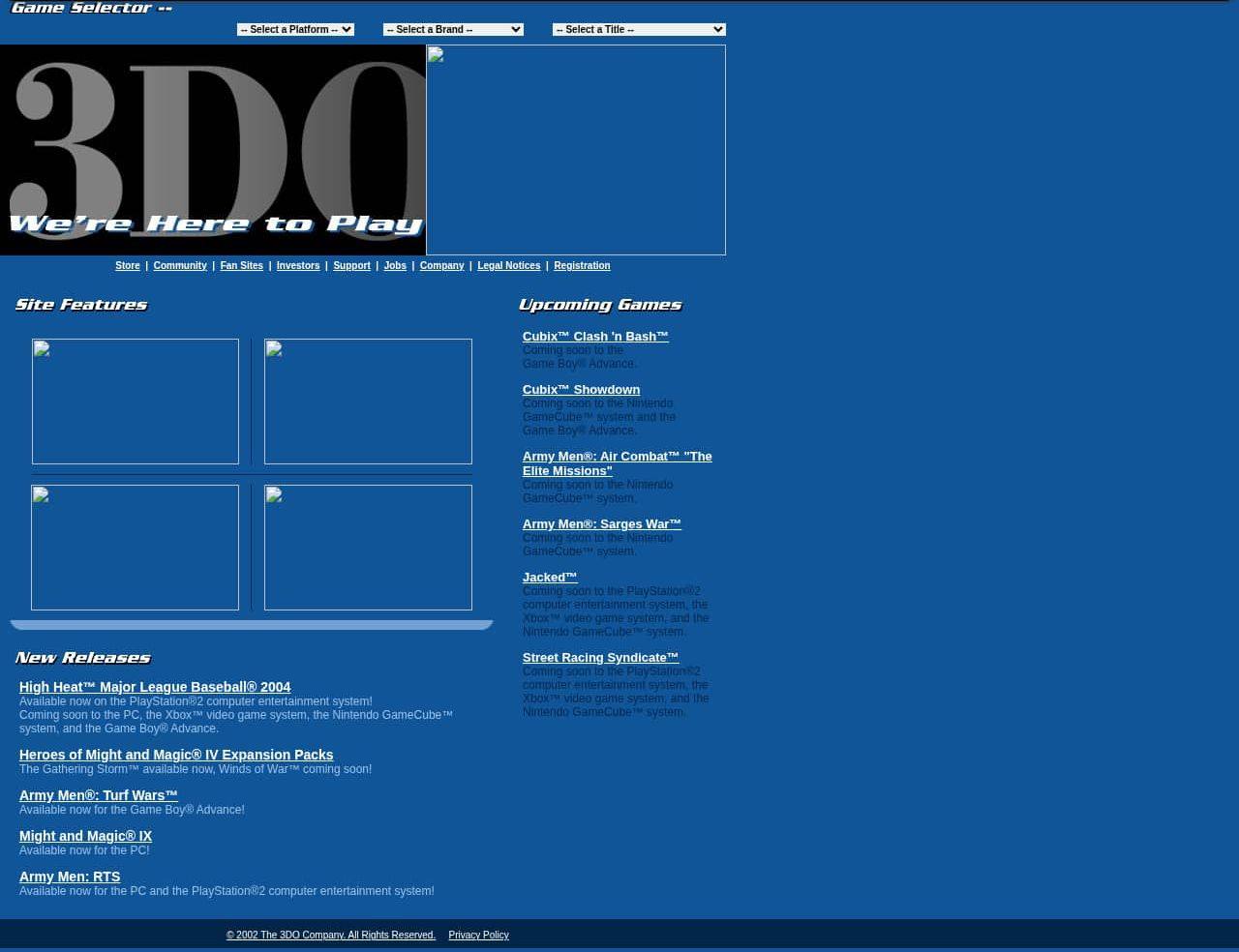
3do.com home page in April 2003 with the line We’re Here to Play
3do.com, Apr 2003Cropped from an Internet Archive capture of 3do.com. Shown for commentary; trademarks belong to their owners.

The 3DO Company did not make its own console. It designed one, licensed the design to Matsushita, Goldstar and others, and planned to live on a royalty from every disc. The machine reached stores in October 1993 at $699 with almost nothing to play. Three years later 3DO sold its next-generation design for $100 million and became a software publisher, had one profitable year on the back of Army Men, and filed for Chapter 11 in May 2003. This post-mortem is built from the company’s 10-K, 10-Q and 8-K filings on SEC EDGAR and from The New York Times, the Los Angeles Times and trade coverage of the period.

The company in four numbers

$699
price of the first 3DO machine in October 1993, when rival consoles sold for as little as $892023
$100M
upfront fee Matsushita paid in 1995–96 for the M2 design, a console it never released126
$262.0M
accumulated deficit on December 31, 2002, in the last balance sheet 3DO filed8
$4.6M
total paid for its games, tools and patents at the bankruptcy auction ($4,585,000)16

Key findings

  1. It set the price of nothing it sold. 3DO licensed the design and collected royalties; Matsushita built the machine and priced it at $699. Hawkins said in 1996: “we had all our eggs in one basket, and we didn’t have control of the basket.”2025
  2. The hardware made money only when it was sold off. 3DO lost $150.5M (derived) from its start to March 1996. Its only large profits, in fiscal 1997 and 1998, came from Matsushita’s $100M licence fee and a $20M sale to Samsung.134
  3. The second company depended on three brands. In fiscal 1999 Army Men, BattleTanx and Might and Magic made up about 75% of revenue.4 Revenue peaked at $122.2M in fiscal 2000 and fell to $53.7M two years later.57
  4. The founder was the lender of last resort. Trip Hawkins lent the company $3M in October 2002 and agreed to lend up to $8M that December. It filed for Chapter 11 five months later.101114
  5. The name outlived the assets. The games went to seven bidders in 2003. In 2026 two firms were still disputing who owns the 3DO trademark.1635

The story

A standard nobody controlled, then a publisher with one hit

3DO was two companies with one name and one founder. The first wanted to license a console to the world’s electronics makers. The second published games for everybody else’s consoles. Both ran out of money.

Chapter 1 of 6

$47.5M

net proceeds of the May 1993 stock offering, five months before there was a product

News segment · 1993The Computer Chronicles: Consumer Electronics Show 1993 The PBS programme’s report from the Las Vegas show where 3DO was unveiled, with new products from Sony, Matsushita, 3DO and MCA. The Internet Archive’s record says it was first broadcast in 1993.40 Watch on the Internet Archive

1991 – Sep 1993 · The standard

A console designed to be built by other people

The company was incorporated as SMSG, Inc. in September 1991, began operations that October and took the name The 3DO Company in September 1992.1 Its founder was Trip Hawkins, who had started Electronic Arts in 1982 and still chaired it.2223

The plan was not to make a console. 3DO would design one, license the design to hardware makers, and license software developers to write for it.1 Hawkins promised developers a royalty of $3 a disc, against the $9 to $12 a game that Sega and Nintendo charged.23

At the Consumer Electronics Show in January 1993 he showed a prototype to a packed room and called it “the next major consumer electronics standard.”1819 Time Warner, Matsushita and AT&T held minority stakes.18 The first machines, the Los Angeles Times noted, would carry “a hefty $700 price tag.”18

In April 1993 3DO bought NTG, a partnership whose only asset was a royalty agreement with 3DO itself, for $21.4M in stock and cash.1 In May it went public on Nasdaq and raised $47.5M after costs.1

This is not just kids’ stuff, it’s not just for nerds and hobbyists.

Trip Hawkins at the Consumer Electronics Show, Los Angeles Times, Jan 8, 199318

Chapter 2 of 6

$699

launch price of Panasonic’s 3DO machine, when a Sega or Nintendo cost as little as $89

Commercial · 1993Panasonic R.E.A.L. 3DO commercial A television spot for Panasonic’s machine, as the uploader titles it. The first 3DO console went on sale in October 1993 at $699.120 The upload gives no air date; we list it under the launch year. Watch on YouTube

Oct 1993 – Dec 1994 · The launch

$699, and nothing to play

The 3DO Interactive Multiplayer went on sale in October 1993. 3DO’s filings call it the first 32-bit, CD-ROM-based video game console on the market.1 Matsushita made it and sold it under the Panasonic name at $699.2021 The Times later reported that 3DO’s designers had added a megabyte of memory, which pushed the retail price up.23

The shares touched $47.75 that month.23 In November a Matsushita vice president said the machine was not selling well because only four games were available; a colleague replied that 40,000 had been shipped to the United States and more than 70% had been bought.21

Software ran three to six months late. John Madden Football, heavily advertised, did not reach stores until March 1994.23 In May AT&T said it would not make a 3DO machine after all.23 In June Hawkins gave up the chairmanship of Electronic Arts to work on 3DO full time.22

By Christmas 1994 the price was $399, Goldstar was selling a second model and more than 100 titles were out. But 3DO had about $21M of cash, enough by Hawkins’s own estimate for about seven months.23

Chapter 3 of 6

300,000

machines Matsushita said it had sold worldwide by September 1994

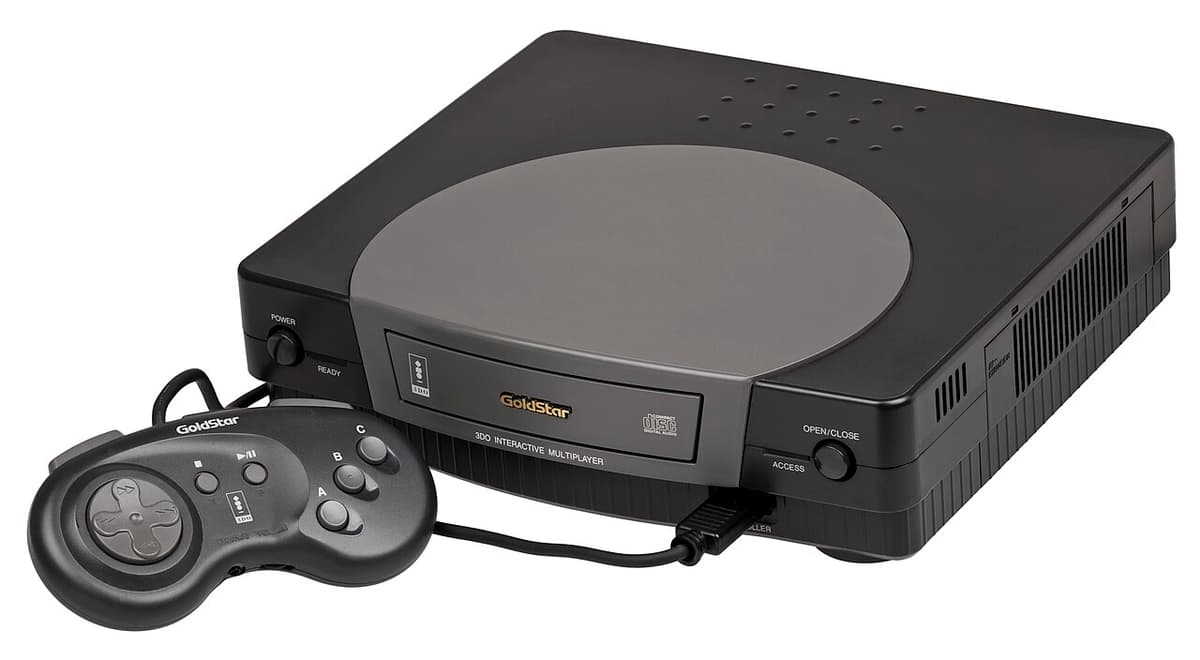
Goldstar 3DO console with its controller
Goldstar’s 3DO machine. Goldstar left the 32-bit business in February 1996.1 Photo: Evan-Amos, via Wikimedia Commons, CC BY-SA 3.0.

1994 – 1995 · The squeeze

A surcharge on the developers, and Sony at the door

The licensing model had a flaw. The hardware makers were selling machines at a loss and had no reason to make more of them, while 3DO collected the royalties.23 In October 1994, to persuade Matsushita to raise production and cut its price, Hawkins faxed every developer a notice of an extra $3 fee on each game, on top of the $3 they already paid. He rolled it back to $1 for the rest of the year after an outcry.23

Matsushita said it had sold 200,000 machines in Japan and 100,000 elsewhere by September 1994. It had earlier forecast half a million in the United States alone that year.23

Then the competition arrived. Sega sold out of 250,000 Saturns in Japan after November 22, 1994, and Sony sold 100,000 PlayStations in two days in December.23 Both launched in the United States in 1995. Sanyo and Creative Technology stopped investing in their 3DO machines that year, Goldstar quit in February 1996, and Matsushita then said it would make no more.1

3DO lost $51.4M, $46.3M and $34.7M in the three fiscal years to March 1996.1 The filings we read give no count of machines sold.

The stock is a binary event. Either it will be worth a lot, or it will be worth nothing.

Keith Benjamin, analyst, Robertson Stephens, The New York Times, Dec 11, 199423

Chapter 4 of 6

$100M

upfront licence fee from Matsushita for the 64-bit M2 design

Original illustration. M2 was licensed for $100M in 1995 and shelved by its buyer in 1997.126 Not a depiction of the actual board.

Dec 1995 – Jul 1997 · The exit

The $100 million console that never shipped

3DO’s best deal was for a machine nobody could buy. On December 7, 1995 it granted Matsushita a perpetual, exclusive licence to M2, its unfinished 64-bit design, for $100M upfront plus royalties. Matsushita would decide when, whether and at what price to launch it.1

The fee turned two years of the accounts black: net income of $13.3M in fiscal 1997 and $22.5M in fiscal 1998.4 Meanwhile 3DO bought game studios: Cyclone in November 1995, Archetype, maker of the online game Meridian 59, in May 1996, and New World Computing, the home of Might and Magic, in June 1996.225

On September 16, 1996 the company said it would become a software publisher and sell or spin off the hardware group, cutting jobs from 450 to 300.25 On June 23, 1997 Samsung bought most of that group for $20M.3 In early July Matsushita’s president told reporters it had stopped developing the M2 console.26 Later that month Matsushita handed back about 3.2 million 3DO shares and 3DO gave up its remaining M2 royalties.3

If you look at the original concept, we had all our eggs in one basket, and we didn’t have control of the basket.

Trip Hawkins, Los Angeles Times, Sep 17, 199625

Chapter 5 of 6

$122.2M

revenue in the year to March 2000, the peak, with net income of $0.2M

Commercial · 1999Army Men 3D for PlayStation 3DO’s 10-K says it ran television campaigns for Army Men 3D on the PlayStation in fiscal 1999, the year Army Men was 31% of its revenue.45 The 1999 date on this copy is the uploader’s. Watch on YouTube

1997 – Mar 2000 · The second company

Little green soldiers and one profitable year

As a publisher 3DO started small: $9.4M of software revenue in fiscal 1998.4 Then it found a formula. Army Men, a series about plastic toy soldiers, brought in 31% of fiscal 1999 revenue; BattleTanx 19%; Might and Magic 25%.4 The company bought television time for Army Men 3D on the PlayStation and BattleTanx on the Nintendo 64.5

Revenue rose from $48.0M in fiscal 1999 to $122.2M in fiscal 2000, and staff from 353 to 495.45 In August 1999 a share offering raised $46.4M.5

It was the only year the publisher did not lose money, and the profit was $0.2M.6 In June 2000 3DO warned that the new fiscal year would fall short of forecasts, citing weaker PlayStation sales and $8M to $12M of extra spending on games for the next consoles. Its finance chief said he would leave.27

Chapter 6 of 6

$4.6M

paid at auction on August 14, 2003 for the games, tools and patents

Original illustration. The franchises were sold lot by lot on August 14, 2003.16

2000 – Aug 2003 · The end

The Bank of Trip, and an auction

3DO lost $77.0M in fiscal 2001 and $47.3M in fiscal 2002, on revenue that fell to $53.7M.7 It cut 160 jobs, and its 2002 annual report warned of “substantial doubt” about its ability to continue.7 In August 2002 it merged every eight shares into one.9

In 1994 Hawkins had joked about “the Bank of Trip.”23 In October 2002 it opened: he lent the company $3M, and in December agreed to lend up to $8M.1011 In the nine months to December 2002 3DO released one new title and took in $20.0M.8

On May 2, 2003 it gave notice of a mass layoff. On May 13 it said March-quarter revenue was about $10.0M and blamed, in part, the Iraq war.1213 On May 28 it filed for Chapter 11.14 The shares closed the next day at 46 cents.29

On August 14 the bankruptcy court auctioned the assets for $4,585,000. Namco, Ubi Soft, Microsoft, Crave, JoWooD, a patent buyer and Hawkins himself were the winners.16 3DO told shareholders to expect nothing.16

This filing gives us more time to complete transactions in the interest of our stakeholders.

Trip Hawkins, 3DO press release, May 28, 200314

Timeline

Thirty-five years, 35 moments

From a licensing plan to a courtroom auction, and a trademark quarrel 23 years later. Filter by thread.

All 35 events as a list
  1. Sep1991
    Corporate

    Incorporated as SMSG, Inc.

    The company is incorporated in California and begins operations in October. It takes the name The 3DO Company in September 1992.1

  2. Jan1993
    Product

    Prototype shown at CES

    Trip Hawkins demonstrates the system in Las Vegas and calls it the next consumer electronics standard. AT&T joins Time Warner and Matsushita as an investor. The first machines are expected to cost about $700.1819

  3. Apr 161993
    Money

    NTG bought for $21.4M

    3DO buys the partnership that held a royalty agreement over its technology, for 1,840,000 shares and cash.1

  4. May1993
    Money

    Goes public on Nasdaq

    Shares begin trading under the symbol THDO. The offering raises $47.5M after costs.1

  5. Oct1993
    Product

    The 3DO Multiplayer goes on sale

    Matsushita sells the first machine under the Panasonic name at $699. The shares reach $47.75 during the month.12023

  6. Nov 191993
    Product

    “Only four games”

    A Matsushita vice president says the machine is selling poorly for lack of software. Colleagues answer that 40,000 have been shipped to the United States and more than 70% sold.21

  7. Jan1994
    Corporate

    3DO opens its own studio

    After a disappointing Christmas the company begins making games itself, in competition with its licensees.23

  8. May1994
    Corporate

    AT&T pulls out

    AT&T says it will not make consumer products based on the 3DO design. Shareholders file securities suits the same month; they are dismissed in July 1995.231

  9. Jun1994
    Corporate

    Hawkins leaves the EA chair

    He steps down as chairman of Electronic Arts to concentrate on 3DO.22

  10. Sep1994
    Product

    300,000 machines

    Matsushita says it has sold 200,000 in Japan and 100,000 elsewhere, short of an earlier forecast of half a million in the United States alone.23

  11. Oct1994
    Money

    The $3 surcharge

    Hawkins faxes developers a notice of an extra $3 fee per game to subsidise hardware makers. He cuts it to $1 for the rest of 1994.23

  12. Nov 221994
    Rivals

    Saturn and PlayStation launch in Japan

    Sega sells out of 250,000 Saturns. Sony sells 100,000 PlayStations in two days from December 3.23

  13. Dec1994
    Product

    Price down to $399

    The list price has fallen from $699 in a year. The machine is in more than 6,000 stores. 3DO has about $21M of cash.23

  14. 1995
    Rivals

    Sega and Sony reach the U.S.

    Both launch 32-bit CD-ROM consoles in 1995. Sanyo and Creative Technology stop investing in their 3DO machines.1

  15. Sep1995
    Product

    M2 for the PC

    Hawkins says 3DO will make a version of its next-generation M2 technology for personal computers.24

  16. Dec 71995
    Money

    M2 licensed for $100M

    Matsushita takes a perpetual, exclusive licence to the 64-bit M2 design for $100M upfront plus royalties.1

  17. Feb1996
    Rivals

    Goldstar quits

    LG Electronics (Goldstar) leaves the 32-bit business. Matsushita later says it will make no more 3DO Multiplayers.1

  18. Jun1996
    Corporate

    New World Computing bought

    3DO pays about 1 million shares, and later about $5.0M in cash under a price guarantee, for the studio behind Might and Magic.4

  19. Sep 161996
    Corporate

    “An about-face”

    3DO says it will become a software company and sell or spin off its hardware group, cutting jobs from 450 to 300.25

  20. Jun 231997
    Money

    Hardware sold to Samsung

    Samsung buys most of the hardware systems group for $20.0M. 3DO books a gain of $18.0M.3

  21. Jul1997
    Product

    M2 console shelved

    Matsushita’s president says the company has stopped developing the M2 console. On July 23 it returns about 3.2 million 3DO shares and 3DO gives up its M2 royalties.263

  22. Mar1999
    Product

    Army Men carries the publisher

    In the year to March 31, 1999 Army Men is 31% of revenue, Might and Magic 25% and BattleTanx 19%.4

  23. Aug1999
    Money

    $46.4M raised

    A second public offering of shares brings in about $46.4M after costs.5

  24. Mar2000
    Money

    The peak

    Revenue for the year to March 31, 2000 is $122.2M, up 154%. Net income is $0.2M.56

  25. Jun2000
    Money

    Profit warning

    3DO says fiscal 2001 will lag estimates. Its chief financial officer plans to leave. The shares close at $5.59.27

  26. Mar2001
    Money

    A $77.0M loss

    The loss for the year to March 31, 2001. Sixty-nine jobs are cut.7

  27. Mar2002
    Bankruptcy & end

    “Substantial doubt”

    Revenue falls to $53.7M with a $47.3M loss. The workforce has been cut by 160 and the annual report raises doubt about the company’s survival.7

  28. Aug 222002
    Money

    One-for-eight reverse split

    Every eight shares become one.9

  29. Oct 12002
    Money

    Hawkins lends $3M

    The chief executive lends the company $3,000,000, secured on all its assets. On December 27 he agrees to lend up to $8,000,000.1011

  30. May 132003
    Bankruptcy & end

    “Strategic options”

    3DO says March-quarter revenue was about $10.0M and that it is considering a sale or merger. It gave notice of a mass layoff on May 2.1213

  31. May 282003
    Bankruptcy & end

    Chapter 11

    The 3DO Company and its California subsidiary file in the Northern District of California.14

  32. Jun 92003
    Bankruptcy & end

    Delisted

    Nasdaq removes the shares from the National Market.15

  33. Aug 142003
    Bankruptcy & end

    The auction

    The assets are sold in bankruptcy court for $4,585,000. Hawkins resigns from the board on August 29.16

  34. Dec 232008
    Bankruptcy & end

    Registration revoked

    The SEC revokes the registration of 3DO’s shares. It had filed no periodic report since the quarter ended December 31, 2002.17

  35. Jul2026
    Afterlife

    A revival, cancelled in a week

    Empire Interactive says it has bought The 3DO Company trademark, then withdraws after Throwback Entertainment says it owns the 3DO mark.3537

Goldstar 3DO console and controller
1994–96 Goldstar’s 3DO machine, on sale in the United States by December 1994.23Photo: Evan-Amos, via Wikimedia Commons, CC BY-SA 3.0.

Part 2 of 6

Business

The numbers · Rivals

The money

Two peaks, both followed by a cliff

3DO’s fiscal years ended on March 31. Its 10-K filings on SEC EDGAR cover every year from the first to fiscal 2002; the company went bankrupt before filing one for fiscal 2003. All figures are as first reported unless noted.

Revenue, fiscal 1994 to 2003

$ millions, years ending March 31. The first peak is a licence fee. The second is Army Men.

$0.0M$50.0M$100.0M$150.0MFY94FY95FY96FY97FY98FY99FY00FY01FY02FY03123456$0.0M$50.0M$100.0M$150.0MFY94FY96FY98FY00FY03123456
  1. FY94 · The console’s first year Revenue of $10.3M against a net loss of $51.4M, including a $21.4M charge for buying NTG.1
  2. FY97 · The M2 fee Of $92.4M (derived), $79.2M is hardware royalties and licence fees; Matsushita’s $100M was booked as revenue in stages from fiscal 1996 to fiscal 1998. Software brings in $9.5M.14
  3. FY98 · Hardware sold Samsung buys the hardware group in June 1997. Software revenue is $9.4M.34
  4. FY00 · The publishing peak $122.2M, up 154% in a year, and net income of $0.2M.56
  5. FY02 · Going-concern warning $53.7M of revenue, a $47.3M loss and an accumulated deficit of $251.9M.7
  6. FY03 · The last year About $30M (derived, unaudited): $20.0M in nine months plus about $10.0M in the March quarter. No annual report was filed.81328
Data table
Revenue, fiscal 1994 to 2003
Fiscal year ending March 31Total revenue
FY94$10.3M
FY95$30.4M
FY96$37.9M
FY97$92.4M
FY98$38.9M
FY99$48.0M
FY00$122.2M
FY01$82.8M
FY02$53.7M
FY03$30.0M
FY94–FY96: 10-K for fiscal 19961. FY97–FY99: 10-K for fiscal 1999; FY97 and FY98 are derived by adding its software and hardware segments4. FY00: 10-K for fiscal 20005. FY01: 10-K for fiscal 20016. FY02: 10-K for fiscal 20027. FY03 is derived from the last 10-Q and a company press release and was never audited813. Later filings restated FY00 to $118.5M and FY01 to $80.0M7.

Net income or loss, every year 3DO reported

$ millions, years ending March 31. Three years in the black out of eleven.

Data table
Net income or loss, every year 3DO reported
PeriodNet income (loss), $M
FY92$-2.7M
FY93$-15.4M
FY94$-51.4M
FY95$-46.3M
FY96$-34.7M
FY97$13.3M
FY98$22.5M
FY99$-13.2M
FY00$0.2M
FY01$-77M
FY02$-47.3M
FY92 (six months from October 1, 1991) to FY96: 10-K for fiscal 19961. FY97–FY99: 10-K for fiscal 19994. FY00–FY02: 10-K for fiscal 20027. In the nine months to December 31, 2002 the company lost a further $10.1M, or $22.8M after preferred dividends and accretion8.

Where the revenue came from, fiscal 1995 to 1999

$ millions. The hardware business earned most when it was being wound up.

Data table
Where the revenue came from, fiscal 1995 to 1999
PeriodHardware systems (royalties, licence fees, development systems)Software publishing
FY95$27.1M$3.3M
FY96$30.6M$7.3M
FY97$82.8M$9.5M
FY98$29.5M$9.4M
FY99$0M$48M
Segment table in the 10-K for fiscal 19994. Rounded from thousands of dollars.

The M2 deal, in 3DO’s own figures

$100M
upfront licence fee from Matsushita, agreed December 7, 1995 and paid in two instalments of $60M and $40M1
$10M
of that withheld as Japanese tax, $6.0M and $4.0M, leaving $90M (derived)1
$20.0M
paid by Samsung for most of the hardware group on June 23, 1997, for a gain of $18.0M3
3.2M
3DO shares Matsushita returned in July 1997 when 3DO gave up its M2 royalties3
10-K filings for fiscal 1996 and fiscal 1998.13

What the auction raised, and from whom

Winning bids on August 14, 2003, as the trade press reported them. Thousands of dollars.

$4585K Total, per 3DO’s 8-K
$1500K 33%Namco: Street Racing Syndicate$1300K 28%Ubi Soft: Might and Magic$750K 16%Crave: Army Men$450K 10%Microsoft: High Heat Baseball$405K 9%Trip Hawkins: older titles and internet patents$90K 2%JoWooD: Jacked$75K 2%Patent Purchase Manager: tools and IP$15K 0%Not itemised (derived remainder)$1500K 33%Namco: Street Racing Syndicate$1300K 28%Ubi Soft: Might and Magic$750K 16%Crave: Army Men$450K 10%Microsoft: High Heat Baseball$405K 9%Trip Hawkins: older titles andinternet patents$90K 2%JoWooD: Jacked$75K 2%Patent Purchase Manager: tools andIP$15K 0%Not itemised (derived remainder)
  • Namco: Street Racing Syndicate. An unfinished game30
  • Ubi Soft: Might and Magic. Heroes of Might and Magic30
  • Crave: Army Men. 31
  • Microsoft: High Heat Baseball. Figure from one report32
  • Trip Hawkins: older titles and internet patents. $200K + $205K31
  • JoWooD: Jacked. 31
  • Patent Purchase Manager: tools and IP. 31
  • Not itemised (derived remainder). 4,585 − 4,570
Data table
What the auction raised, and from whom
Where it wentAmountShareNote
Namco: Street Racing Syndicate$1500K33%An unfinished game
Ubi Soft: Might and Magic$1300K28%Heroes of Might and Magic
Crave: Army Men$750K16%
Microsoft: High Heat Baseball$450K10%Figure from one report
Trip Hawkins: older titles and internet patents$405K9%$200K + $205K
JoWooD: Jacked$90K2%
Patent Purchase Manager: tools and IP$75K2%
Not itemised (derived remainder)$15K0%4,585 − 4,570
Total and list of winning bidders: 3DO’s 8-K of September 5, 200316. Individual prices: GamesIndustry.biz, August 18 and 20, 20033031, and Nintendo World Report for the Microsoft bid32. The filing does not give prices by lot, so the split is the press’s and the last line is a derived remainder.
The share price, at the dates a source gives one
$47.75peak in October 1993, the month the console launched23
$10.63in December 1994, quoted as $10.62523
$15.81highest close in the March 2000 quarter, the best of the publishing years5
46¢on May 29, 2003, the day after the filing, down 65%29
The New York Times23, 3DO’s 10-K for fiscal 20005 and CNET29. Prices after August 22, 2002 follow a one-for-eight reverse split9, so the last figure is not comparable with the others: 46 cents then is under 6 cents in old shares (derived: $0.46 ÷ 8).

How many 3DO machines were sold is not in the company’s filings. Matsushita, the main manufacturer, gave 300,000 worldwide as of September 1994.23 A lifetime figure of about 2 million is widely repeated; we could not trace it to a primary source and treat it as unverified.

The rivals

Cheaper machines below it, stronger ones behind it

3DO had a year’s head start on the 32-bit consoles. It spent that year at the highest price in the shop, and the companies that followed sold their own hardware at prices they chose.

What a console cost, 1993–1994

Prices as reported by The New York Times. The Saturn and PlayStation prices are Japanese launch prices converted by the Times.

3DO (Panasonic), October 1993
$699
Launch price2023
Philips CD-i, January 1993
$600
A CD player for the television, not a 32-bit console19
Sega Saturn, Japan, November 1994
$448
3DO, December 1994
$399
List price after cuts23
Sony PlayStation, Japan, December 1994
$399
Sega or Nintendo 16-bit system, 1993
$89
“As little as $89”23
Data table
What a console cost, 1993–1994
MachinePriceNote
3DO (Panasonic), October 1993$699Launch price
Philips CD-i, January 1993$600A CD player for the television, not a 32-bit console
Sega Saturn, Japan, November 1994$448
3DO, December 1994$399List price after cuts
Sony PlayStation, Japan, December 1994$399
Sega or Nintendo 16-bit system, 1993$89“As little as $89”
The New York Times, January 8, 199319, September 9, 199320 and December 11, 199423.

One 3DO for the price of nearly eight 16-bit consoles

$699the 3DO at launch, October 199323
=
8 ×the cheapest Sega or Nintendo system at the time23 ($89)

Derived $699 ÷ $89 ≈ 7.9, shown as 8. Both prices are from the same New York Times article.23

Data table
One 3DO for the price of nearly eight 16-bit consoles
Value
the 3DO at launch, October 1993$699
the cheapest Sega or Nintendo system at the time$89
Ratio8 (derived)

Who won, who died

The CD-based machines of 1993–1995, with the one sales figure our sources give for each.

3DO Interactive Multiplayer

Abandoned by 1996
300,000 by Sep 1994 Matsushita’s count, eleven months after launch: 200,000 in Japan and 100,000 elsewhere. Every licensee had stopped making it by 1996.231

Sega Saturn

Dead
250,000 in under three weeks Sold out in Japan after its November 22, 1994 launch. Reached the United States in 1995.231

Sony PlayStation

Survived
100,000 in two days Sony’s entire first Japanese shipment, from December 3, 1994. Reached the United States in 1995. 3DO was publishing games for it by 1999.2315

Atari Jaguar

Dead
No count in our sources The Times wrote in December 1994 that 1995 would be a battle “that only two or three contestants will survive,” and named Atari’s machine among them.23

Philips CD-i

Dead
No count in our sources Philips was spending more than $25M on advertising its $600 player when 3DO was unveiled.19
Data table
Who won, who died
CompanyOutcomeEarly salesNotes
3DO Interactive MultiplayerAbandoned by 1996300,000 by Sep 1994Matsushita’s count, eleven months after launch: 200,000 in Japan and 100,000 elsewhere. Every licensee had stopped making it by 1996.
Sega SaturnDead250,000 in under three weeksSold out in Japan after its November 22, 1994 launch. Reached the United States in 1995.
Sony PlayStationSurvived100,000 in two daysSony’s entire first Japanese shipment, from December 3, 1994. Reached the United States in 1995. 3DO was publishing games for it by 1999.
Atari JaguarDeadNo count in our sourcesThe Times wrote in December 1994 that 1995 would be a battle “that only two or three contestants will survive,” and named Atari’s machine among them.
Philips CD-iDeadNo count in our sourcesPhilips was spending more than $25M on advertising its $600 player when 3DO was unveiled.
The New York Times1923 and 3DO’s 10-K filings15. The figures are from different dates and markets and are not directly comparable. That the Saturn, Jaguar and CD-i were later discontinued and that the PlayStation line continues is general knowledge.
Licensed the design

3DO

Who built the machine
Matsushita, Goldstar, Sanyo and others1
Who set the price
The manufacturer2023
Royalty per game
$3, then a disputed $3 surcharge23
Hardware losses
Fell on the licensees23
Sega and Nintendo sold their own hardware

The incumbents

Who built the machine
The platform owner
Who set the price
The platform owner
Royalty per game
$9 to $12, by the Times’s account23
Hardware losses
Not addressed in our sources
The New York Times, December 11, 199423, and 3DO’s 10-K for fiscal 19961. The right-hand column describes the incumbents’ model as the Times described it, not audited figures.

The [64-bit based gaming] market has matured and it is difficult to make a fresh entry.

Yoichi Morishita, president of Matsushita, on shelving the M2 console, as reported by Kyodo and quoted by GameSpot, Jul 3, 199726

Part 3 of 6

Brand

Commercials & footage · Old website · Brand gallery

Commercials & footage

The most advanced home gaming system in the universe

The 1993 unveiling as public television showed it, the founder on network news, two Panasonic commercials, the Army Men campaign that paid for the second company, and a later look back. Where a date comes only from the uploader, the caption says so.

News segment · 1993The Computer Chronicles: Consumer Electronics Show 1993 The PBS programme’s report from the Las Vegas show where 3DO was unveiled, with new products from Sony, Matsushita, 3DO and MCA. The Internet Archive’s record says it was first broadcast in 1993.40 Watch on the Internet Archive
Interview · 1993Trip Hawkins on CBS News A two-minute consumer report by Herb Weisbaum on the 3DO and Atari’s Jaguar, with Hawkins interviewed. The 1993 date and the CBS attribution are the uploader’s; the clip was posted in March 2024.39 Watch on YouTube
Commercial · 1993Panasonic R.E.A.L. 3DO commercial A television spot for Panasonic’s machine, as the uploader titles it. The first 3DO console went on sale in October 1993 at $699.120 The upload gives no air date; we list it under the launch year. Watch on YouTube
Commercial · 19943DO: “Toys” A spot the uploader titles “Toys” and dates 1994. The machine’s target audience, the Times wrote that December, was men between 18 and 45.23 Watch on YouTube
Commercial · 1999Army Men 3D for PlayStation 3DO’s 10-K says it ran television campaigns for Army Men 3D on the PlayStation in fiscal 1999, the year Army Men was 31% of its revenue.45 The 1999 date on this copy is the uploader’s. Watch on YouTube
Retrospective · 2020Matt McMuscles: “The 3DO: What Happened?” A twenty-minute retrospective published in October 2020. It is commentary, not a source for any figure on this page. Watch on YouTube

Videos are embedded from the services that host them and load only when you press play. YouTube embeds use youtube-nocookie.com. Each video belongs to its uploader or rights holder and is shown here for commentary; we do not host any of the files. We found no embeddable news footage of the 2003 bankruptcy or the auction.

The old website

3do.com, from three divisions to a list of games

Screenshots of pages saved by the Internet Archive’s Wayback Machine, stored as images. Click one to open the original capture. A capture from May 2000, the peak year, had lost nearly all its images and is not shown.42

Screenshot of http://www2.3do.com/ as archived Dec 30, 1996

Captured Dec 30, 1996

After the about-face

Three months after 3DO said it would become a software company25, the home page still gives equal space to 3DO Systems, the hardware group Samsung would buy the following June.3 The online game Meridian 59 gets the top link.

Open this capture on the Wayback Machine

Text preserved in the archived pages

Three sections: The Company, Studio 3DO and 3DO Systems, the last offering “3DO MPEGXpress”, “M2 Technology” and “PC Technology”.
3do.com · Dec 30, 199642
“Meridian 59 Free Trial”
3do.com · Dec 30, 199642
“We’re Here to Play”
3do.com · Apr 1, 200342
Upcoming games: “Jacked”, “Street Racing Syndicate” and two Army Men titles for the GameCube. New releases: “High Heat Major League Baseball 2004” and “Army Men: RTS”.
3do.com · Apr 1, 200342

Several images in the 2003 page were never archived and show as empty boxes.

Part 4 of 6

People

People · Press

The people

Who ran it, who built it and who said no

Titles are as given in the filings and the press at the time. Later careers are left out where we have no source.

People (7)
Name and roleWhat they didAfterwards
William M. “Trip” Hawkins IIIFounder, chairman and CEO, 1991 – 2003

An early Apple employee who founded Electronic Arts in 1982 and gave up its chairmanship in 1994 to run 3DO. He had put $15M of his own money in by late 1994, owned about 38% of the shares in 2002, lent the company money in its last months and bought two lots at its auction.710162223

Described in 2014 as the founder of Electronic Arts and Digital Chocolate, when he became an adviser to the mobile company Skillz.38
Hugh MartinPresident from Oct 1995

Chief operating officer from January 1993. He took full operating control in the September 1996 reorganization, when Hawkins moved to a creative role.225

Dave Needle and RJ MicalNTG engineers

Named in 3DO’s filings as parties, with NTG Engineering, to the 1993 agreements under which 3DO acquired NTG for $21.4M in stock and cash.1

Bob FaberSenior vice president, sales and marketing, 1993

Said he “sighed with relief” when Nintendo and Silicon Graphics announced their console partnership in August 1993, because it showed they were starting from scratch.20

John AdamsChief financial officer until 2000

His plan to leave was announced with the June 2000 profit warning.27

Vinod KhoslaEarly investor and director

The venture capitalist told the Times in 1994, after the developer surcharge: “Trip doesn’t appreciate the finer nuances of social relationships.”23

Yoichi MorishitaPresident of Matsushita

Announced in July 1997 that Matsushita had stopped developing the M2 console it had paid 3DO $100M to license.126

The clippings

What they said at the time

Press (10)
It will be the next major consumer electronics standard.
Trip Hawkins, at the Consumer Electronics Show, The New York Times, Jan 8, 199319
If you look at the original concept, we had all our eggs in one basket, and we didn’t have control of the basket.
Trip Hawkins, Los Angeles Times, Sep 17, 199625
  1. Robert F. Kleiber, analyst, Piper Jaffray, The New York Times, Jan 8, 199319

    It’s wonderful hardware, and it clearly raises the bar.
  2. Michael Murphy, California Technology Stock Letter, The New York Times, Sep 9, 199320

    The valuation is nuts.
  3. Steven Blank, president of the developer Rocket Science, on the royalty surcharge, The New York Times, Dec 11, 199423

    What a P.R. mess.
  4. Trip Hawkins, The New York Times, Dec 11, 199423

    We like to joke about the Bank of Trip.
  5. John Taylor, analyst, L.H. Alton & Co., on Hawkins leaving the Electronic Arts chair, Los Angeles Times, Jun 22, 199422

    Trip is reacting to reality.
  6. Hugh Martin, president of 3DO, Los Angeles Times, Sep 17, 199625

    The game business climate right now dictates that we make hits and conserve cash.
  7. Trip Hawkins, 3DO press release, May 13, 200313

    Market conditions for us appeared to take a turn for the worse when the war with Iraq began.
  8. Işık Şekercigil, Empire Interactive, to Time Extension, Jul 202635

    We acquired the rights to The 3DO Company brand, not the 3DO console brand. Although they may seem identical, they are legally different.

Part 5 of 6

Verdict

Cause of death · What if · Afterlife

Cause of death

The autopsy

Tap a cause to see the evidence. The percentages are our editorial weighting. The evidence under each one is sourced.

Cause of death, by editorial weight

One square is one percentage point. The weights are our judgment, not a measurement.

  1. 30%A licensing model with no control over price or supply
  2. 20%$699 and an empty shelf
  3. 20%Sony and Sega
  4. 20%A publisher that leaned on a few brands
  5. 10%Never enough cash
Data table
Cause of death, by editorial weight
CauseWeight
A licensing model with no control over price or supply30%
$699 and an empty shelf20%
Sony and Sega20%
A publisher that leaned on a few brands20%
Never enough cash10%

3DO designed the console and collected royalties; hardware makers built it at a loss and had no reason to build more. To get Matsushita to raise output 3DO had to tax its own developers. Hawkins later said the company “didn’t have control of the basket.”12325

The first machine cost $699 when a Sega or Nintendo cost as little as $89. A Matsushita executive said a month after launch that only four games were available, and advertised titles ran three to six months late.202123

Sega sold 250,000 Saturns in Japan within three weeks of launch, more than the 200,000 3DO machines Matsushita had sold there by September 1994. Both rivals reached the United States in 1995. Every 3DO hardware licensee had stopped by 1996.123

Three brands made up about 75% of fiscal 1999 revenue. Revenue fell from $122.2M to $53.7M in two years, and CNET wrote at the bankruptcy that Army Men’s popularity had waned and other titles had failed to catch on.45729

3DO had about seven months of cash in December 1994, an accumulated deficit of $262.0M by December 2002, and in its last months ran on secured loans from its own chief executive.810112328

Editorial judgment: the weights are an interpretive model by the Spectre Brands editors, not a measured quantity. The filings and the press of the time document the symptoms. How much each one contributed is a matter of opinion.

The fork in the road

What if…

Four decisions where the story could have gone differently. The “What if” panels are speculation, labeled as such.

What happened

Panasonic’s machine launched at $699 in October 1993 and was cut to $399 about a year later.2023 That December Sony introduced the PlayStation in Japan at $399.23

What if speculative

A $399 launch would have needed someone to absorb $300 a unit (derived: $699 − $399). 3DO had raised $47.5M in its offering1; that sum would have covered the gap on fewer than 160,000 machines (derived: $47.5M ÷ $300). The model had no one whose job it was to pay.

What happened

3DO licensed the design and left manufacturing, pricing and distribution to Matsushita, Goldstar and others.1 In 1996 Hawkins said the company had not had “control of the basket.”25

What if speculative

Sega and Nintendo sold their own hardware and charged developers $9 to $12 a game.23 Doing the same would have given 3DO control of the price. It would also have required far more capital than a start-up with a $3 royalty could raise.

What happened

Matsushita’s $100M fee and Samsung’s $20M produced net income of $13.3M and $22.5M in fiscal 1997 and 1998.134 3DO then built a publishing business that lost $13.2M, made $0.2M, and lost $77.0M and $47.3M in the next four years.467

What if speculative

Winding down in 1998 with the hardware proceeds would have left shareholders something. Instead the company raised another $46.4M in 19995 and ended with an auction that brought $4.6M and nothing for the shares.16

What happened

In the March 2000 quarter the shares closed as high as $15.81 and revenue for the year was $122.2M.5 Three months later came the profit warning.27 By May 2003 the company was looking for a buyer from inside Chapter 11.14

What if speculative

A sale or merger in early 2000 would have been made from strength. The Might and Magic, Army Men and High Heat brands fetched $2.5M between them in 2003 (derived: $1.3M + $0.75M + $0.45M).303132

Where are they now

The afterlife

3DO

  1. The company

    Liquidated

    3DO said after the auction that it would wind down, distribute what remained to creditors and that shareholders should expect nothing.16 The SEC revoked the registration of its shares on December 23, 2008, describing it as a void Delaware corporation whose bankruptcy case was still pending.17

  2. Might and Magic

    Sold

    Ubi Soft’s winning bid for the Heroes of Might and Magic franchise was $1.3M.30 It was the oldest of 3DO’s brands, bought with New World Computing in 1996.4

  3. Army Men

    Sold

    Crave Entertainment paid $750,000 for the series that had been 31% of 3DO’s revenue in fiscal 1999.314

  4. High Heat Baseball and the rest

    Sold

    Microsoft took High Heat Baseball, reportedly for $450,000. Namco paid $1.5M for the unfinished Street Racing Syndicate and JoWooD about $90,000 for Jacked.303132

  5. Trip Hawkins

    Bought back

    The founder was among the winning bidders at his own company’s auction: $200,000 for older titles and $205,000 for internet patents. He resigned from the board on August 29, 2003.1631 The trade press later described him as the founder of Electronic Arts and Digital Chocolate.38

  6. The older games

    Re-released

    In April 2020 Ziggurat Interactive bought more than 30 titles “originally owned by The 3DO Company and its affiliates”, among them Killing Time, Captain Quazar and Requiem: Avenging Angel, from Prism Entertainment of Palo Alto, and put them on Steam and GOG.3334

  7. The name

    Disputed

    In July 2026 a company trading as Empire Interactive announced it had acquired “the trademark and select intellectual property rights of The 3DO Company” and talked of a new console. Throwback Entertainment, a Canadian firm, replied that it owns the 3DO trademark and the 3DO.com domain. Empire withdrew within a week, citing “the likelihood of prolonged legal disputes.”353637 We have not checked either claim against a trademark register.

  8. M2

    Shelved

    Matsushita stopped work on the M2 console in July 1997. Its president said the technology might be used in information or multimedia equipment.26

Who owned the name, and the things that carried it

The hardware, the games and the trademark went separate ways.

  1. Sep 1992

    The 3DO Company

    SMSG, Inc., founded a year earlier, takes the 3DO name.1

  2. Dec 1995

    Matsushita (M2 only)

    Takes an exclusive, perpetual licence to the next-generation M2 design. It never ships an M2 console.126

    $100M
  3. Jun 1997

    Samsung (hardware group)

    Buys most of the hardware systems group’s assets. 3DO keeps its name and becomes a publisher.3

    $20M
  4. May 2003

    The 3DO Company, in Chapter 11

    Files in the Northern District of California, cases 03-31580 and 03-31581.16

  5. Aug 2003

    Seven auction winners

    Namco, JoWooD, Crave, Microsoft, Patent Purchase Manager, Ubi Soft and Trip Hawkins divide the games and patents.16

    $4.585M
  6. Apr 2020

    Ziggurat Interactive (older games)

    Buys more than 30 former 3DO titles from Prism Entertainment. The price was not disclosed in the announcement.33

  7. Jul 2026

    Disputed

    Empire Interactive and Throwback Entertainment each claim a 3DO trademark. No product is on sale under the name.35

Data table
Who owned the name, and the things that carried it
WhenOwnerWhat happenedPrice
Sep 1992The 3DO CompanySMSG, Inc., founded a year earlier, takes the 3DO name.
Dec 1995Matsushita (M2 only)Takes an exclusive, perpetual licence to the next-generation M2 design. It never ships an M2 console.$100M
Jun 1997Samsung (hardware group)Buys most of the hardware systems group’s assets. 3DO keeps its name and becomes a publisher.$20M
May 2003The 3DO Company, in Chapter 11Files in the Northern District of California, cases 03-31580 and 03-31581.
Aug 2003Seven auction winnersNamco, JoWooD, Crave, Microsoft, Patent Purchase Manager, Ubi Soft and Trip Hawkins divide the games and patents.$4.585M
Apr 2020Ziggurat Interactive (older games)Buys more than 30 former 3DO titles from Prism Entertainment. The price was not disclosed in the announcement.
Jul 2026DisputedEmpire Interactive and Throwback Entertainment each claim a 3DO trademark. No product is on sale under the name.
3DO’s SEC filings1316, GameSpot26, Ziggurat Interactive33 and Time Extension35. The filings do not say which auction lot, if any, included the 3DO trademark itself.

Sources & data notes

Show your work

3DO was a Nasdaq company from May 1993, and its annual reports from fiscal 1996 onward are on SEC EDGAR. Those filings, which also restate the earlier years, are the spine of this page. The console years before EDGAR are filled in from The New York Times and the Los Angeles Times.

  1. The 3DO Company — Form 10-K for the fiscal year ended March 31, 1996, filed Jun 28, 1996. Business history, the M2 licence, selected financial data for fiscal 1992–1996, the NTG acquisition and the 1993 offering.
  2. The 3DO Company — Form 10-K for the fiscal year ended March 31, 1997, filed Jun 30, 1997.
  3. The 3DO Company — Form 10-K for the fiscal year ended March 31, 1998, filed Jun 25, 1998. The Samsung sale and the second M2 addendum.
  4. The 3DO Company — Form 10-K for the fiscal year ended March 31, 1999, filed Jun 17, 1999. Segment data for fiscal 1995–1999 and revenue by brand.
  5. The 3DO Company — Form 10-K for the fiscal year ended March 31, 2000, filed Jun 29, 2000.
  6. The 3DO Company — Form 10-K for the fiscal year ended March 31, 2001, filed Jun 29, 2001.
  7. The 3DO Company — Form 10-K for the fiscal year ended March 31, 2002, filed Jul 1, 2002. The last annual report, with the going-concern warning.
  8. The 3DO Company — Form 10-Q for the quarter ended December 31, 2002, filed Feb 14, 2003. The last periodic report the company filed.
  9. The 3DO Company — Form 8-K, filed Aug 22, 2002 (one-for-eight reverse stock split).
  10. The 3DO Company — Form 8-K, filed Oct 7, 2002 ($3,000,000 secured bridge note from William M. Hawkins III).
  11. The 3DO Company — Form 8-K, filed Jan 7, 2003 (Note and Warrant Purchase Agreement with Mr. Hawkins, up to $8,000,000).
  12. The 3DO Company — Form 8-K, filed May 8, 2003 (WARN Act notice of a mass layoff).
  13. The 3DO Company — Form 8-K, filed May 14, 2003, with the press release “The 3DO Company Considers Strategic Options,” May 13, 2003.
  14. The 3DO Company — Form 8-K, filed May 30, 2003, with the press release “The 3DO Company Files Chapter 11,” May 28, 2003.
  15. The 3DO Company — Form 8-K, filed Jun 4, 2003, with the press release “The 3DO Company Notified of Nasdaq Delisting,” May 30, 2003.
  16. The 3DO Company — Form 8-K, filed Sep 5, 2003 (the August 14 auction, its total and winning bidders, board resignations, and the expected liquidation).
  17. U.S. Securities and Exchange Commission — Order Making Findings and Revoking Registrations by Default, Exchange Act Release No. 59156, Dec 23, 2008.
  18. “Is 3-D the Next Step in Home Entertainment?”, Los Angeles Times, Jan 8, 1993.
  19. “Alphabet Soup, With a Dash of Hype”, The New York Times, Jan 8, 1993 (Internet Archive copy).
  20. “Market Place; Investors can only guess which video game device will conquer.”, The New York Times, Sep 9, 1993 (Internet Archive copy).
  21. “3DO Sales Called Pleasing”, The New York Times, Nov 20, 1993 (Internet Archive copy).
  22. “Trip Hawkins to Focus His Efforts on Struggling 3DO”, Los Angeles Times, Jun 22, 1994.
  23. “For 3DO, a Make-or-Break Season”, The New York Times, Dec 11, 1994 (Internet Archive copy).
  24. “Technology: Digital Commerce; 3DO’s chief pauses for a mea culpa, then offers an advanced games machine.”, The New York Times, Oct 2, 1995 (Internet Archive copy; we could read only the opening paragraphs).
  25. “3DO Says ‘I Do’ to a Major Switch in Its Game Strategy”, Los Angeles Times, Sep 17, 1996.
  26. Micheal Mullen, “M2, We Hardly Knew You”, GameSpot News, Jul 3, 1997 (Internet Archive copy), citing Kyodo.
  27. Bloomberg News, “Video Game Maker 3DO Issues Profit Warning”, Los Angeles Times, Jun 8, 2000.
  28. “Game Maker 3DO Files for Chapter 11”, Los Angeles Times, May 29, 2003.
  29. David Becker, “3DO files for bankruptcy”, CNET News.com, May 29, 2003.
  30. Rob Fahey, “Namco, Ubisoft and MS carve up 3DO assets”, GamesIndustry.biz, Aug 18, 2003.
  31. Rob Fahey, “Final results of 3DO asset auctions released”, GamesIndustry.biz, Aug 20, 2003.
  32. Steven Rodriguez, “3DO Sells off Game Properties”, Nintendo World Report, Aug 21, 2003. The only source we found for the price of the Microsoft bid.
  33. Ziggurat Interactive — “Ziggurat Interactive Acquires 3DO Games Catalog from Prism Entertainment”, press release, April 2020.
  34. “Ziggurat Interactive acquires 3DO Game Company portfolio”, GamesIndustry.biz, Apr 27, 2020.
  35. “Empire Interactive Withdraws From ‘3DO Project’ Due To ‘Likelihood Of Prolonged Legal Disputes’”, Time Extension, July 2026, updated Jul 4, 2026.
  36. Phil Hayton, “Plans to revive the 3DO are already dead, with the publisher claiming it ‘did not anticipate such fragmentation of rights’”, GamesRadar+, July 2026.
  37. Daniel Cooper, “A strange attempt to revive the 3DO is already dead”, Engadget, Jul 2, 2026.
  38. “Trip Hawkins joins mobile eSports platform Skillz”, GamesIndustry.biz, Dec 15, 2014.
  39. “Trip Hawkins 3DO and Jaguar interview 1993 | CBS News Herb Weisbaum”, YouTube, uploaded by Mark Swierszcz on Mar 6, 2024. The date and network are the uploader’s.
  40. The Computer Chronicles, “Consumer Electronics Show 1993”, Stewart Cheifet Productions, 1993, in the Internet Archive’s Computer Chronicles collection.
  41. Evan-Amos, photographs of the Panasonic FZ-1 and Goldstar GDO-101M 3DO consoles, Wikimedia Commons, CC BY-SA 3.0.
  42. Internet Archive Wayback Machine — captures of 3do.com: Dec 30, 1996 and Apr 1, 2003.
Data notes (10)

Data notes

Derived: Revenue of $92.4M for fiscal 1997 and $38.9M for fiscal 1998 is the sum of the software and hardware segments in the fiscal 1999 10-K ($9,540K + $82,810K; $9,429K + $29,461K).4 Fiscal 2003 revenue of about $30M is $20.0M for the nine months to December 20028 plus about $10.0M for the March quarter13; it was never audited and no 10-K was filed. Losses of $150.5M to March 1996 are $2.7M + $15.4M + $51.4M + $46.3M + $34.7M.1 The $90M net M2 fee is $100M − $6.0M − $4.0M of Japanese withholding tax.1 Hawkins’s $405,000 at auction is $200,000 + $205,000.31 The $15,000 “not itemised” line in the auction diagram is $4,585,00016 minus the seven reported bids, which total $4,570,000.303132 $699 ÷ $89 ≈ 7.9; $699 − $399 = $300; $47.5M ÷ $300 ≈ 158,000. $0.46 ÷ 8 ≈ $0.06. $1.3M + $0.75M + $0.45M = $2.5M.

As reported and restated: The homepage sparkline and the revenue chart use each year’s figure as first reported: fiscal 1994–96 from the 1996 10-K, 1997–99 from the 1999 10-K, then one 10-K per year, with a derived, unaudited final point. They therefore mix primary and derived figures. The fiscal 2002 10-K restated software revenue to $8.0M (1998), $46.5M (1999), $118.5M (2000) and $80.0M (2001).7 Net income figures for fiscal 2000–2002 are from that same 10-K.

Estimates and press figures: Unit sales (40,000 shipped to the United States by November 1993; 300,000 worldwide by September 1994) are Matsushita’s statements to The New York Times, not audited figures.2123 Prices of individual auction lots are from trade press; 3DO’s 8-K gives only the total and the names of the bidders, and the Microsoft price appears in one outlet only.16303132 Saturn and PlayStation launch figures and prices are as the Times reported them in dollars.23

Unverified: A lifetime total of about 2 million 3DO consoles. An initial offering price of $15 a share (the 10-K gives 3,485,000 shares and $47.5M net of $4.6M costs, which implies about $15, but we did not see the prospectus).1 That Time magazine named the console a product of the year for 1993. The trademark claims made in 2026 by Empire Interactive and Throwback Entertainment, which we report as claims and did not check against any register.35

Conflicts between sources: The launch price is $699 in The New York Times2023, “$700” in other reports182129. The Times in December 1994 still called Hawkins chairman of Electronic Arts, six months after the Los Angeles Times reported he was stepping down.2223 The SEC’s 2008 order says the bankruptcy case “was converted into a Chapter 11 petition” on November 7, 2003, which reads like a slip, since it began as one; we do not state what it was converted to.17

Unknown: How many consoles were sold in total. What creditors recovered. Which buyer, if any, acquired the 3DO trademark in 2003, and who owns it now. Audited results for the year to March 31, 2003. The exact day in October 1993 the console went on sale; a date of October 4 is often given, and we could not confirm it.

The tier: We list 3DO as a ghost, not dead, on a narrow reading: no product is sold under the name, but the name is still being claimed, registered and argued over, and games the company owned are being re-released by others.3335 If the 2026 claims lapse with nothing sold, it should be reclassified as dead.

How we read the sources: SEC filings were downloaded from EDGAR and read as text. Los Angeles Times archive pages loaded directly. New York Times articles were read in Internet Archive copies, which is what we link to; the 1995 article showed only its opening paragraphs. GamesRadar+ and Engadget are used for the 2026 episode alongside Time Extension, which did the original reporting.

Images and video: Console photographs are by Evan-Amos on Wikimedia Commons under CC BY-SA 3.0.41 Website screenshots are Internet Archive captures with the Wayback toolbar cropped off.42 Drawings are original. Air dates of commercials are the uploaders’ unless stated.

General knowledge: That the Sega Saturn, Atari Jaguar and Philips CD-i were later discontinued and that Sony still sells PlayStation consoles. That Panasonic is a Matsushita brand and Goldstar an LG brand.