Data notes (9)
Data notes
Derived: 758 days is November 1, 2016 to November 29, 2018; 34 days is October 26 to November 29, 2018; 130 days is November 29, 2018 to April 8, 2019; 545 days is November 29, 2018 to May 27, 2020; ten days is October 22 to November 1, 2016; sixteen days is October 10 to October 26, 2018.71517193637 $99 ÷ $10.99 ≈ 9.0 months; $99 ÷ 12 = $8.25; $10.99 × 12 − $99 = $32.88.4 600 ÷ 1,800 ≈ 33% and 1,200 ÷ 1,800 ≈ 67%.12 100,000 ÷ 15,000,000 ≈ 0.7% and 137,000,000 ÷ 100,000 = 1,370.42331 100,000 × $10.99 × 12 = $13.19M, and $13.19M ÷ $31,000M ≈ 0.04%.41623 $38.5B + $42.5B = $81.0B is AT&T’s own sum.15 “21” signers counts Christopher Nolan and Emma Thomas separately, as The Hollywood Reporter’s total does.2630
Estimates: The only subscriber figure is the Los Angeles Times’s “estimated 100,000 subscribers,” published on November 3, 2018 without a stated source; a column in the same paper the day before used the same number.2223 The Ringer repeated it and credited the Times.31 Turner and Warner Bros. declined to give a number in February and October 2018.1219 Treat every calculation on this page that uses 100,000 as an illustration. Turner’s figure of 15 million interested Americans was its own extrapolation from a commissioned survey.4 Petition counts before 2026 are the round numbers reporters gave.21242730
The homepage sparkline: The card’s series (0, 900, 1,100, 1,200, 1,800, 1,800, 0) is the catalog size as reported by four outlets between October 2016 and October 2018, with zero before launch and after closure.571219 The counts are not like for like: 900 was a promise for the base service, 1,100 was described as the complete collection, and 1,200 is Variety’s later round figure for launch.
Conflicts between sources: The size of the launch catalog is “more than 900” films in Multichannel News, “more than 1,100” in The Verge and “around 1,200” in Variety sixteen months later; TechCrunch gives the Criterion Channel alone 1,200 titles.57812 Criterion’s post announcing its independent channel is dated November 15, 2018 on the archived page, while The Hollywood Reporter says the plan was revealed on Friday, November 16; Criterion’s video is dated November 20.293041 AT&T’s filing values the consideration paid for Time Warner at about $81.0B; the Los Angeles Times calls it an $85.4-billion merger.1522 AT&T’s press release is datelined June 15, 2018, the day after the filing says the merger was completed.1516 Variety says FilmStruck “debuted in November 2016”; the trademark record gives first use as November 1, 2016, which matches The Verge.71938 Widescreen Review gives the Criterion Channel’s annual price as $100; Criterion’s own notice says $99.99.3536 Some sources call FilmStruck a venture of TCM and Criterion and others of Turner and Warner Bros. Digital Networks; the first describes 2016 and the second 2018.119 Whether the closure was AT&T’s decision is itself disputed: Variety’s sources said it predated the merger, and the Los Angeles Times columnist doubted that account.1922
Secondary and retrospective: John Stankey’s “hours a day” remark and Coleman Breland’s April 2018 remarks are quoted from a Los Angeles Times opinion column, not from recordings we heard.22 The same column is our source for the judge’s reference to FilmStruck in the merger ruling, which we did not read.22 The Netflix catalog decline is an AllFlicks figure as reported by TechCrunch.8 The account of how the letter was organised comes from one Hollywood Reporter article.30 The time the streams stopped is one subscriber’s recollection.33 Fandor’s layoffs come from the same essay.33
Unknown: Subscribers, revenue, costs and losses for any period. How many people worked on FilmStruck. What Turner paid Criterion or any other licensor. How many subscribers the British, French and Spanish services had. Who took the decision to close and when. Whether a sale of the service was considered. What use of the name supports the surviving trademark registration. The Criterion Channel’s subscriber count.
How we read the sources: The two AT&T filings were read on sec.gov. Variety, Deadline, The Hollywood Reporter, the Los Angeles Times, The Verge, TechCrunch, The Guardian, Multichannel News, Broadcasting & Cable, Paste, /Film, The Ringer, NPR, Film Comment, Widescreen Review, the WarnerMedia press room and Shore Fire Media loaded directly and were read in full as page text. The New York Times article, the AT&T press release and the five Criterion posts did not load directly and were read in Internet Archive copies; the links for the AT&T release and the Criterion posts go to those copies. The petition count, creation date and goal were taken from the data embedded in the Change.org page. The trademark records were read on the USPTO’s status server. Video titles, channels and upload dates were read from YouTube’s own pages; we did not transcribe the videos and quote nothing from them. No page was read only through a text-extraction service.
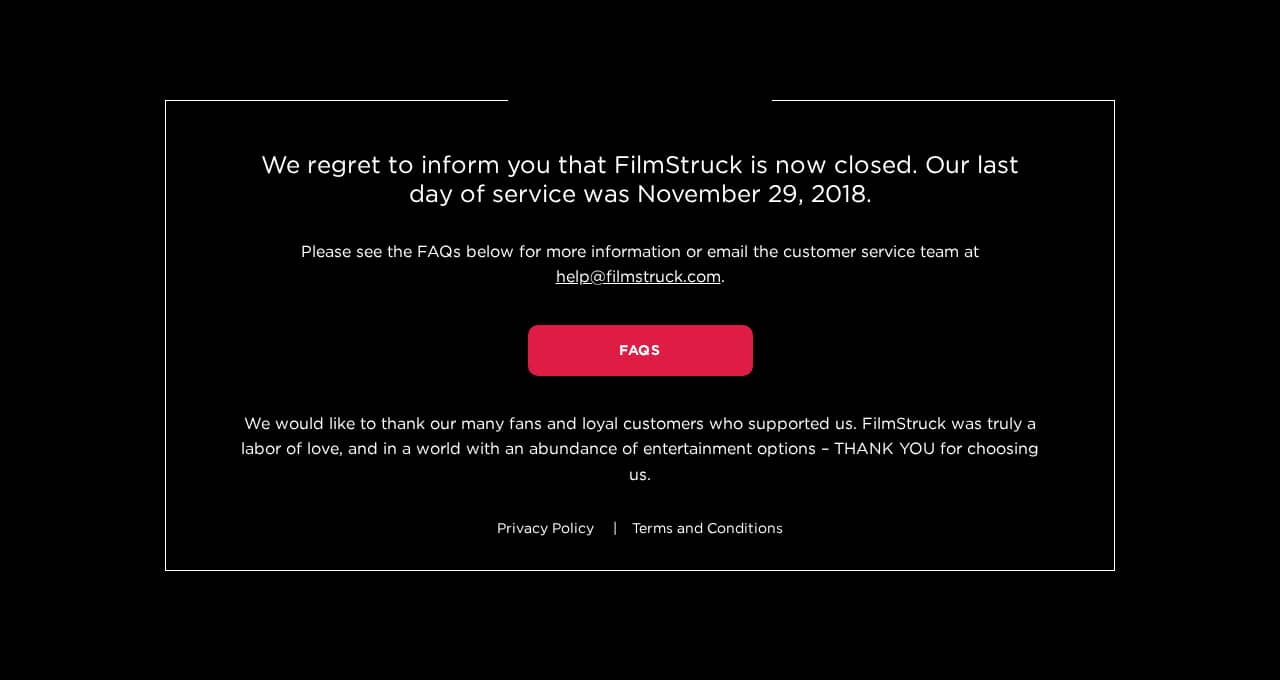
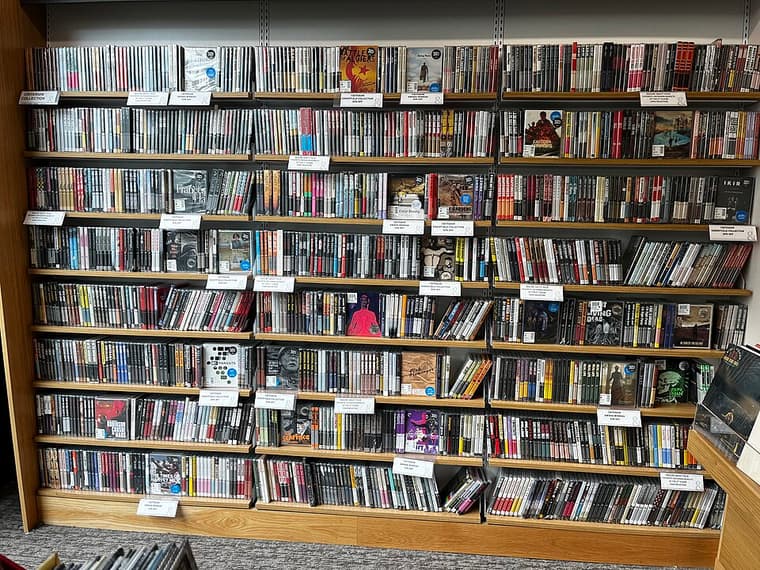
Images: The wordmark and two photographs are from Wikimedia Commons under the terms stated.40 The four screenshots are of Internet Archive captures of filmstruck.com and include film stills that belong to their owners.39 The accent red was darkened from the red of the 2018 closing page for legibility.
General knowledge: That Netflix, Hulu and Amazon Prime Video were the largest U.S. subscription streaming services in 2016–2018 (also stated in several sources above). That HBO, Turner and Warner Bros. were the three divisions of Time Warner.