Spectre Brands

DeadShort-form streaming for phones · Los Angeles

Quibi

Launched Apr 6, 2020. Announced its wind-down Oct 21, 2020. Dark by Dec 1, 2020.

The name meant “quick bites.” The company turned out to be one.

Why dead: The service stopped streaming on or about December 1, 2020, its shows were sold to Roku and rebranded Roku Originals, and its Turnstyle technology went to Eko in 2021; we found nothing that operates under the Quibi name.151721

Quibi holding page from October 2018 with a black wordmark
The name appears, Oct 2018
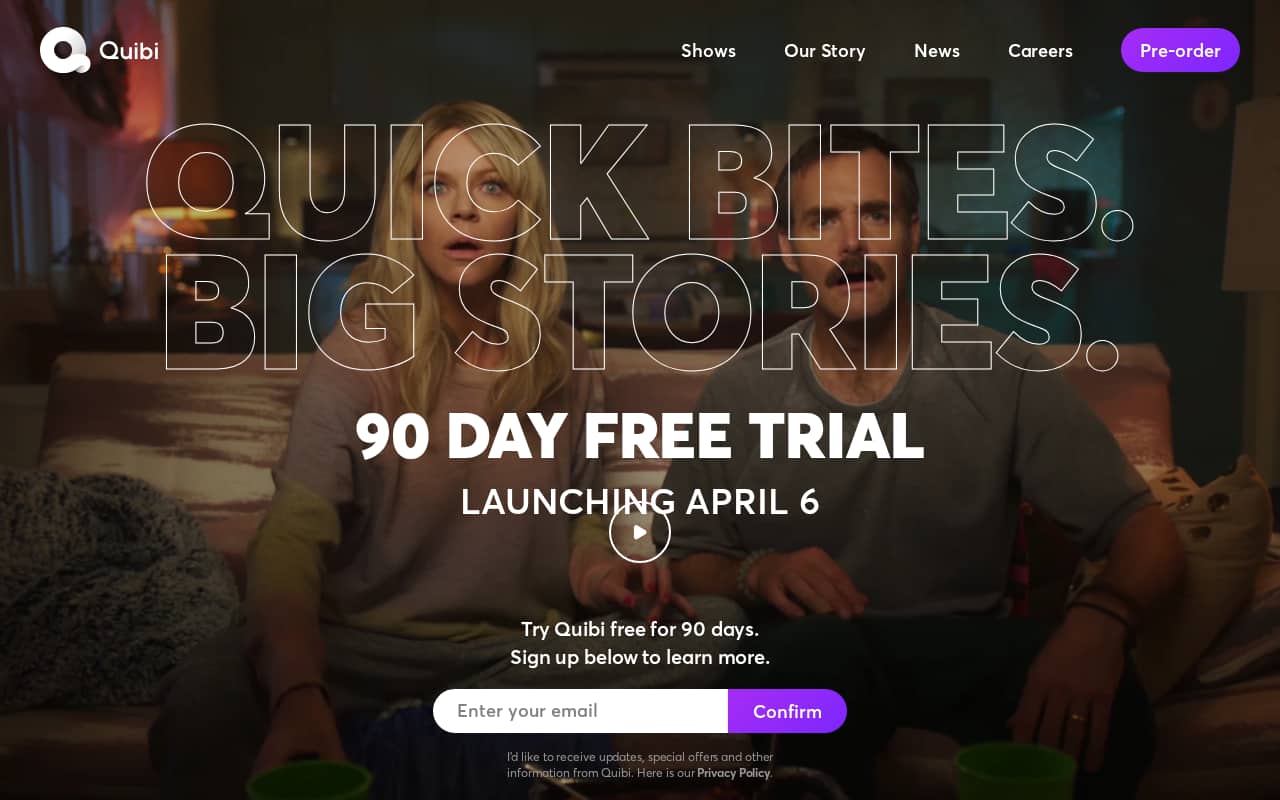
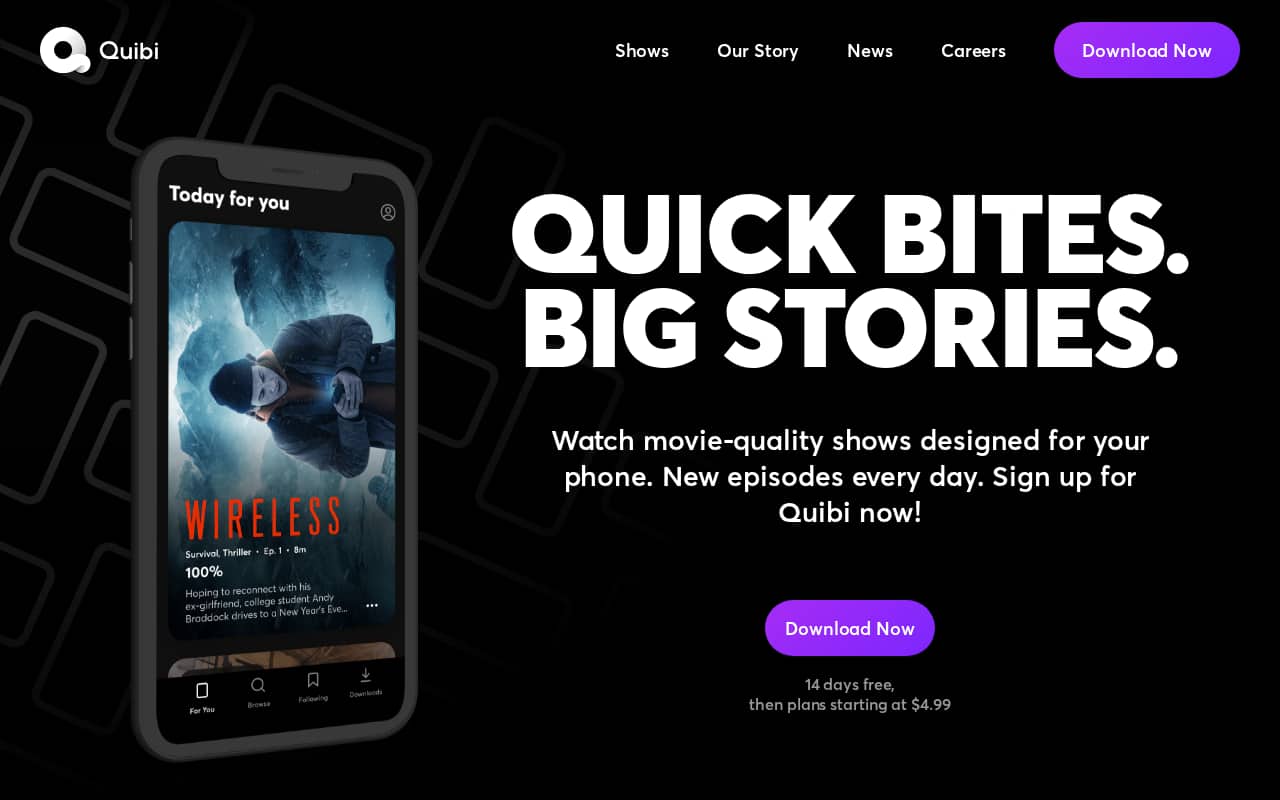
Quibi home page offering a 90 day free trial, launching April 6
Five days before launch, Apr 2020
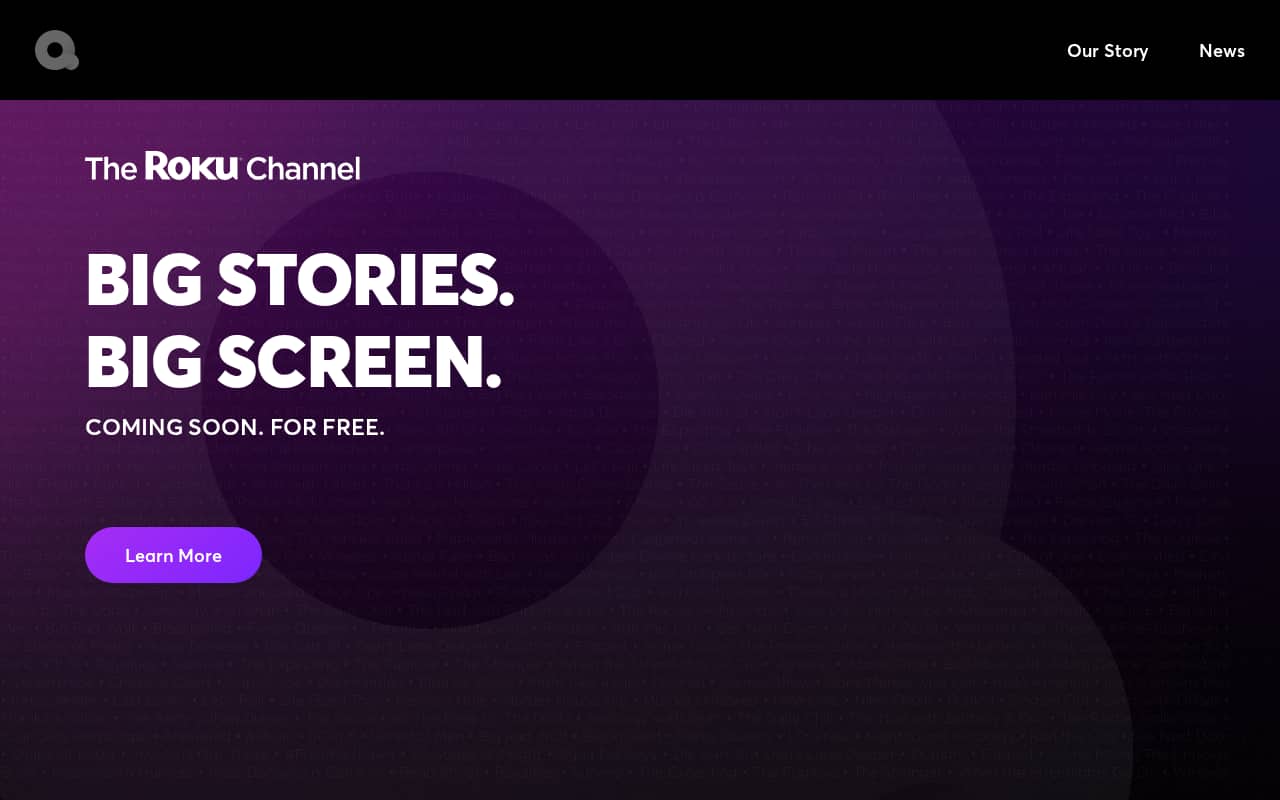
quibi.com in June 2021 pointing to The Roku Channel
Handed to Roku, Jun 2021

Jeffrey Katzenberg and Meg Whitman raised $1.75 billion to make premium shows in chapters of ten minutes or less, watchable only on a phone. The app arrived a few weeks into the pandemic lockdowns, could not be cast to a television or screenshotted, and cost $4.99 a month in a market full of free short video. This is the full post-mortem, built from the founders’ own letter, Roku’s filings, contemporary reporting and the archived website. Quibi was private, so most of its numbers are press reports or estimates, and are labelled as such.

The company in four numbers

$1.75B
raised in two rounds before a single episode had streamed3
198 days
from launch to the wind-down announcement (derived)10
7.4M
paying subscribers targeted for year one, as reported by the Wall Street Journal8
$350M
reportedly returned to investors when it closed16

Key findings

  1. It charged for something the phone already gave away. Quibi cost $4.99 a month with ads or $7.99 without, against free short video on YouTube and TikTok. The founders’ own letter allowed that “the idea itself wasn’t strong enough to justify a standalone streaming service.”110
  2. Phone-only was a choice, and it was reversed too late. Whitman said the team considered television apps and decided against them. AirPlay arrived seven weeks after launch; apps for Apple TV, Android TV and Fire TV arrived the day before the shutdown was announced.21030
  3. The pandemic hurt, but it helped everyone else. Katzenberg said “I attribute everything that has gone wrong to coronavirus.” In the same year Disney+ reached 73.7 million paid subscribers.533
  4. The plan needed scale immediately. The reported first-year target was 7.4 million paying subscribers. By June the Wall Street Journal reported the company was on course for fewer than 2 million and expected to need another $200M.78
  5. It stopped with money left. The founders closed the company rather than spend the remainder, and reportedly returned about $350M of the $1.75B. Roku bought the shows for a reported sum under $100M.216

The story

Quick bites, big money, eight months

Quibi did not fail quietly or slowly. It raised more money than almost any media start-up before it, signed most of Hollywood, bought a Super Bowl ad, and announced its own closure 198 days after launch with hundreds of millions of dollars still in the bank.

Chapter 1 of 6

$1B

first funding round, announced August 2018, before the company had a name

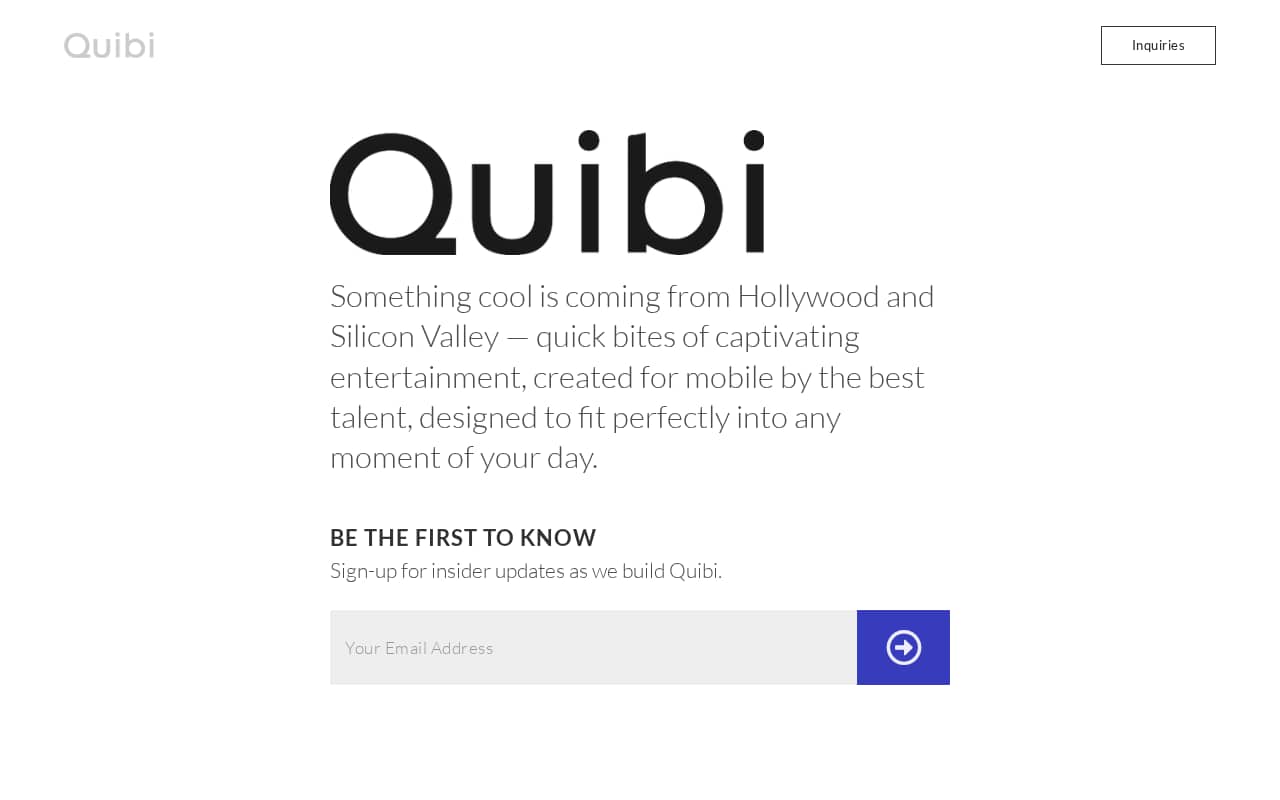
Quibi holding page from October 2018 with a black wordmark and an email sign-up box
quibi.com a week after the name was announced, captured Oct 17, 2018: “Something cool is coming from Hollywood and Silicon Valley.”36

2017 – 2018 · The pitch

Every studio in town writes a cheque

After selling DreamWorks Animation in 2016, Jeffrey Katzenberg formed a holding company, WndrCo, and by July 2017 was promoting a venture he called NewTV: premium, Hollywood-made video in short chapters, built for phones.4 He recruited Meg Whitman, who had just announced her retirement from Hewlett Packard Enterprise, as chief executive.4

In August 2018 NewTV announced $1 billion of funding. The round was led by Madrone Capital Partners, and the investors included Disney, NBCUniversal, Sony Pictures, Viacom, WarnerMedia, Lionsgate, MGM, ITV, Entertainment One, Alibaba, Goldman Sachs, JPMorgan and Liberty Global.3 Vulture later quoted a studio executive who put the individual studio stakes “in the $20 million range.”4

On October 10, 2018 the company got its name. Quibi, the founders said, was a portmanteau of “quick bites.”28

Chapter 2 of 6

$100K

per minute of programming, the budget Katzenberg quoted to Vulture

Event · 2020The Quibi keynote at CES 2020 Whitman and Katzenberg’s full presentation in Las Vegas on January 8, 2020, where Turnstyle, the prices and the April 6 launch date were announced.2627 From the CES channel, uploaded January 15, 2020. Watch on YouTube

2019 – Jan 2020 · The build

$100,000 a minute, and a phone that turns

Quibi paid for television at film prices. “People on Quibi have $100,000 a minute to make content,” Katzenberg told Vulture. “That doesn’t exist on other platforms.”4 Variety put it at up to $6 million per hour.3 Steven Spielberg, Guillermo del Toro, Antoine Fuqua and Reese Witherspoon were among those who signed on.3 The company said it had sold out its first year of advertising, with $150 million in commitments.3

At its CES keynote on January 8, 2020, Quibi showed its one piece of new technology. Turnstyle let a viewer rotate the phone between portrait and landscape while the show kept playing, reframed for each.26 Whitman announced the price, $4.99 a month with ads or $7.99 without, the launch date of April 6, and a first year of more than 175 shows and 8,500 episodes.27

In March 2020 a second round of $750 million closed, taking the total to $1.75 billion. The chief financial officer said it would give Quibi “a strong cash runway.”3

Chapter 3 of 6

1.7M

downloads in the first week, according to the company

Commercial · 2020“Bank Heist,” the Super Bowl LIV spot Aired February 2, 2020, two months before the service existed. A getaway driver promises to arrive “in a Quibi,” meaning less than ten minutes.24 USA Today’s Ad Meter ranked it fourth from bottom of 62 ads.25 A third-party upload made on the day of the game. Watch on YouTube

Feb – Apr 2020 · The launch

“I’ll be there in a Quibi”

Quibi introduced itself to the country during Super Bowl LIV. In the spot, a getaway driver radios a waiting bank-robbery crew: “I’ll be there in a Quibi.” “A what?!” “A Quibi. Less than ten minutes.”24 USA Today’s Ad Meter ranked it fourth from bottom of 62 ads.25

The service went live on April 6, 2020, with a 90-day free trial and a deal that gave some T-Mobile customers a free year.29 By then stay-at-home orders covered much of the country, and the commute and the coffee queue that the product was designed for had gone.6

A week later Whitman told CNBC the app had been downloaded 1.7 million times and that the lockdown “didn’t hurt us at all.”629 Disney+ had announced more than 10 million sign-ups the day after its own launch five months earlier.6

Chapter 4 of 6

7.4M

paying subscribers targeted for year one; by June the reported projection was under 2 million

The use case was the commute. The audience was at home, in front of a television the app could not reach. Original illustration.

Apr – Sep 2020 · The summer

Stuck on the sofa with a phone-only app

The app could not send video to a television, and it blocked screenshots, so nothing from its shows could be shared.411 On launch day it reached No. 3 in Apple’s App Store. By mid-June it was No. 284.4

On May 11 Katzenberg told the New York Times: “I attribute everything that has gone wrong to coronavirus. Everything. But we own it.”5 AirPlay support arrived on May 27 and Chromecast was promised for June.30 In June senior executives took a 10% pay cut.7

The Wall Street Journal then reported the plan and the reality side by side: a first-year target of 7.4 million paying subscribers, and a pace that would deliver fewer than 2 million.78 When the first free trials expired in July, Sensor Tower estimated that about 72,000 of the first 910,000 sign-ups had become paying customers. Quibi called the figure “incorrect by an order of magnitude” and did not give its own.9

Chapter 5 of 6

$100M+

in damages sought by Eko over Turnstyle, as reported by Variety

One scene, framed twice: the idea behind Turnstyle. Original illustration.

Mar 2020 – Sep 2021 · The lawsuit

The one new thing it built was claimed by someone else

A month before launch, the interactive-video company Eko and Quibi sued each other over Turnstyle. Eko said the technology had been taken from it through meetings and through engineers who had seen its work under a non-disclosure agreement; Quibi asked the court to declare that it had not infringed.422 The hedge fund Elliott Management financed Eko’s case.21

In July 2020 a federal judge in California denied Eko’s request to switch the feature off and dismissed three of its nine claims, but let the patent and trade-secret claims proceed. Quibi called it “a meritless case.”22

The case outlived the service. In September 2021 the two sides dropped all claims, and Quibi’s successor company handed the Turnstyle technology and its intellectual property to Eko. Variety’s source said no money changed hands.21

Chapter 6 of 6

$350M

reportedly returned to investors, out of $1.75B raised

quibi.com in June 2021 with The Roku Channel logo and the words Big Stories, Big Screen
quibi.com on Jun 12, 2021: “Big stories. Big screen. Coming soon. For free.”36

Oct 2020 – 2021 · The end

“A profound apology”

In September the Wall Street Journal reported that Quibi was exploring a sale, a new fundraising or a merger with a blank-cheque company.31 None happened. On October 20 it released apps for Apple TV, Android TV and Fire TV. On October 21 it announced it was closing.1013

Whitman told Deadline the arithmetic: “In order to get to scale we would have to raise more capital, a lot more capital,” and the data would not support another raise.2 About $350 million was still in the bank, and about 200 people worked there.2 Streaming ended on or about December 1.15

On January 8, 2021 Roku agreed to buy the rights to more than 75 shows, for a sum Variety’s source described as “significantly” less than $100 million.1617 They returned in May 2021, free with ads and on televisions, as Roku Originals.17

All that is left now is to offer a profound apology for disappointing you and, ultimately, for letting you down.

Jeffrey Katzenberg and Meg Whitman, open letter, October 21, 20201

Timeline

Four years, 28 moments

From the first pitch to the last lawsuit. The service itself occupies eight months in the middle. Filter by thread.

All 28 events as a list
  1. Jul 20172017
    Corporate

    Katzenberg pitches “NewTV”

    A year after selling DreamWorks Animation, Katzenberg is on the cover of Variety promoting premium short-form video for phones, to be built by his holding company WndrCo.4

  2. Early 20182018
    Corporate

    Meg Whitman joins as CEO

    Katzenberg calls Whitman on the day she announces her retirement from Hewlett Packard Enterprise; she signs on a few weeks later.4

  3. Aug 2018
    Money

    $1 billion raised

    The first round is led by Madrone Capital Partners. Disney, NBCUniversal, Sony, Viacom, WarnerMedia, Lionsgate, MGM, ITV, Entertainment One and Alibaba all invest.34

  4. Oct 10
    Corporate

    NewTV becomes Quibi

    The name, short for “quick bites,” is announced at the Vanity Fair New Establishment Summit in Los Angeles.28

  5. 2019
    Money

    First-year advertising sold out

    Quibi says it has $150 million in commitments from advertisers including Google, P&G and PepsiCo.3

  6. Jan 82020
    Product

    CES keynote: Turnstyle, prices, launch date

    $4.99 a month with ads, $7.99 without, launching April 6 with more than 175 shows and 8,500 episodes promised in year one.2627

  7. Feb 2
    Marketing

    Super Bowl LIV ad

    “Bank Heist” is Quibi’s first national advertisement. USA Today’s Ad Meter ranks it fourth from bottom of 62.2425

  8. Mar 4
    Money

    $750 million second round

    Upsized from $500 million. Total raised reaches $1.75 billion. Investors in the round are not named.3

  9. Early Mar
    Eko lawsuit

    Quibi and Eko sue each other

    Eko claims Turnstyle was built on its technology. Quibi seeks a declaration that it did not infringe.22

  10. Apr 6
    Product

    Launch

    The app goes live in North America with a 90-day free trial and a free year for some T-Mobile customers. It reaches No. 3 in Apple’s App Store.429

  11. Apr 13
    Product

    “1.7 million downloads”

    Whitman tells CNBC the first week beat expectations and that the company will speed up work on casting to televisions.6

  12. May 11
    Corporate

    “I attribute everything that has gone wrong to coronavirus”

    Katzenberg to the New York Times. Sensor Tower estimates 2.9 million installs; Quibi says 3.5 million, with 1.3 million active users.5

  13. May 27
    Product

    AirPlay support

    Seven weeks after launch, iPhone users can send shows to a television. Chromecast is promised for June.30

  14. Early Jun
    Money

    Executives take a 10% pay cut

    The company also plans to cut $300 million from first-year content and marketing budgets, the Wall Street Journal reports.7

  15. Jun 14
    Money

    The Journal publishes the gap

    A reported target of 7.4 million paying subscribers in year one; a pace that would deliver fewer than 2 million. Advertisers are asking to renegotiate.78

  16. Mid-Jun
    Product

    No. 284 in the App Store

    Down from No. 3 on launch day. Vulture reports it fell to No. 1,477 when marketing was paused.4

  17. Jul 8
    Product

    The first free trials expire

    Sensor Tower estimates that 72,000 of the first 910,000 sign-ups became paying subscribers. Quibi says the estimate is “incorrect by an order of magnitude.”9

  18. Jul 2020
    Eko lawsuit

    Judge refuses to switch Turnstyle off

    Eko’s request for a preliminary injunction is denied and three of its nine claims are dismissed; the patent and trade-secret claims go on.22

  19. Jul 2020
    Product

    Ten Emmy nominations

    All in the short-form categories.14

  20. Sep 17
    Product

    Two Emmys

    Laurence Fishburne and Jasmine Cephas Jones win the short-form acting awards for #FreeRayshawn.23

  21. Sep 21
    Corporate

    Strategic options

    The Wall Street Journal reports Quibi is exploring a sale, a new fundraising or a merger with a special-purpose acquisition company.31

  22. Oct 20
    Product

    Television apps, at last

    Apps for Apple TV, Android TV and Fire TV are released.1013

  23. Oct 21
    Death & afterlife

    Wind-down announced

    Katzenberg and Whitman publish an open letter: the company will close, sell its content and technology, and return cash to shareholders.110

  24. Dec 1
    Death & afterlife

    The app goes dark

    Quibi’s support page had said streaming would end “on or about December 1, 2020.”1516

  25. Jan 82021
    Death & afterlife

    Roku buys the shows

    Roku acquires the content rights, more than 75 shows. The price is not disclosed; it is reported as under $100 million.1617

  26. May 2021
    Death & afterlife

    Relaunched as Roku Originals

    The shows return free, with advertising, on The Roku Channel.1719

  27. Jul 2021
    Death & afterlife

    Eight Emmy nominations, for Roku

    Former Quibi shows including Reno 911!, Die Hart and Mapleworth Murders are nominated under their new owner.20

  28. Sep 15
    Eko lawsuit

    Eko gets Turnstyle

    QBI Holdings and Eko drop all claims. The Turnstyle technology and its intellectual property are transferred to Eko.21

Part 2 of 6

Business

The numbers · Marketing · Rivals

The money

What went in, what came back, and who was counting

Quibi never published a financial statement or a subscriber count. What exists is the amount it said it raised, the amount it reportedly gave back, and two competing sets of download numbers: the company’s own, and Sensor Tower’s estimates. Both are shown, labelled.

Where $1.75 billion went

Money raised in two rounds, and the part that reportedly went back to investors when the company closed. $ millions.

$1750M raised: $1.0B in August 2018 and $750M in March 2020
$1400M 80%Not returned (derived remainder)$350M 20%Returned to investors (reported)$1400M 80%Not returned (derived remainder)$350M 20%Returned to investors (reported)
  • Not returned (derived remainder). $1,750M less the $350M reportedly returned. It covers content, marketing, technology, staff and the cost of winding down. Quibi published no breakdown and we have not itemised it.
  • Returned to investors (reported). Variety: Quibi “reportedly told investors that it would return $350 million of its cash on hand.” Deadline: “around $350 million still in the bank.”216
Data table
Where $1.75 billion went
Where it wentAmountShareNote
Not returned (derived remainder)$1400M80%$1,750M less the $350M reportedly returned. It covers content, marketing, technology, staff and the cost of winding down. Quibi published no breakdown and we have not itemised it.
Returned to investors (reported)$350M20%Variety: Quibi “reportedly told investors that it would return $350 million of its cash on hand.” Deadline: “around $350 million still in the bank.”
Amounts raised as stated by the company to Variety3. The returned amount is press-reported, not confirmed by the company216. The remainder is derived and takes no account of what Roku paid for the shows, which was not disclosed16.

The clock

198 days
from launch on April 6, 2020 to the wind-down announcement on October 21 (derived).10
239 days
of service, to the shutdown “on or about” December 1, 2020 (derived).15
$5.9M
not returned per day of service: $1.4B ÷ 239 days (derived from reported figures).316
$1B
the company expected to have spent by the third quarter of 2020, as reported by the Wall Street Journal in June.7

The subscriber plan, and what was measured

Millions of paying subscribers. Only the first bar is the company’s own number, and it comes from a press report.

Year-one target (reported)
7.4M
Wall Street Journal, June 2020.8
Year-one projection at June’s pace (reported)
under 2M
Wall Street Journal, June 2020.7
First 910,000 sign-ups still paying after the trial (estimate)
72,000
Sensor Tower estimate, disputed by Quibi.9
Data table
The subscriber plan, and what was measured
MeasureMillionsNote
Year-one target (reported)7.4MWall Street Journal, June 2020.
Year-one projection at June’s pace (reported)under 2MWall Street Journal, June 2020.
First 910,000 sign-ups still paying after the trial (estimate)72,000Sensor Tower estimate, disputed by Quibi.
Target and projection from the Wall Street Journal’s report of June 14, 2020, as summarised by Tubefilter and Señal News78. Conversion estimate from Sensor Tower via The Verge9. The actual number of paying subscribers was never published and is unknown.

Two counts of the same downloads

Cumulative app downloads, millions. Sensor Tower’s estimates against the totals Quibi gave to the press on or near the same dates.

Data table
Two counts of the same downloads
PeriodSensor Tower estimateQuibi’s own figure
Apr 13n/a1.7M
May 112.9M3.5M
Jun 73.8M5.0M
Jul 84.5M5.6M
Oct 219.6Mn/a
Sensor Tower estimates: 2.9M5, 3.8M7, 4.5M9, 9.6M12. Company figures: 1.7M6, 3.5M5, 5M7, “over 5.6 million”9. Quibi gave no total in October and Sensor Tower’s week-one total was not in our sources. Downloads are not subscribers.

The launch spike, and what followed

Average app installs per day, thousands, between the dates of successive Sensor Tower estimates. Derived from estimates; read it as a shape, not a measurement.

0K100K200K300K400KLaunch dayApr 7 – May 11May 12 – Jun 7Jun 8 – Jul 8Jul 9 – Oct 2112340K200K400KLaunch dayApr 7 – May 11May 12 – Jun 7Jun 8 – Jul 8Jul 9 – Oct 211234
  1. Launch day · April 6: 379,000 in a day Sensor Tower’s estimate for launch day, the peak. The app reached No. 3 in Apple’s App Store.47
  2. Apr 7 – May 11 · The 90-day trial does not hold the pace By May 11 the estimated total was 2.9 million. Katzenberg blamed the pandemic.5
  3. Jun 8 – Jul 8 · Under 25,000 a day The Journal reported fewer than 20,000 a day in the first week of June. Free trials began expiring in early July.79
  4. Jul 9 – Oct 21 · A late rise that did not matter Sensor Tower put the total at about 9.6 million by October 21, but first-time installs in October were down 41% on September, and the company closed.12
Data table
The launch spike, and what followed
2020Average installs per day (derived from Sensor Tower estimates)
Launch day379K
Apr 7 – May 1172K
May 12 – Jun 733K
Jun 8 – Jul 823K
Jul 9 – Oct 2149K
Sensor Tower estimates as reported by the New York Times5, the Wall Street Journal via Tubefilter7, The Verge9 and The Hollywood Reporter12. Daily averages are derived: the change between two cumulative estimates divided by the days between them (arithmetic in the data notes).

Quibi’s reported first-year plan, from the New York Times: seven million users, $250 million in subscriber revenue and $470 million of marketing.5 The Journal’s figure for the subscriber target is 7.4 million.8 We use the Journal’s number in the charts and note the difference here.

Marketing

Selling a word nobody knew

Quibi had to explain a new name, a new format and a new habit at the same time. It chose the two most expensive stages in American television to do it, and promoted the platform more than the shows on it.

The Super Bowl and the Oscars

The first national advertisement ran during Super Bowl LIV on February 2, 2020, two months before anyone could use the product. Quartz put the price of 30 seconds of that game at $5.6 million and reported that viewers said afterwards that they still did not know what Quibi was.24 Whitman had said a week earlier: “We have to build a brand—no one’s heard of Quibi—and we have to build the use case.”24

Vulture reported that Quibi also advertised on the Oscars broadcast, and that its marketing “pushed the platform rather than the shows on it.” The magazine’s sources described market research in which 70% of respondents took Quibi for a food-delivery service; a Quibi executive denied that account, and we treat it as unverified.4

The company planned to spend $470 million on marketing in its first year and cut that back once the country was at home.5 In late June it switched to promoting individual shows.4

Commercial · 2020“Bank Heist,” the Super Bowl LIV spot Aired February 2, 2020, two months before the service existed. A getaway driver promises to arrive “in a Quibi,” meaning less than ten minutes.24 USA Today’s Ad Meter ranked it fourth from bottom of 62 ads.25 A third-party upload made on the day of the game. Watch on YouTube

The money not returned, in Super Bowl ads

One icon is one 30-second spot at the 2020 rate.

$1.4Braised and not returned to investors (derived)
=
250 ×30 seconds of Super Bowl LIV ($5.6M)

Derived $1,750M raised3 − $350M reportedly returned16 = $1,400M. $1,400M ÷ $5.6M per 30-second spot24 = 250 spots.

Data table
The money not returned, in Super Bowl ads
Value
raised and not returned to investors (derived)$1.4B
30 seconds of Super Bowl LIV$5.6M
Ratio250 (derived)
Funding from Variety3, the returned amount as reported by Variety and Deadline216, the cost of a spot from Quartz24. Quibi did not disclose what it paid for its own spot.

The first-year plan, in dollars

$ millions. Planned and committed amounts reported before and just after launch.

Data table
The first-year plan, in dollars
Period$ millions
Marketing budget (plan)$470M
Budget cuts announced by June$300M
Subscriber revenue (plan)$250M
Advertising commitments$150M
Marketing plan of $470M and subscriber-revenue plan of $250M from the New York Times5. The $300M cut to first-year content and marketing budgets from the Wall Street Journal via Tubefilter7. Advertising commitments of $150M as stated by the company3; Vulture gives $100M4. All are plans or press reports, not results.
The App Store told the story faster than the company did
No. 3in Apple’s App Store on launch day, April 6, 20204
No. 284by mid-June4
No. 1,477when marketing was paused during the Black Lives Matter protests4
4th worstof 62 Super Bowl LIV ads on USA Today’s Ad Meter, with a rating of 4.425
App Store rankings as reported by Vulture4; Ad Meter result from MediaPost25.

The rivals

Five launches in nine months

Quibi arrived in the middle of the most crowded stretch in the history of streaming. The four services that launched around it all belonged to companies that owned libraries, cable systems or the phones themselves. The same lockdown that Quibi blamed filled their subscriber tables.

The streaming class of 2019–2020: four are still here

Each service’s own reported audience figure near the end of 2020. The measures differ and are not like for like.

Disney+ (Nov 2019)

Survived
73.7M Paid subscribers at October 3, 2020.33 It announced more than 10 million sign-ups the day after launch.6

Apple TV+ (Nov 2019)

Survived
Not disclosed Apple published no subscriber figure. Vulture put its content spending at $6 billion.4

Quibi (Apr 2020)

Dead
Never disclosed The reported target was 7.4 million in year one.8 It closed after 239 days and never published a subscriber count.15

HBO Max (May 2020)

Survived
17.2M Activations at the end of the fourth quarter of 2020, most of them existing HBO customers.34

Peacock (Jul 2020)

Survived
33M Sign-ups across the United States as of January 28, 2021, including free accounts.35
Data table
The streaming class of 2019–2020: four are still here
CompanyOutcomeReported audience, late 2020Notes
Disney+ (Nov 2019)Survived73.7MPaid subscribers at October 3, 2020. It announced more than 10 million sign-ups the day after launch.
Apple TV+ (Nov 2019)SurvivedNot disclosedApple published no subscriber figure. Vulture put its content spending at $6 billion.
Quibi (Apr 2020)DeadNever disclosedThe reported target was 7.4 million in year one. It closed after 239 days and never published a subscriber count.
HBO Max (May 2020)Survived17.2MActivations at the end of the fourth quarter of 2020, most of them existing HBO customers.
Peacock (Jul 2020)Survived33MSign-ups across the United States as of January 28, 2021, including free accounts.
Disney 10-K for fiscal 202033, AT&T fourth-quarter 2020 results34, Comcast fourth-quarter 2020 results35. Launch months are general knowledge (see data notes).

What each one had that Quibi did not

ServiceOwnerLibrary on day oneWatchable on a televisionPrice at launch
QuibiIndependent start-upNone; originals only11No, until October 20, 202010$4.99 with ads, $7.99 without27
Disney+The Walt Disney CompanyDisney, Pixar, Marvel, Star Wars and National Geographic33YesNot in our sources
HBO MaxAT&T (WarnerMedia)HBO and Warner Bros.34YesNot in our sources
PeacockComcast (NBCUniversal)NBCUniversal; an advertising-supported service35YesNot in our sources
Company filings and press as cited. Disney, WarnerMedia and NBCUniversal were all investors in Quibi.3

The rival it did not name

The Verge’s post-mortem argued that the real competition was never the other subscription services: “Quibi didn’t fail because TikTok existed; it failed because executives refused to see TikTok as its biggest competition.”11 When the New York Times put the comparison to Katzenberg in May 2020 he answered: “That’s like comparing apples to submarines.”5

Vulture set out the scale of the paid competition at the time: Netflix had more than 182 million subscribers and had spent $15 billion on original content the year before.4 Quibi’s $1.75 billion was large for a start-up and small for the field it chose.

Dead

Quibi

Launched
April 6, 202010
Funding
$1.75B from outside investors3
Price
$4.99 or $7.99 a month27
Screens
Phones only at launch10
Reported audience
Never disclosed
Outcome
Closed after 239 days15
Alive

The same shows on Roku

Relaunched
May 202117
Cost to Roku
Reported as under $100M16
Price
Free, with advertising16
Screens
Televisions16
Reported audience
From launch to June 3, 2021, more accounts streamed a Roku Original than ever streamed a Quibi show, per Deadline as quoted by Looper20
Outcome
Second seasons ordered for some shows17
Roku 10-K for fiscal 202117, Variety16, Looper quoting Deadline20.

Part 3 of 6

Brand

Commercials & footage · Old website · Brand gallery

Commercials & footage

The pitch, the ad and the morning after

Quibi’s own channels and shows are gone from the app stores, but the sales pitch survives: the founders on CNBC a year before launch, the CES keynote, the Super Bowl spot, and the same two people explaining the shutdown nine months later.

Commercial · 2020“Bank Heist,” the Super Bowl LIV spot Aired February 2, 2020, two months before the service existed. A getaway driver promises to arrive “in a Quibi,” meaning less than ten minutes.24 USA Today’s Ad Meter ranked it fourth from bottom of 62 ads.25 A third-party upload made on the day of the game. Watch on YouTube
Event · 2020The Quibi keynote at CES 2020 Whitman and Katzenberg’s full presentation in Las Vegas on January 8, 2020, where Turnstyle, the prices and the April 6 launch date were announced.2627 From the CES channel, uploaded January 15, 2020. Watch on YouTube
Interview · 2019CNBC: Whitman and Katzenberg explain Quibi, a year early A ten-minute interview on “Squawk on the Street,” uploaded by CNBC on June 19, 2019, ten months before launch. The case for paid short-form video, in the founders’ own words. Watch on YouTube
Interview · 2020CNBC: “Shutting down operations was most honorable choice for shareholders” The founders on CNBC’s “Squawk Alley” on October 22, 2020, the morning after the announcement, explaining why they chose to stop and return cash.1 Watch on YouTube
News segment · 2020Good Morning America: “Billion dollar short form streaming start up Quibi shuts down” ABC’s morning-show report on the closure, uploaded October 22, 2020. Watch on YouTube
Retrospective · 2020Ordinary Things: “The Dumpster Fire Failure of Quibi” A fourteen-minute independent retrospective, uploaded November 12, 2020, while the app was still running out its last weeks. Its figures and opinions are the uploader’s; ours are in the sections above. Watch on YouTube

Videos are embedded from the services that host them and load only when you press play. YouTube embeds use youtube-nocookie.com. Each video belongs to its uploader or rights holder and is shown here for commentary; we do not host any of the files. No official launch trailer for the service could be found on a channel we could verify; the CES keynote is the fullest surviving record of how Quibi presented itself.

The old website

quibi.com, from teaser to tombstone

The app is gone from the stores, so the website is the best surviving record of how Quibi presented itself. These are screenshots of pages saved by the Internet Archive’s Wayback Machine, stored as images. Click one to open the original capture. Captures were found with the CDX API in October 2026.36

Screenshot of https://www.quibi.com/ as archived Oct 17, 2018 · 22:27 UTC

Captured Oct 17, 2018 · 22:27 UTC

A wordmark and an email box

One week after NewTV became Quibi: a black wordmark, one sentence of promise and a sign-up form. The purple arrived later.

Open this capture on the Wayback Machine

Text preserved in the archived pages

“Something cool is coming from Hollywood and Silicon Valley — quick bites of captivating entertainment, created for mobile by the best talent, designed to fit perfectly into any moment of your day.”
Holding page · Oct 17, 2018 capture36
QUICK BITES. BIG STORIES. 90 DAY FREE TRIAL. LAUNCHING APRIL 6.
Home page · Apr 1, 2020 capture36
“Watch movie-quality shows designed for your phone. New episodes every day.” 14 days free, then plans starting at $4.99
Home page · Nov 1, 2020 capture, eleven days after the shutdown announcement36
The Roku Channel. BIG STORIES. BIG SCREEN. COMING SOON. FOR FREE.
Home page · Jun 12, 2021 capture36

Screenshots of Internet Archive captures at 1280 pixels wide, saved as images. Capture times are UTC. Background video on the 2020 pages is shown as the still frame the archive preserved. Our request to the live quibi.com in October 2026 was refused, so the current state of the domain is unknown.

Part 4 of 6

People

People · Press

The people

Who ran it

Two of the best-known executives in their industries, and a senior team that changed around them. Later careers are included only where we found a source.

People (8)
Name and roleWhat they didAfterwards
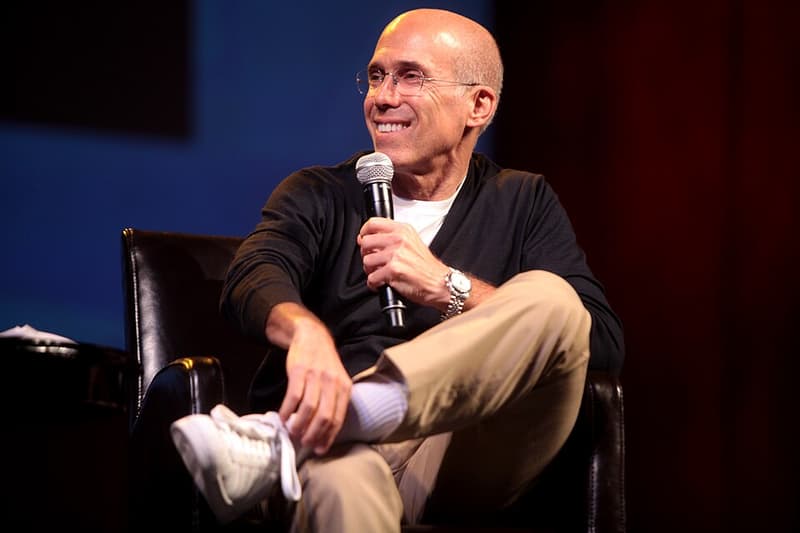
Portrait of Jeffrey KatzenbergJeffrey KatzenbergFounder and chairman

Aged 69 at launch. Former chairman of Walt Disney Studios and co-founder of DreamWorks; he sold DreamWorks Animation in 2016 and formed the holding company WndrCo, where the idea began as NewTV.45 He chose the programming and, by Vulture’s account, gave notes on individual scenes.4

Signed the Eko settlement statement as “founder and chairman of Quibi” in September 2021.21
Portrait of Meg WhitmanMeg WhitmanChief executive, 2018 – 2020

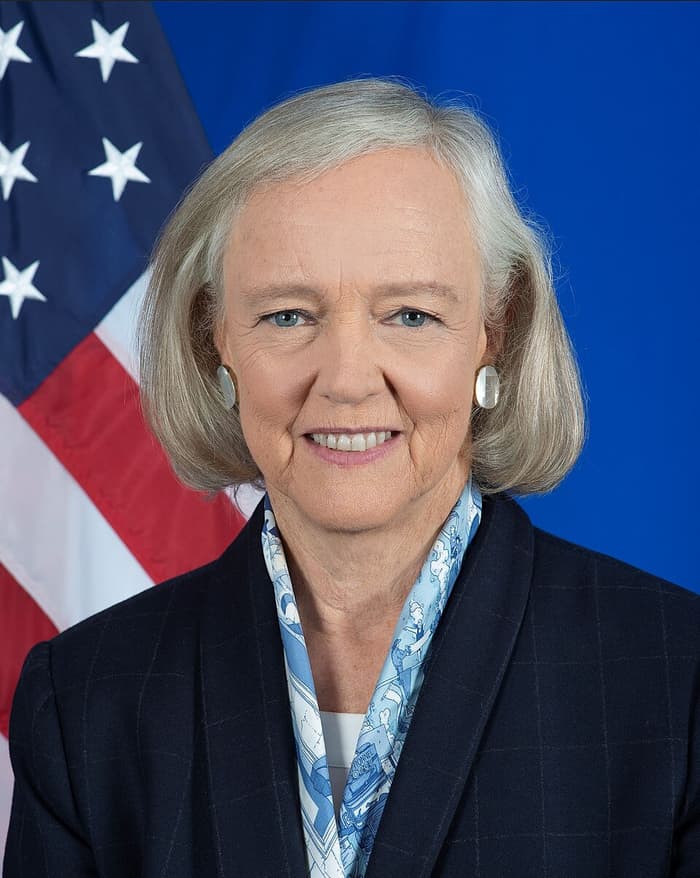
Aged 63 at launch. Former chief executive of eBay and of Hewlett-Packard, recruited by Katzenberg as she left Hewlett Packard Enterprise.45 She told Vulture that Quibi was the premium version of a free product, like bottled water.4

Confirmed as United States ambassador to Kenya in July 2022.37
Tom ConradChief product officer

Demonstrated Turnstyle at CES in January 2020; Engadget identified him as a founder of Pandora.26 He announced AirPlay support in May 2020 with the line that “these days visiting the family room is like a day trip.”30

Ambereen ToubassyChief financial officer

Announced the $750 million second round in March 2020: “This round of $750 million gives us tremendous flexibility and the financial wherewithal to build content and technology that consumers embrace.”3

Janice MinHead of Daily Essentials (left before launch)

The former editor of The Hollywood Reporter oversaw the daily news and lifestyle programming and left after reportedly clashing with Katzenberg over its direction.4

Tim ConnellyAdvertising executive (left before launch)

Led the team that secured the first-year advertising commitments, then “left abruptly,” according to Vulture.4

Megan ImbresCreative-marketing lead

Her departure was announced two weeks after launch.4

Yoni BlochFounder and chief executive of Eko (the plaintiff)

Met Katzenberg in March 2017 and later sued over Turnstyle. After the settlement he said the result “will help ensure that Eko remains the undisputed leader in interactive storytelling technology.”2122

Portraits. Jeffrey Katzenberg: Photo: Gage Skidmore, via Wikimedia Commons, CC BY-SA 2.0. Meg Whitman: Photo: United States Department of State, via Wikimedia Commons, public domain.

The clippings

What they said at the time

Press (8)
And yet, Quibi is not succeeding. Likely for one of two reasons: because the idea itself wasn’t strong enough to justify a standalone streaming service or because of our timing.
Jeffrey Katzenberg and Meg Whitman, open letter, Oct 21, 20201
  1. Jeffrey Katzenberg, to the New York Times, May 11, 20205

    I attribute everything that has gone wrong to coronavirus. Everything. But we own it.
  2. Meg Whitman, on the pandemic, as reported from her CNBC interview of Apr 13, 20206

    It turns out people have in-between moments at home. We don’t actually think it hurt us.
  3. Jeffrey Katzenberg, to Vulture, 20204

    People on Quibi have $100,000 a minute to make content. That doesn’t exist on other platforms.
  4. The Verge, sub-headline, Oct 22, 202011

    The streamer that was doomed to fail before it launched has died
  5. Meg Whitman, to Deadline, Oct 21, 20202

    Most entrepreneurs just keep on going because they literally run out of money and we just didn’t think that was the right thing to do.
  6. Rob Holmes, Roku vice-president of programming, to Variety, Jan 8, 202116

    We’re pivoting from Quibi’s SVOD model to an ad-supported model, and this type of new, original content is not usually available for free.
  7. Jeffrey Katzenberg, asked by Deadline what was next, Oct 21, 20202

    I’m going to Disneyland.

Part 5 of 6

Verdict

Cause of death · What if · Afterlife

Cause of death

The autopsy

Tap a cause to see the evidence. The percentages are our editorial weighting. The evidence under each one is sourced, and because Quibi was private much of it is press reporting.

Cause of death, by editorial weight

One square is one percentage point. The weights are our judgment, not a measurement.

  1. 30%A paid product in a free category
  2. 25%Strategy: phone-only, unshareable, platform-first
  3. 20%The pandemic removed the use case
  4. 15%A cost base that needed scale at once
  5. 7%Leadership friction and departures
  6. 3%The Eko lawsuit
Data table
Cause of death, by editorial weight
CauseWeight
A paid product in a free category30%
Strategy: phone-only, unshareable, platform-first25%
The pandemic removed the use case20%
A cost base that needed scale at once15%
Leadership friction and departures7%
The Eko lawsuit3%

Quibi asked $4.99 to $7.99 a month for short video on a phone, where YouTube and TikTok were free and Netflix and Disney+ already held the monthly budget.1127 The founders’ letter conceded the possibility that “the idea itself wasn’t strong enough to justify a standalone streaming service.”1 Sensor Tower estimated that about 8% of the first sign-ups paid once the trial ended; Quibi disputed the figure and never published its own.9

These were decisions, not accidents. Whitman told Deadline the team considered television apps and chose to be “mobile only.”2 The app blocked screenshots, so its shows could not travel on social media.411 Marketing sold the word Quibi before it sold a show.4 Television apps shipped on October 20, 2020, one day before the closure was announced.10

The product was designed for commutes and queues, and launched weeks into stay-at-home orders.6 Katzenberg told the New York Times: “I attribute everything that has gone wrong to coronavirus.”5 The letter was more careful: other businesses “have found their way through it. We were not able to do so.”1 In the same months Disney+ reached 73.7 million paid subscribers.33

Programming cost up to $100,000 a minute and the planned first-year marketing budget was $470 million.45 By June the company reportedly expected to have spent $1 billion by the third quarter and to need at least $200 million more in 2021.7 Whitman said in October that reaching scale would take “a lot more capital” and that the data would not support raising it.2

The Wall Street Journal reported that Whitman threatened to resign before launch over Katzenberg’s treatment of her.11 Vulture documented the exits of the head of Daily Essentials, the executive who led advertising sales and the creative-marketing lead, the last of them two weeks after launch.4

Quibi’s one proprietary feature was in litigation from March 2020, with Elliott Management funding the other side and damages of more than $100 million sought.2122 It did not close the company, but it clouded the value of the technology Quibi hoped to sell, and Turnstyle ended up with Eko.21

Editorial judgment: the weights are our judgment, not a measurement. Quibi’s founders said they would “never know” how much was the idea and how much the timing.1 We give more weight to the idea and the strategy because the services that launched beside it grew through the same pandemic.

The fork in the road

What if…

Three decisions where the story could have gone differently. The “What if” panels are speculation, labeled as such.

What happened

Quibi launched on phones only. Whitman said the team had weighed living-room apps and decided the use case was “7 in the morning ’til 7 at night while you were on the go.”2 AirPlay came on May 27, Chromecast was promised for June, and apps for Apple TV, Android TV and Fire TV on October 20, the day before the shutdown announcement.1030 Casting switched off Turnstyle, the feature that distinguished the shows.11

What if speculative

With television apps in April, the shows would have been available where a locked-down audience was actually watching. Roku’s later experience is suggestive: Deadline reported that more Roku accounts streamed the former Quibi shows in their first weeks than Quibi accounts ever had.20 But those viewers paid nothing. Television access might have lifted trial sign-ups without answering whether anyone would pay $4.99.

What happened

The service had two paid tiers and no free one. It tested a free, advertising-supported version in Australia and New Zealand a couple of months before closing.11 It said it had sold $150 million of first-year advertising, and by June advertisers were asking to renegotiate because viewership was low.37

What if speculative

A free tier at launch would have put the shows in front of the 5 million or more people who downloaded the app, and given advertisers the audience they had paid for.9 It is the model Roku applied to the same library.16 Whether advertising alone could have covered programming at up to $6 million an hour is doubtful; the plan’s $250 million of subscriber revenue would have had to come from somewhere.35

What happened

When the pandemic arrived, Katzenberg and Whitman considered postponing. They went ahead on April 6 because twelve months of advertising was locked in and more than six months of shows were finished.4

What if speculative

A launch in 2021, with commuting partly restored, would have tested the original idea under the conditions it was designed for. It would also have meant a year of fixed costs with no revenue, renegotiated advertising, and a launch after TikTok’s pandemic growth rather than during it. The founders’ own view was that the cause was “a combination of the two,” the idea and the timing.1

Where are they now

The afterlife

Quibi

  1. The shows

    Rebranded

    Roku bought the content rights on January 8, 2021 and relaunched the library in May 2021 as Roku Originals, free with advertising on The Roku Channel.17 It has since ordered second seasons of some of them.17 Most of the Daily Essentials news and lifestyle programmes were not part of the deal.16

  2. Turnstyle

    Surrendered

    The rotate-to-reframe technology and its intellectual property went to Eko in September 2021 under the settlement of the lawsuit. No money changed hands, according to Variety’s source.21

  3. The company

    Buried

    The app stopped streaming on or about December 1, 2020.15 The remaining entity, QBI Holdings LLC, existed in 2021 to settle the Eko case.21 We found nothing operating under the Quibi name today, and could not load quibi.com in October 2026.

  4. The investors

    Partly repaid

    About $350 million of the $1.75 billion was reportedly returned.16 Whitman described closing with cash in the bank as the alternative to what most entrepreneurs do, which is to “keep on going because they literally run out of money.”2

  5. The staff

    Dispersed

    About 200 people worked at Quibi when it closed. They were told at a virtual town hall on October 21, 2020.232

  6. The founders

    Moved on

    Meg Whitman was confirmed as United States ambassador to Kenya in July 2022.37 Katzenberg’s holding company WndrCo, which incubated Quibi, predates it.4

  7. The Emmys

    Awarded

    Quibi won two Emmys in September 2020, both for #FreeRayshawn.23 In July 2021 former Quibi shows earned eight nominations, credited to Roku.20

From NewTV to Roku Originals

The name lasted two years. The shows and the technology went to different owners.

  1. Aug 2018

    NewTV (WndrCo)

    Katzenberg’s venture raises its first $1 billion.34

    $1B raised
  2. Oct 2018

    Quibi

    Renamed for “quick bites.”28 A second round in March 2020 takes funding to $1.75 billion.3

    $1.75B raised
  3. Oct 2020

    Wind-down

    The founders announce the closure and put the content and technology up for sale. Streaming ends on or about December 1.115

  4. Jan 2021

    Roku

    Buys the content rights to more than 75 shows.1617

    Under $100M (reported)
  5. Sep 2021

    Eko

    Receives the Turnstyle technology in a settlement with QBI Holdings.21

    No money (reported)
  6. Today

    Roku Originals

    The shows carry Roku’s brand. Nothing we found uses the Quibi name.17

Data table
From NewTV to Roku Originals
WhenOwnerWhat happenedPrice
Aug 2018NewTV (WndrCo)Katzenberg’s venture raises its first $1 billion.$1B raised
Oct 2018QuibiRenamed for “quick bites.” A second round in March 2020 takes funding to $1.75 billion.$1.75B raised
Oct 2020Wind-downThe founders announce the closure and put the content and technology up for sale. Streaming ends on or about December 1.
Jan 2021RokuBuys the content rights to more than 75 shows.Under $100M (reported)
Sep 2021EkoReceives the Turnstyle technology in a settlement with QBI Holdings.No money (reported)
TodayRoku OriginalsThe shows carry Roku’s brand. Nothing we found uses the Quibi name.
Variety31621, Roku’s 10-K for fiscal 202117, the founders’ letter1. Quibi was not bankrupt; it wound down voluntarily and returned cash. The chain marks the wind-down in the same style as a failure for clarity.

Sources & data notes

Show your work

Quibi was a private company and never published accounts or a subscriber count. Almost every figure on this page is therefore a press report, a company statement to the press or a third-party estimate, and is labelled that way. The primary documents are the founders’ open letter, Roku’s annual reports and the rivals’ own filings.

  1. Jeffrey Katzenberg and Meg Whitman — “An open letter to the employees, investors, and partners who believed in Quibi”, Medium, Oct 21, 2020 (read in the Internet Archive copy of Oct 22, 2020; original URL).
  2. Deadline — Dominic Patten, interview with Katzenberg and Whitman on the decision to shut down, Oct 21, 2020.
  3. Variety — “Quibi Closes Upsized $750 Million Second Round of Funding for Mobile-Video Launch”, Mar 4, 2020.
  4. Vulture / New York Magazine — “Is Anyone Watching Quibi?”, July 2020.
  5. The New York Times — “Jeffrey Katzenberg Blames Pandemic for Quibi’s Rough Start”, May 11, 2020 (read in the Internet Archive copy).
  6. CNBC — “Meg Whitman says Quibi reached 1.7 million downloads in first week”, Apr 13, 2020.
  7. Tubefilter — “Quibi Predicted It Would Net 7 Million Year-One Subscribers. It’s On Track To Bring In Just 2 Million. (Report)”, Jun 15, 2020, summarising a Wall Street Journal report of Jun 14, 2020 (read in the Internet Archive copy).
  8. Señal News — “Quibi to fall short of 2020 global subscriber goal”, Jun 17, 2020, and TechSpot, “Quibi is missing the mark so far”, June 2020. Both report the Wall Street Journal’s 7.4 million figure.
  9. The Verge — “Quibi reportedly lost 90 percent of early users after their free trials expired”, Jul 8, 2020 (Sensor Tower estimates and Quibi’s reply).
  10. The Verge — “Quibi is shutting down”, Oct 21, 2020.
  11. The Verge — “11 reasons why Quibi crashed and burned in less than a year”, Oct 22, 2020.
  12. The Hollywood Reporter — “Quibi to Shut Down Six Months After Launch”, Oct 21, 2020.
  13. NBC News — “Quibi is shutting down just months after launching”, Oct 21, 2020.
  14. TechCrunch — “The short, strange life of Quibi”, Oct 23, 2020.
  15. TechCrunch — “Quibi says it will shut down in early December”, Oct 22, 2020.
  16. Variety — “Roku Acquires Global Rights to 75-Plus Quibi Shows, Will Stream Them for Free”, Jan 8, 2021.
  17. Roku, Inc. — Form 10-K for fiscal 2021, filed Feb 18, 2022.
  18. Roku, Inc. — Form 10-K for fiscal 2020, filed Feb 26, 2021.
  19. TechCrunch — “Quibi’s content is coming to Roku as ‘Roku Originals’”, Apr 21, 2021.
  20. Looper — “Here’s How Quibi Bolstered Roku Originals’ Emmy Fortunes”, Jul 14, 2021 (citing Deadline and the Wall Street Journal).
  21. Variety — “Jeffrey Katzenberg’s Quibi Settles Legal Spat With Eko, Transfers Mobile-Video Tech to Eko”, Sep 15, 2021.
  22. The Hollywood Reporter — “Quibi’s Dispute with Eko Over Turnstyle Feature Trimmed By Judge”, Jul 30, 2020.
  23. The Hollywood Reporter — “Quibi Takes Home Two Short-Form Emmy Wins”, Sep 17, 2020.
  24. Quartz — “Quibi’s Super Bowl ad launched its quest to be understood”, Feb 3, 2020.
  25. MediaPost — “Quibi Among 5 Worst-Rated Super Bowl Ads”, Feb 3, 2020 (USA Today Ad Meter results).
  26. Engadget — “Quibi’s secret weapon: Videos that work in portrait and landscape mode”, Jan 8, 2020.
  27. NBC New York / CNBC — “Quibi Streaming Service Will Cost $5 a Month With Ads, or $8 Without”, January 2020.
  28. Fortune — “Jeffrey Katzenberg and Meg Whitman Reveal the Name of Their ‘NewTV’ Platform”, Oct 10, 2018.
  29. Light Reading — “Quibi notches 1.7M downloads in first week”, Apr 13, 2020.
  30. MobileSyrup — “Quibi adds AirPlay support, finally lets users watch content on the big screen”, May 27, 2020.
  31. StreamTV Insider — “Struggling streaming video service Quibi may already be for sale”, Sep 21, 2020 (summarising a Wall Street Journal report).
  32. Cartoon Brew — “QuiBYE! Jeffrey Katzenberg’s Quibi Folds After Six Months”, Oct 22, 2020.
  33. The Walt Disney Company — Form 10-K for fiscal 2020, filed Nov 25, 2020 (paid subscriber table).
  34. AT&T Inc. — Fourth-quarter 2020 results, Form 8-K Exhibit 99.1, Jan 27, 2021.
  35. Comcast Corporation — Fourth-quarter 2020 results, Form 8-K Exhibit 99.1, Jan 28, 2021.
  36. Internet Archive Wayback Machine — captures of quibi.com: Oct 17, 2018, Apr 1, 2020, Nov 1, 2020, Jan 2, 2021 and Jun 12, 2021.
  37. Princeton Alumni Weekly — “Meg Whitman ’77 Confirmed as U.S. Ambassador to Kenya”, Jul 19, 2022.
Data notes (9)

Data notes

No audited figures: Quibi was privately held. It filed nothing with the SEC and never published a subscriber count, revenue or a profit and loss account. The number of paying subscribers on the day it closed is unknown; figures that circulate for it are not used on this page.

Press-reported figures: The $1.75B raised is the company’s own statement to Variety.3 The 7.4 million first-year subscriber target, the projection of fewer than 2 million, the $300M budget cut, the $1B expected to be spent by the third quarter of 2020 and the further $200M the company expected to need are all from a Wall Street Journal report of June 14, 2020. We could not open the Journal’s article and cite it through Tubefilter, Señal News and TechSpot.78 The New York Times gives the first-year plan as “seven million users and $250 million in subscriber revenue” and planned marketing of $470M.5 The roughly $350M returned to investors is reported, not confirmed by the company: Variety says Quibi “reportedly told investors” of that amount and Deadline says there was “around $350 million still in the bank.”216 The price Roku paid was not disclosed; “less than $100 million” is the Wall Street Journal’s figure, repeated by Variety’s source as “significantly” less than $100 million.1619

Estimates: All Sensor Tower download and conversion numbers are that firm’s estimates from app-store data, not counts: 379,000 installs on launch day, 2.9 million by May 11, 3.8 million by June 7, about 4.5 million by July 8, about 9.6 million by October 21, and 72,000 paying users out of about 910,000 early sign-ups.57912 Quibi disputed them and gave higher totals of its own (1.7 million in week one, 3.5 million in May, 5 million in June, more than 5.6 million in July).5679 TechCrunch gives 300,000 for launch-day downloads on iOS.14 The $5.6M cost of a 30-second Super Bowl spot is Quartz’s figure for the going rate, not a price Quibi disclosed.24

Derived figures: 198 days from launch to the wind-down announcement is April 6 to October 21, 2020; 239 days of service is April 6 to December 1, 2020 (“on or about”).1015 $1.4B not returned = $1.75B raised − about $350M reportedly returned; it is a remainder, not an audited cost, and ignores whatever Roku paid.316 250 Super Bowl slots = $1.4B ÷ $5.6M.24 About $5.9M a day = $1.4B ÷ 239 days. Average daily installs between estimate dates are differences between successive Sensor Tower totals divided by the days between them: (2.9M − 0.379M) ÷ 35 = about 72,000; (3.8M − 2.9M) ÷ 27 = about 33,000; (4.5M − 3.8M) ÷ 31 = about 23,000; (9.6M − 4.5M) ÷ 105 = about 49,000. The 8% conversion rate is 72,000 ÷ 910,000, as stated by The Verge.9 The 5.4 million shortfall is 7.4M − 2M.8

Disputed or unverified: Vulture reports that in market research 70% of respondents thought Quibi was a food-delivery service; a Quibi executive denied the account, and we treat it as unverified.4 Vulture also reports studio investments “in the $20 million range” and a “round-tripping” arrangement that a Quibi executive denied.4 Ad commitments are given as $150M by Variety and $100M by Vulture.34 Staff numbers are approximate: Deadline says “200-strong,” Cartoon Brew “200-odd.”232 The claim that Meg Whitman threatened to resign is the Wall Street Journal’s, cited through The Verge.11

The name today: Quibi’s holding company was renamed QBI Holdings and existed in September 2021 only to settle the Eko case.21 The shows are branded Roku Originals.17 We found no product or service operating under the Quibi name. Our request to quibi.com in October 2026 was refused by the server, so the present content of the domain is unknown; the last archived page we captured, from June 2021, pointed to The Roku Channel.36

Rivals’ figures are not like for like: Disney+ is paid subscribers at October 3, 2020.33 HBO Max is activations at the end of 2020, most of them existing HBO customers.34 Peacock is sign-ups, including free accounts, as of January 28, 2021.35 Apple did not publish a figure for Apple TV+.

General knowledge: Disney+ launched in the United States on November 12, 2019, Apple TV+ on November 1, 2019, HBO Max on May 27, 2020 and Peacock nationally on July 15, 2020. Super Bowl LIV was played on February 2, 2020. Jeffrey Katzenberg was chairman of Walt Disney Studios and a co-founder of DreamWorks; Meg Whitman was chief executive of eBay and of Hewlett-Packard.

Videos: Upload dates are taken from each YouTube watch page. The Super Bowl spot is a third-party upload made on the day of the game; the CES keynote is on the CES channel; the two CNBC clips and the Good Morning America segment are on the broadcasters’ own channels.