Spectre Brands

DeadFast-food hamburgers · Indianapolis, Indiana

Burger Chef

First restaurant opened in spring 1958. Sale to Hardee’s agreed December 1981. Last franchise renamed 1996.

In 1967 only McDonald’s had more restaurants. Fifteen years later the chain was sold for its buildings.

Why dead: No restaurant has traded as Burger Chef since the last franchise, in Cookeville, Tennessee, was renamed in 1996; Hardee’s keeps the trademark registered and has used it only for short Big Shef promotions.41113

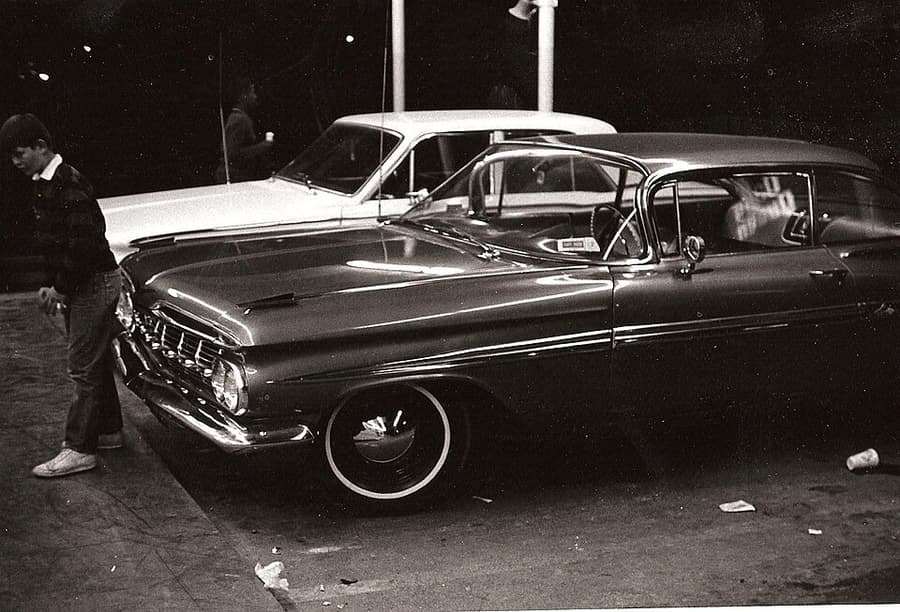
Black and white photograph of two cars parked at a Burger Chef at night in 1967
Killeen, Texas, 1967Photo: John Lloyd, via Wikimedia Commons, CC BY 2.0.
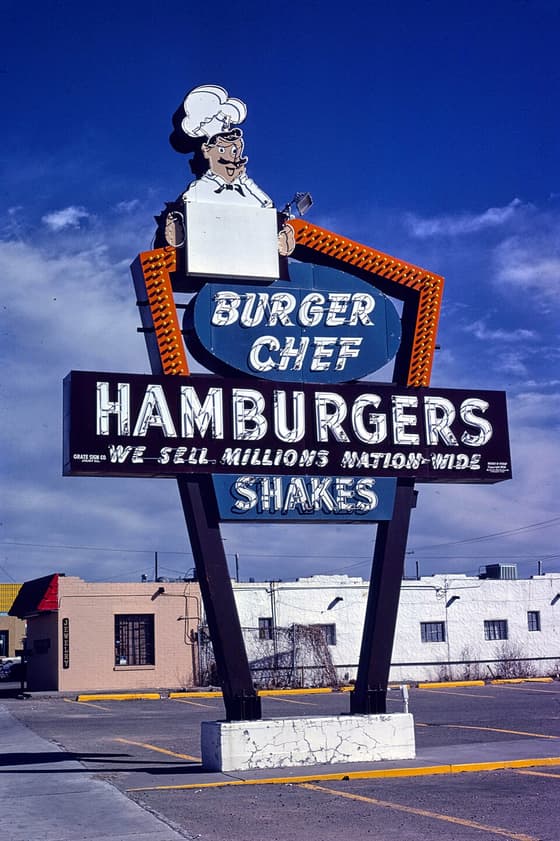
A tall neon Burger Chef roadside sign photographed in 1979
Albuquerque sign, 1979Photo: John Margolies, Roadside America Photograph Archive, Library of Congress. No known restrictions on publication; via Wikimedia Commons, public domain.
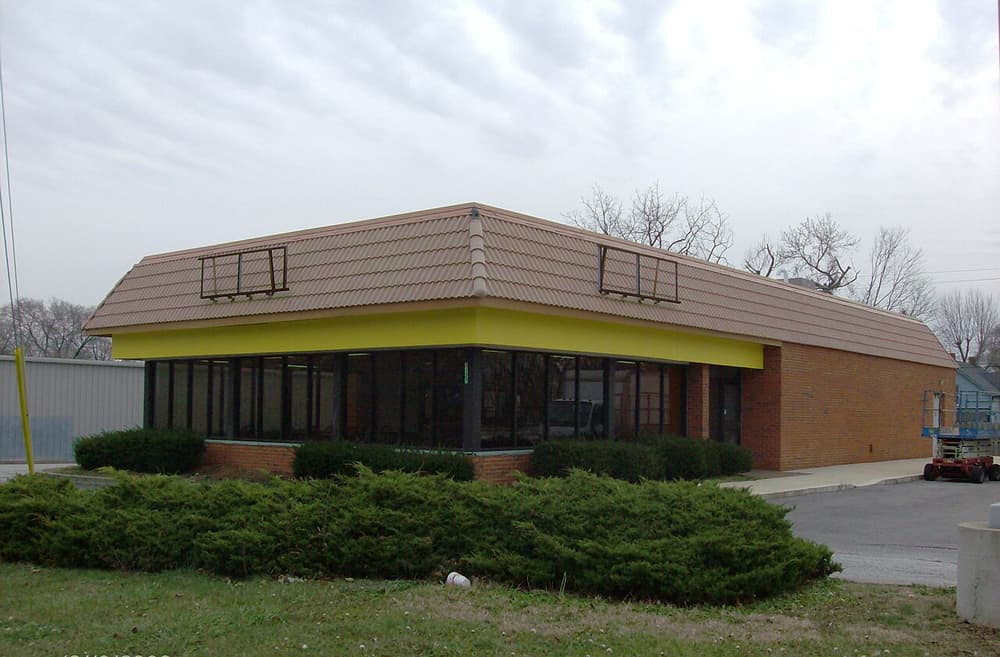
An empty former Burger Chef and Hardee’s building in Indianapolis
A converted building, 2009Photo: Xnatedawgx, via Wikimedia Commons, CC BY-SA 3.0.

Burger Chef began as a way to sell a flame broiler. It became a chain of several hundred restaurants, was bought by General Foods in 1968, and was pushed to about 1,200 outlets in three years. In January 1972 the new owner disclosed an $83 million loss, most of it on Burger Chef. The chain shrank for a decade and was sold to the owner of Hardee’s, which took down the signs. There are no company filings to lean on here, so this account is built from contemporary New York Times reporting, Indiana reference histories and trademark records, and it says where they disagree.

The chain in four numbers

1,200
outlets at the peak in 1971–72, counting General Foods’ Rix roast-beef units14
$16M
what General Foods paid in 1968, according to The New York Times12
$83M
loss General Foods disclosed in January 1972, mostly on Burger Chef1
$44M
approximate price Hardee’s agreed to pay in December 19813

Key findings

  1. It was a real number two. By December 1967 Burger Chef was the second-largest restaurant chain in the country, behind McDonald’s. Burger King had 274 stores that year.421
  2. The owner doubled it in three years. General Foods took a chain of about 700 units and expanded it, with a roast-beef sideline, to 1,200 outlets “widely and thinly scattered” across the country.1
  3. The loss was five times the purchase price. An $83 million loss was disclosed in January 1972 against a $16 million purchase. After tax the extraordinary charge was $46.8 million, $39 million of it for fast food.1
  4. It had the ideas first. The Funmeal of 1973 came six years before the Happy Meal, and the 1978 Star Wars Funmeal is among the earliest film tie-ins for a children’s meal.81719
  5. The buyer wanted the sites, not the name. Hardee’s converted the restaurants to its own brand from 1982. The last one to keep the Burger Chef name gave it up in 1996.410

The story

A broiler, a conglomerate and a write-off

Burger Chef was not beaten by a better hamburger. It was bought by a packaged-food company that expanded it faster than it could find good sites or people, and then spent ten years shrinking it.

Chapter 1 of 5

15¢

price of the flame-broiled hamburger in the early years

Original illustration of a conveyor flame broiler. By the mid-1960s the chain’s machine was said to cook about 2,000 burgers an hour.8

1957 – 1967 · Origins

A restaurant built to sell a machine

The company began as an equipment maker. General Equipment of Indianapolis made frozen custard and soft-serve machines, and in the 1950s Frank Thomas Jr. agreed to mass-produce flame broilers for a Miami-based chain, keeping the right to sell them in every state but Florida.6 Local histories say the brothers Frank and Donald Thomas held a patent on the broiler; we could not locate the patent itself.6

In 1957 Frank Thomas opened a pilot hamburger stand at the Little America amusement park in Indianapolis to show the equipment. The grill did not sell. The 15-cent hamburgers did.57 The first restaurant called Burger Chef opened in spring 1958 at 1300 West 16th Street, with Robert Wildman as partner.5

Franchising did the rest. An owner’s investment was about $129,000 and the Encyclopedia of Indianapolis puts the average return at 50% a year, a retrospective figure.5 There were about 70 restaurants by 1960 and about 500 by 1966.56 The burger, fries and shake combination sold for 45 cents, and the double-decker Big Shef arrived in 1964 or 1965, before the Big Mac.78

Chapter 2 of 5

$16M

purchase price in 1968, as reported by The New York Times

Black and white photograph of a 1959 Chevrolet and another car parked at a Burger Chef at night
Cars at a Burger Chef in Killeen, Texas, in 1967, the year before the sale. Photo: John Lloyd, CC BY 2.0.24

1967 – 1971 · The sale

General Foods buys the number two

By December 1967 Burger Chef was the second-largest restaurant chain in the United States, behind McDonald’s.45 The Thomas brothers concluded that they lacked the resources of their rivals and sold.6 General Foods, the maker of Maxwell House and Jell-O, paid $16 million in 1968 for about 700 owned and franchised units.1 Other accounts give the price as $16.5 million, nearly $20 million or $25 million, and the unit count as anything from 650 to nearly 900.5679

The new owner expanded at once. The 1,000th restaurant opened in 1969.4 General Foods also bought a roast-beef chain started by a Burger Chef franchisee for $3 million and renamed it Rix. Together the two reached 1,200 outlets.1 Time puts the Burger Chef peak at 1,200 restaurants in 1971, about 100 fewer than McDonald’s had.4

The people who had built the chain did not stay. The founder left, another senior executive had a heart attack, and within two years the management turnover was “nearly total.”1 General Foods supplied replacements from its own ranks.

Chapter 3 of 5

$83M

loss General Foods disclosed in January 1972, mostly on Burger Chef

Tall neon roadside sign reading Burger Chef Hamburgers Shakes against a blue sky
A Burger Chef sign in Albuquerque, New Mexico, photographed in 1979 by John Margolies. Library of Congress; no known restrictions.23

1972 · The write-off

Too far, too fast

In January 1972 General Foods disclosed that it had lost $83 million, mostly on Burger Chef. After tax the extraordinary loss came to $46.8 million, of which $39 million was charged to fast food. Earnings per share fell from $2.38 to $1.32.1 A later Times article rounds the write-off to $80 million before tax.2

The company’s own explanation was real estate. It had made “inflated property commitments in weak marketing areas,” in the words of the Times, and it had staffed a restaurant business with packaged-goods managers.1 Arthur E. Larkin Jr., the president of General Foods, retired abruptly in April 1972 at 55.

The remedy was retreat. All the Rix units were closed. More than 100 Burger Chef units had shut by June 1972 and a net reduction of 25% was planned, with the chain to be consolidated into a regional one.1

We moved too far, too fast, under the pressures of the times.

Arthur E. Larkin Jr., former president of General Foods, The New York Times, June 11, 19721

Chapter 4 of 5

1973

the Funmeal, six years before the McDonald’s Happy Meal

Commercial · 1978Star Wars Fun Meals The Star Wars Funmeal trays. The uploader dates the spot to 1977; the surviving trays carry a 1978 copyright.1925 Watch on YouTube

1973 – 1979 · The retreat

Good ideas in a shrinking chain

The smaller chain kept inventing. A “Quality Improvement Plan” brought grilled buns and trials of salad bars, and the Works Bar let customers dress their own burgers.69 In 1973 came the Funmeal, a boxed children’s meal with puzzles and stories built around the mascots Burger Chef and Jeff.817 In 1978 the box carried Star Wars: seven different Funmeal trays with punch-out toys.19

McDonald’s launched the Happy Meal in 1979.20 The Indianapolis Star records that Burger Chef sued McDonald’s over it, and in 1981 sued Burger King over a “Fun School Meal,” a case settled out of court.7 Later accounts say the McDonald’s suit was dismissed. We found no court record, so the outcome is unverified.18

The decade also brought the event for which the name is now most often searched. On the night of November 17, 1978, four young employees, Jayne Friedt, Ruth Shelton, Daniel Davis and Mark Flemmonds, were abducted from the restaurant in Speedway, Indiana. They were found dead two days later. The case has never been solved.1516

By the end of the 1970s the system had a little over 650 restaurants.5

Chapter 5 of 5

$44M

approximate price agreed with Hardee’s in December 1981

Vacant single-storey restaurant building with a mansard roof and empty sign frames
3127 West Washington Street, Indianapolis, in 2009: a Burger Chef that became a Hardee’s and was then emptied. Photo: Xnatedawgx, CC BY-SA 3.0.24

1981 – 1996 · The end

Hardee’s buys the buildings

In March 1981 the Times described Burger Chef as “barely a breakeven operation.”2 On December 10 it reported that General Foods had agreed to sell the unit to Hardee’s Food Systems, a subsidiary of Imasco of Montreal, for about $44 million. The chairman of General Foods said the business was “not central to the long-term direction” of the company.3

The sale was completed in 1982; we have not found the closing date.10 On November 15, 1982 an Indianapolis station reported on 75 local restaurants becoming Hardee’s. Hardee’s chairman expected about 2,100 units in 38 states.10 The Indianapolis Star puts the company-owned restaurants converted at nearly 260, with franchisees given the option.7

Some franchisees kept the name for years. The last, in Cookeville, Tennessee, became a “Pleasers” restaurant in 1996.4

Timeline

From a grill demonstration to a trademark file

Thirty moments, with the rivals alongside. Where sources disagree on a date or a count, the entry says so.

All 31 events as a list
  1. 1930s
    Corporate

    General Equipment founded

    Frank Thomas Sr. starts a company making frozen custard and ice cream machines. One history dates it to 1929.69

  2. 1950s
    Corporate

    The flame broiler

    Frank Thomas Jr. agrees to mass-produce flame broilers for a Miami-based chain and to market them outside Florida.6

  3. May1957
    Corporate

    Pilot stand at Little America

    A demonstration hamburger stand opens at an Indianapolis amusement park. The Indianapolis Star counts this as the first Burger Chef.57

  4. Spring1958
    Corporate

    First Burger Chef

    Opens at 1300 West 16th Street, Indianapolis, with Robert Wildman as partner.45

  5. 1959
    Corporate

    Eight restaurants, or forty

    The Encyclopedia of Indianapolis counts eight in three states. The Indianapolis Star says more than 40 by October.57

  6. 1960
    Corporate

    About 70 restaurants

    Two years after launch, according to the Indianapolis Business Journal.6

  7. 1964–65
    Menu & marketing

    The Big Shef

    A double-decker burger with cheese, lettuce and sauce. Sources give 1964 or 1965.78

  8. Sep1965
    Corporate

    Downtown Indianapolis

    The first downtown restaurant opens at 6 East Washington Street. One history numbers it store 450.59

  9. 1966
    Corporate

    About 500 restaurants

    The Encyclopedia of Indianapolis says 500; the Business Journal says 440.56

  10. 1967
    Rivals

    Pillsbury buys Burger King

    The chain has 274 stores and is valued at $18 million.21

  11. Dec1967
    Corporate

    Second-largest chain

    Burger Chef trails only McDonald’s.4

  12. 1968
    Money

    Sold to General Foods

    $16 million for about 700 owned and franchised units, by the Times account. Other reports range up to $25 million.16

  13. 1968
    Rivals

    McDonald’s opens its 1,000th restaurant

    The leader passes four figures in the year Burger Chef is sold.20

  14. 1969
    Corporate

    1,000th Burger Chef

    One year after the sale.4

  15. 1969
    Rivals

    First Wendy’s

    Opens in Columbus, Ohio.22

  16. 1971
    Corporate

    The peak

    About 1,200 restaurants. McCann Erickson resigns the advertising account and Ogilvy & Mather takes it.4

  17. Jan1972
    Money

    An $83 million loss

    General Foods discloses the loss, mostly on Burger Chef. The after-tax charge is $46.8 million.1

  18. Apr1972
    Corporate

    The president retires

    Arthur E. Larkin Jr. leaves General Foods at 55.1

  19. Jun1972
    Corporate

    Closures

    More than 100 units closed, all Rix roast-beef units to go, and a net reduction of 25% planned.1

  20. 1973
    Menu & marketing

    The Funmeal

    A boxed meal for children with puzzles and stories.817

  21. 1978
    Menu & marketing

    Star Wars Funmeal

    Seven trays with punch-out toys, made with Coca-Cola under license from Twentieth Century-Fox.19

  22. Nov 171978
    Corporate

    Speedway

    Four employees are abducted from the Speedway, Indiana restaurant and found dead two days later. The case is unsolved.1516

  23. 1979
    Rivals

    The Happy Meal

    McDonald’s introduces its own children’s meal. Burger Chef sues.720

  24. Mar 21981
    Money

    “Barely a breakeven operation”

    The Times’ description of Burger Chef, by then a regional chain.2

  25. Dec 101981
    End & afterlife

    Sale to Hardee’s reported

    About $44 million. General Foods expects a charge of about 25 cents a share.3

  26. Nov 151982
    End & afterlife

    Conversions in Indianapolis

    A television report covers 75 local restaurants becoming Hardee’s.10

  27. 1996
    End & afterlife

    The last Burger Chef

    The Cookeville, Tennessee franchise becomes “Pleasers.”4

  28. Jan 152007
    End & afterlife

    Trademark challenged

    River West Brands petitions to cancel two Burger Chef registrations as abandoned.13

  29. Apr 232007
    End & afterlife

    The Big Shef returns

    Hardee’s sells it for a limited time in five Indiana and Ohio markets.11

  30. Apr 162009
    End & afterlife

    Challenge withdrawn

    River West files a withdrawal of its petition.14

  31. May2014
    End & afterlife

    Another limited run

    Hardee’s serves the Big Shef again in Indianapolis while the chain appears in the television series Mad Men.412

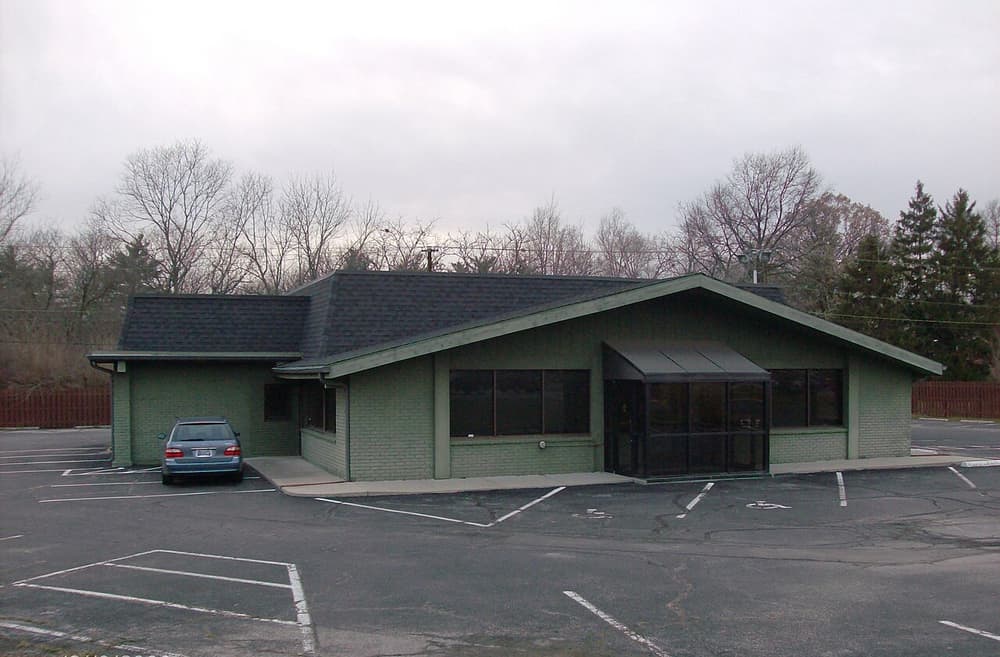
Single-storey green brick building with a low pitched roof and an empty car park
2009 A former Burger Chef at 6132 Allisonville Road, Indianapolis, in use as a dental office.Photo: Xnatedawgx, via Wikimedia Commons, CC BY-SA 3.0.

Part 2 of 6

Business

The numbers · Marketing · Rivals

The numbers

How many restaurants, and what they cost General Foods

Burger Chef was a subsidiary for most of its life and never published accounts of its own. What survives is a handful of unit counts and the figures General Foods gave the press. They are enough to show the shape.

From one restaurant to 1,200 and back

Restaurants in the system at eight dated points. The years are not evenly spaced.

05001,0001,500195819601966196819691972198119961234505001,0001,500195819661969199612345
  1. 1960 · franchising About 70 restaurants two years after the first one opened.6
  2. 1968 · General Foods buys About 700 owned and franchised units for $16 million.1
  3. 1972 · the peak and the write-off 1,200 outlets, counting Rix. An $83 million loss is disclosed in January 1972.1
  4. 1981 · the sale About 650 restaurants when Hardee’s agrees to buy the chain.6
  5. 1996 · the last one The Cookeville, Tennessee franchise is renamed.4
Data table
From one restaurant to 1,200 and back
YearRestaurants
19581
196070
1966500
1968700
19691,000
19721,200
1981650
19961
19585; 1960 and 19816; 19665; 1968 and 19721; 1969 and 19964. The 1972 figure includes General Foods’ Rix roast-beef units. Other sources give 440 for 1966, 650 to nearly 900 for 1968 and 679 for 1982.679

What General Foods paid, lost and got back

Figures as reported by The New York Times, in $ millions, not adjusted for inflation.

Purchase price, 1968
$16.0M
For about 700 units1
Loss disclosed, January 1972
$83.0M
“Mostly on the Burger Chef fast-food chain”1
After-tax extraordinary loss, fiscal 1972
$46.8M
All write-offs1
Of which charged to fast food
$39.0M
Burger Chef and Rix1
Sale price, December 1981
$44.0M
“About $44 million”3
Data table
What General Foods paid, lost and got back
Item$ millionsNote
Purchase price, 1968$16.0MFor about 700 units
Loss disclosed, January 1972$83.0M“Mostly on the Burger Chef fast-food chain”
After-tax extraordinary loss, fiscal 1972$46.8MAll write-offs
Of which charged to fast food$39.0MBurger Chef and Rix
Sale price, December 1981$44.0M“About $44 million”
The New York Times, June 11, 19721 and December 10, 19813. A 1981 Times article gives the 1972 write-off as $80 million before tax.2

The loss was about five times the purchase price

$83Mloss disclosed in January 1972
=
5 ×paid for Burger Chef in 1968 ($16M)

Derived $83M ÷ $16M = 5.2. Both figures from The New York Times, June 11, 1972.1 The $83M includes smaller write-offs outside fast food.

Data table
The loss was about five times the purchase price
Value
loss disclosed in January 1972$83M
paid for Burger Chef in 1968$16M
Ratio5 (derived)
The New York Times1.

What did General Foods pay? Four sources, four answers

Reported purchase price in $ millions. The Times figure is the only contemporary one.

Data table
What did General Foods pay? Four sources, four answers
PeriodReported price
New York Times, 1972 and 1981$16.0M
Encyclopedia of Indianapolis$16.5M
Lost Indiana, 2001$20.0M
Indianapolis Business Journal, 2021$25.0M
$16M12; $16.5M5; “nearly $20 million,” for Burger Chef and the Sani-Serv equipment business together9; $25M6. The Indianapolis Star also gives $16 million.7 We use the Times figure throughout.

Burger Chef against McDonald’s

Restaurants in the years for which a sourced count exists. Gaps are years with no figure.

Data table
Burger Chef against McDonald’s
PeriodBurger ChefMcDonald’s
19687001,000
19711,2001,300
1976n/a4,177
1981650n/a
Burger Chef: 19681, 19714, 19816. McDonald’s: 1,000th restaurant in 196820; 1971 is derived from Time’s statement that Burger Chef’s 1,200 was “just 100 fewer”; 4,177 in 19764.
What the franchise looked like
$129,000an owner-operator’s investment in the early 1960s5
50%average annual return on that investment, a retrospective figure5
45¢burger, fries and shake together47
~260company-owned restaurants at the 1982 sale7
Encyclopedia of Indianapolis5, Time4, Indianapolis Star7. Sales, profits and average volume per restaurant were never published and are unknown.

Menu & marketing

First with the idea, second with the money

Much of what a fast-food counter now offers appeared at Burger Chef early: the combination meal, the double-decker burger, the children’s meal in a box, the condiment bar. None of it was protected well enough, or backed heavily enough, to matter.

Firsts, with their dates

45¢
The “Triple Threat” or “Triple Treat”: burger, fries and a drink sold together, which Time calls the first combo meal.47
1964–65
The Big Shef, a double-decker with cheese, lettuce and sauce, two or three years before the Big Mac.78
1973
The Funmeal, a boxed children’s meal with games and a small toy or record. The Happy Meal followed in 1979.1720
7
Star Wars Funmeal trays in 1978, an early film tie-in for a children’s meal.1719
Time4, Indianapolis Star7, Indiana Historical Bureau8, Mental Floss17, Griffin Museum of Science and Industry19. “First” claims are those of the cited sources.
Original illustration of a fold-up meal tray of the kind the Funmeal introduced. Not a reproduction of any Burger Chef packaging.

The children’s meal

The box was the product. It folded into a tray, carried puzzles and stories, and gave children a reason to ask for one chain over another. Mental Floss reports that McDonald’s executives knew of the Funmeal when they commissioned the Happy Meal.17

Commercial · 1974Burger Chef and Jeff The animated mascots that carried the Funmeal. Dated 1974 by the uploader.25 Watch on YouTube

The Happy Meal dispute

The Indianapolis Star records that Burger Chef sued McDonald’s after the Happy Meal appeared in 1979, and that a 1981 suit against Burger King over a “Fun School Meal” was settled out of court when Burger King acknowledged the Funmeal trademark.7 A 2025 essay says the McDonald’s case was dismissed because the idea of a bundled children’s meal was too broad to protect.18 We did not find the court record. Treat the outcome, and any damages figure quoted elsewhere, as unverified.

Advertising

McCann Erickson won the account in 1968, with billings of $2.5 million, and resigned it in 1971, when Ogilvy & Mather took over.4 The animated mascots Burger Chef and Jeff fronted the children’s advertising through the 1970s.68 The total advertising budget in later years is unknown.

The rivals

Three chains passed it. One bought it.

In 1967 Burger Chef was larger than Burger King and Wendy’s did not exist. By the time it was sold, all three national rivals were several times its size, and the fourth was the buyer.

The hamburger chains of the late 1960s, and what became of them

Restaurant counts around the 1968 sale, with later counts where a sourced figure exists.

Burger Chef

Dead
19681996
about 700 in 1968 Peaked at 1,200 outlets, fell to about 650 by 1981 and was converted to Hardee’s.16

McDonald’s

Survived
19681988
1,000 in 1968 4,177 restaurants by 1976 and 10,000 by April 1988.420

Burger King

Survived
19671982
274 in 1967 Bought by Pillsbury that year for $18 million. About 3,500 stores by 1982.21

Wendy’s

Survived
19691979
1 in 1969 Opened its 1,000th restaurant in 1978 and had 1,767 by November 1979.22

Hardee’s

The buyer
about 2,100 in 1982 Its chairman’s estimate of the system after absorbing Burger Chef, in 38 states.10
Data table
The hamburger chains of the late 1960s, and what became of them
CompanyOutcomeRestaurantsNotesSeries
Burger ChefDeadabout 700 in 1968Peaked at 1,200 outlets, fell to about 650 by 1981 and was converted to Hardee’s.700, 1200, 650, 1
McDonald’sSurvived1,000 in 19684,177 restaurants by 1976 and 10,000 by April 1988.1000, 4177, 10000
Burger KingSurvived274 in 1967Bought by Pillsbury that year for $18 million. About 3,500 stores by 1982.274, 3500
Wendy’sSurvived1 in 1969Opened its 1,000th restaurant in 1978 and had 1,767 by November 1979.1, 1000, 1767
Hardee’sThe buyerabout 2,100 in 1982Its chairman’s estimate of the system after absorbing Burger Chef, in 38 states.
Burger Chef146; McDonald’s420; Burger King21; Wendy’s22; Hardee’s10. Counts for 1967–69 are the closest comparable years we could source; a Hardee’s count for the 1960s was not found.
Sold 1982

Burger Chef

First restaurant
19585
Owner from the late 1960s
General Foods, 19681
Units at that sale
about 7001
Units in 1981–82
about 6506
Still trading

Burger King

Founded
195421
Owner from the late 1960s
Pillsbury, 196721
Units at that sale
27421
Units in 1982
about 3,50021
Both chains were sold to packaged-food companies within about a year of each other. Reference history of Burger King21; The New York Times1; Indianapolis Business Journal6.

Burger Chef’s sales, market share and profit by year were never published. Rankings such as “second only to McDonald’s” refer to the number of restaurants.45

Part 3 of 6

Brand

Commercials & footage · Brand gallery

Commercials & footage

The chain on television

Burger Chef advertised heavily to families. These are four spots as collectors have preserved them, and three later looks back. Airing years come from the uploaders unless stated.

Commercial · 1970“We Always Treat You Right” A thirty-second spot from the first years under General Foods, when the chain was still adding restaurants. Dated 1970 by the uploader.25 Watch on YouTube
Commercial · 1974Burger Chef and Jeff The animated mascots that carried the Funmeal. Dated 1974 by the uploader.25 Watch on YouTube
Commercial · 1978Star Wars Fun Meals The Star Wars Funmeal trays. The uploader dates the spot to 1977; the surviving trays carry a 1978 copyright.1925 Watch on YouTube
Commercial · 1980A 1980 spot One of the last campaigns before the sale to Hardee’s. Dated 1980 by the uploader.25 Watch on YouTube
Retrospective · 2018Indiana Historical Bureau: “Hoosier Fast-Food Pioneer” A five-minute history from the state’s historical bureau, published June 2018. Its script is one of our sources.8 Watch on YouTube
News segment · 2018WTHR: “Burger Chef case 40 years later” An Indianapolis station’s report on the 40th anniversary of the unsolved 1978 Speedway murders.1525 Watch on YouTube
Retrospective · 2021Recollection Road: “Burger Chef” An eight-minute independent retrospective. Its figures are the uploader’s; ours are in the sections above.25 Watch on YouTube

Videos are embedded from the services that host them and load only when you press play. YouTube embeds use youtube-nocookie.com. Each video belongs to its uploader or rights holder and is shown here for commentary; we do not host any of the files.

Part 4 of 6

People

People · Press

The people

Who built it, who bought it, who sold it

Roles are as given in the cited sources. Later careers are included only where a source states them.

People (8)
Name and roleWhat they didAfterwards
Frank P. Thomas Jr.Co-founder; head of General Equipment

Succeeded his father at the family equipment company, took on the flame broiler, and opened the 1957 pilot stand to demonstrate it.56

Died in 2007 in Taos, New Mexico, according to a local history.9
Donald J. ThomasCo-founder

Frank’s brother and partner in General Equipment and Burger Chef. The brothers sold to General Foods in 1968.6

Robert WildmanCo-founder

Partner in the first restaurant and an executive of the equipment business. The Encyclopedia of Indianapolis also links him to the Ponderosa and Rax chains.57

Arthur E. Larkin Jr.President, General Foods, 1966–72

Retired abruptly in April 1972 at 55, after the write-off. “Burger Chef was the event,” he told the Times.1

C. W. (Tex) CookChairman and chief executive, General Foods

Took back the presidency after Larkin’s departure and oversaw the retreat to a regional chain.1

James L. FergusonChairman and chief executive, General Foods, 1981

Announced the sale, saying the business was not central to the company’s long-term direction.3

Jack LaugheryChairman and chief executive, Hardee’s

Led the buyer. In November 1982 he expected a combined system of about 2,100 units in 38 states.10

Jayne Friedt, Ruth Shelton, Daniel Davis and Mark FlemmondsEmployees, Speedway, Indiana

The four young staff of the Crawfordsville Road restaurant who were abducted and killed in November 1978. No one has been convicted.1516

The clippings

What they said at the time

Press (8)
We moved too far, too fast, under the pressures of the times.
Arthur E. Larkin Jr., former president of General Foods, The New York Times, Jun 11, 19721
…this business was not central to the long-term direction that we see for General Foods.
James L. Ferguson, chairman of General Foods, Dec 19813
  1. The New York Times headline, Jun 11, 19721

    At General Foods, Did Success Breed Failure?
  2. Arthur E. Larkin Jr., on his retirement, 19721

    But Burger Chef was the event.
  3. Marylin Bender, The New York Times, Jun 11, 19721

    …that was a lot of money to lose on hamburgers in three years…
  4. The New York Times, citing analysts, Mar 2, 19812

    …barely a breakeven operation…
  5. Jack Laughery, chairman of Hardee’s, Nov 1982, as quoted by WRTV10

    We still have a lot of room for expansion and look forward to a very exciting future.
  6. Brad Haley, Hardee’s marketing chief, Apr 23, 200711

    In certain markets like Indy and Terre Haute, the love affair with Burger Chef remains strong…
Vacant restaurant building with a mansard roof and empty sign frames
2009 A former Burger Chef, later a Hardee’s, at 3127 West Washington Street, Indianapolis.Photo: Xnatedawgx, via Wikimedia Commons, CC BY-SA 3.0.

Part 5 of 6

Verdict

Cause of death · What if · Afterlife

Cause of death

The autopsy

Tap a cause to see the evidence. The percentages are our editorial weighting. The evidence under each one is sourced.

Cause of death, by editorial weight

One square is one percentage point. The weights are our judgment, not a measurement.

  1. 35%Expansion into weak sites
  2. 25%A packaged-goods owner running restaurants
  3. 20%Rivals with more scale
  4. 10%A decade without a settled identity
  5. 10%An owner that wanted out
Data table
Cause of death, by editorial weight
CauseWeight
Expansion into weak sites35%
A packaged-goods owner running restaurants25%
Rivals with more scale20%
A decade without a settled identity10%
An owner that wanted out10%

General Foods took about 700 units to 1,200 outlets in roughly three years and made “inflated property commitments in weak marketing areas.” The result was an $83 million loss and a planned 25% cut in the chain.1

Management turnover was “nearly total” within two years of the purchase, and General Foods filled the gaps with its own people. Its president lost his job over the result.1 Time adds an ill-judged logo redesign.4

McDonald’s went from 1,000 restaurants in 1968 to 4,177 in 1976, while Burger Chef shrank.420 Burger King grew from 274 stores in 1967 to 3,500 in 1982, and Wendy’s from one restaurant to 1,767 in ten years.2122

One local history counts four different logos and store designs during the 1970s.9 Innovations such as the Funmeal and the Works Bar were real but were copied by larger chains.617

By 1981 the chain was “barely a breakeven operation,” and General Foods said it was “not central to the long-term direction” of the company. The buyer wanted locations for Hardee’s, not a second brand.2310

Editorial judgment: the weights are an interpretive model by the Spectre Brands editors, not a measured quantity. Burger Chef’s own accounts were never public, so the evidence is what General Foods told the press and what later histories recorded.

The fork in the road

What if…

Three decisions where the story could have gone differently. The “What if” panels are speculation, labeled as such.

What happened

General Foods expanded Burger Chef and Rix to 1,200 outlets within about three years of buying roughly 700, then closed more than 100 and planned to cut a quarter of the chain.1

What if speculative

The founders had added several hundred restaurants in a decade, with new franchisees sent to Indianapolis for training.45 Holding to that pace would have left a smaller chain in 1972, but one without the write-down, and with the capital that went into bad sites still available for the good ones.

What happened

The founder left after the sale, and within two years almost the whole management had changed. A General Foods executive later conceded that fast food was “not like manufacturing a pound of coffee.”1

What if speculative

An earn-out for the founders, or a separate restaurant management of the kind Pillsbury set up at Burger King when it hired Donald Smith in 1977 to restructure the franchise system21, might have kept site selection and franchise relations in experienced hands during the expansion.

What happened

General Foods kept the chain for another ten years after the write-off, shrinking it to a regional business that was barely breaking even by 1981, and sold it for about $44 million.23

What if speculative

A sale to a restaurant operator in 1972, while the chain still had more than 1,000 units and the second-largest footprint in the industry, might have preserved the name. Whether any buyer existed at a price General Foods would accept is unknown.

Where are they now

The afterlife

Burger Chef

  1. The restaurants

    Converted

    Most became Hardee’s from 1982, starting with nearly 260 company-owned units. Franchisees could convert, rebrand or close.710 Many of the buildings still stand under other uses.824

  2. The last franchise

    Renamed

    Cookeville, Tennessee, kept the name until 1996, when it became “Pleasers.”4 One local history attributes its long survival to a franchisee lawsuit settlement; we could not confirm that account.9

  3. The trademark

    Kept on file

    Hardee’s Food Systems held two Burger Chef registrations, issued in 1993 and 1994. River West Brands petitioned to cancel them as abandoned in January 2007 and withdrew in April 2009.1314 We have not checked their status since.

  4. The Big Shef

    Revived briefly

    Hardee’s sold it for a limited time in 2007 in Indianapolis, Terre Haute, Fort Wayne, South Bend and Dayton, at two for $3, and again in Indianapolis in 2014.1112 An Indiana history blog also records a 2001 run.8

  5. The owners

    Absorbed

    General Foods moved on to Oscar Mayer.2 Hardee’s was later bought by CKE Restaurants, the owner of Carl’s Jr., and was a wholly owned CKE subsidiary by 2007.911

  6. Speedway

    Unsolved

    The 1978 murders of four employees remain unsolved. The Indiana State Police renewed its appeal for information on the 40th anniversary in 2018.1516

Who owned the name

Three owners in the chain’s working life, and a fourth by acquisition of the third.

  1. 1958

    The Thomas brothers and Robert Wildman

    General Equipment’s owners open the first Burger Chef in Indianapolis and franchise it.56

  2. 1968

    General Foods

    Buys about 700 units and expands to 1,200 outlets. Discloses an $83 million loss in 1972.1

    $16M
  3. 1982

    Hardee’s (Imasco)

    Buys the chain and converts the restaurants to Hardee’s.310

    about $44M
  4. 1996

    Last franchise renamed

    The Cookeville, Tennessee restaurant becomes “Pleasers.”4

  5. 2007–09

    River West Brands challenge

    A petition to cancel the trademarks as abandoned is filed and later withdrawn.1314

  6. 1997 – today

    Hardee’s (CKE Restaurants)

    CKE, the owner of Carl’s Jr., buys Hardee’s in 1997 according to one local history.9 Hardee’s keeps the trademark and uses it for occasional Big Shef promotions, most recently documented in 2014.1112

Data table
Who owned the name
WhenOwnerWhat happenedPrice
1958The Thomas brothers and Robert WildmanGeneral Equipment’s owners open the first Burger Chef in Indianapolis and franchise it.
1968General FoodsBuys about 700 units and expands to 1,200 outlets. Discloses an $83 million loss in 1972.$16M
1982Hardee’s (Imasco)Buys the chain and converts the restaurants to Hardee’s.about $44M
1996Last franchise renamedThe Cookeville, Tennessee restaurant becomes “Pleasers.”
2007–09River West Brands challengeA petition to cancel the trademarks as abandoned is filed and later withdrawn.
1997 – todayHardee’s (CKE Restaurants)CKE, the owner of Carl’s Jr., buys Hardee’s in 1997 according to one local history. Hardee’s keeps the trademark and uses it for occasional Big Shef promotions, most recently documented in 2014.
The New York Times13, Time4, USPTO Trademark Trial and Appeal Board filings1314, Hardee’s press release11.

Sources & data notes

Show your work

Burger Chef predates online filings and was a subsidiary for most of its life, so there is no EDGAR record. Contemporary New York Times reports come first, then trademark filings, then later reference histories and local retrospectives, which are labeled as such.

  1. The New York Times: Marylin Bender, “At General Foods, Did Success Breed Failure?; Hamburger Chain, Other Errors Lost Millions”, Jun 11, 1972. Read via the Internet Archive copy.
  2. The New York Times: “Strategy Shift at General Foods”, Mar 2, 1981. Read via the Internet Archive copy.
  3. The New York Times: “Hardee’s to Buy Burger Chef”, Dec 10, 1981. Read via the Internet Archive copy.
  4. Time: Eric Dodds, “Mad Men: A Brief History of the Real-World Burger Chef”, May 19, 2014. Read via the Internet Archive copy. Retrospective.
  5. Encyclopedia of Indianapolis: Connie J. Zeigler, “Burger Chef”, 1994, revised Feb 2021. Reference history.
  6. Indianapolis Business Journal: Richard Gunderman, “Indy Beacons: Burger Chef, Indy’s biggest-ever restaurant chain”, Feb 12, 2021. Retrospective.
  7. The Indianapolis Star: Dawn Mitchell, “RetroIndy: Burger Chef was ‘incrediburgible’”, Sep 5, 2017 (Internet Archive copy). Retrospective.
  8. Indiana Historical Bureau: Justin Clark, “Burger Chef: Hoosier Fast-Food Pioneer”, The Indiana History Blog, text of a 2018 video, posted Jul 17, 2024.
  9. Lost Indiana: [“Burger Chef [Indianapolis]”](https://lostindiana.net/2001/06/01/burger-chef-indianapolis/), Jun 1, 2001. A local-history website; used for details not found elsewhere and flagged where it is the only source.
  10. WRTV Indianapolis: “1982: Bye-bye Burger Chef, hello Hardee’s”, Nov 17, 2022, describing the station’s report of Nov 15, 1982.
  11. Hardee’s Food Systems, Inc.: “Hardee’s Brings Back Burger Chef Big Shef Hamburger for a Limited Time in Select Markets”, press release via PR Newswire, Apr 23, 2007 (Internet Archive copy).
  12. The Atlanta Journal-Constitution: John Kessler, “Hardee’s brings back the Burger Chef Big Shef for a LTO”, May 19, 2014.
  13. U.S. Patent and Trademark Office, Trademark Trial and Appeal Board: River West Brands LLC v. Hardee’s Food Systems, Inc., Cancellation No. 92046880, Petition for Cancellation, filed Jan 15, 2007 (registrations 1776896 and 1832980).
  14. U.S. Patent and Trademark Office, Trademark Trial and Appeal Board: Cancellation No. 92046880, Withdrawal of Cancellation, filed Apr 16, 2009.
  15. Encyclopedia of Indianapolis: Vickie J. West, “Burger Chef Murders”, 1994, revised May 2024.
  16. Indianapolis Monthly: Tony Rehagen, “Next In Line: The Burger Chef Murders”, Nov 2018.
  17. Mental Floss: Jake Rossen, “Arch Rivals: Unboxing the History of the McDonald’s Happy Meal”, Apr 17, 2020.
  18. American Institute for Economic Research: “Burger Chef and the McDonald’s Happy Meal: A Case Study in Creative Destruction”, 2025. Commentary; used only for its account of the lawsuit, which we could not confirm.
  19. Griffin Museum of Science and Industry, Chicago: collection record “Burger Chef C-3PO Star Wars FunMeal Box”, object 1996.18.1508b, manufactured 1978.
  20. International Directory of Company Histories, vol. 63 (St. James Press, 2004): “McDonald’s Corporation”, via FundingUniverse. Reference history.
  21. International Directory of Company Histories, vol. 56 (St. James Press, 2004): “Burger King Corporation”, via FundingUniverse. Reference history.
  22. International Directory of Company Histories, vol. 47 (St. James Press, 2002): “Wendy’s International, Inc.”, via FundingUniverse. Reference history.
  23. Library of Congress, John Margolies Roadside America Photograph Archive: “Old Burger Chef sign, Albuquerque, New Mexico”, 1979, LC-DIG-mrg-07681. No known restrictions on publication.
  24. Wikimedia Commons: Cars at Burger Chef, Killeen, Texas, 1967 (John Lloyd, CC BY 2.0); Former Burger Chef, 6132 Allisonville Road and Former Hardees, Burger Chef, 3127 W Washington St (Xnatedawgx, CC BY-SA 3.0, both Dec 18, 2009).
  25. YouTube uploads used in the video section: CB’s Media Archive (uploaded 2023), chuckcollins (2009), Galactic Voyage (2015), coasterchild1 (2007), Indiana Historical Bureau (Jun 15, 2018), WTHR (Nov 14, 2018), Recollection Road (Mar 2, 2021). Airing years of commercials are the uploaders’.
Data notes (9)

Data notes

Editorial: the year of death: We date the end to 1982, when General Foods completed the sale and Hardee’s began converting the restaurants, because that is when Burger Chef stopped being run as a chain.310 A single franchise in Cookeville, Tennessee kept the name until 1996, which other sources use as the end date.4 The exact closing date of the sale is unknown to us; the agreement was reported on December 10, 1981.

Editorial: the tier: Dead. No restaurant operates under the name. Hardee’s has kept the trademark registered and used it for limited Big Shef promotions (2007 and 2014 documented; 2001 reported by one source).81112 We did not check the current status of the registrations after the 2009 filing.14

Ranges where sources differ: Purchase price in 1968: $16M (New York Times, Indianapolis Star), $16.5M, nearly $20M, $25M.15796 Units at the purchase: 650, about 700, over 730, nearly 900.7169 Year of purchase: 1968 in most sources, 1967 in the Indianapolis Star, which may refer to the announcement.7 Peak: 1,200 in 1971 (Time), 1,200 in 1972 (Indiana Historical Bureau), “over 1,200” (Business Journal); the Times’ 1,200 counts Burger Chef and Rix together.4861 Units at the 1981–82 sale: 650, 679, “just over half” of 1,200.694 Sale price: about $44M (Times), $43M (Business Journal).36 Restaurants in 1959: eight or more than 40.57 First restaurant: May 1957 pilot stand or spring 1958 on West 16th Street.75 Big Shef: 1964 or 1965.87 Star Wars Funmeal: 1978 on the surviving boxes; the museum text and some uploaders say 1977.19

Derived figures: Loss as a multiple of purchase price: $83M ÷ $16M = 5.2.1 McDonald’s 1971 count of 1,300 = Burger Chef’s 1,200 plus the “100 fewer” in Time.4 The compare block spans 2009 − 1967 = 42 years.

Retrospective figures: Every unit count except those in the 1972 and 1981 Times articles comes from a later history or retrospective, not a contemporary document. The $129,000 investment and 50% return are from the Encyclopedia of Indianapolis.5 Rival counts are from the International Directory of Company Histories.202122

Unverified or single-source claims: The outcome of the 1979 suit against McDonald’s (said to have been dismissed) is unverified; no court record was found.18 The flame broiler patent is asserted by local histories; the patent number was not located.6 The franchisee lawsuit said to explain the Cookeville restaurant’s survival, the four logos of the 1970s, CKE’s 1997 purchase of Hardee’s and Frank Thomas Jr.’s death in 2007 rest on Lost Indiana alone.9 The 2001 Big Shef promotion rests on the Indiana Historical Bureau alone.8

Unknown: Burger Chef’s annual sales, profits, sales per restaurant, advertising spend after 1968 and the split between company-owned and franchised restaurants before 1982 were not found in any source we could open. The 1975 withdrawal from Australia and the 1967 Wall Street Journal report of the General Foods deal are cited elsewhere but could not be opened, so they are left out.

General knowledge: General Foods made Maxwell House coffee and Jell-O; Imasco was a Montreal tobacco and consumer company; CKE Restaurants owns Carl’s Jr. and Hardee’s.

Images and drawings: Photographs are from Wikimedia Commons and the Library of Congress under the licenses stated beside each one.2324 The four drawings are original illustrations made for this page. The mascots Burger Chef and Jeff are not reproduced.